
📖This article is part of the complete guide to Brick & Masonry Exterior Painting.
Applying paint to masonry without the correct breathable sealant is a recipe for peeling, flaking, and structural moisture traps. In my experience working with homeowners in the Lakeside neighborhood of Newark, many have fallen for the trap of using standard latex paint on porous brick, only to see the finish bubble within two seasons due to the specific humidity patterns of the San Francisco Bay Area. Painting masonry is not merely a matter of aesthetics; it is a technical process of managing vapor transmission.
For a comprehensive overview, explore our guide on brick & masonry exterior painting.
What is Brick & Masonry Exterior Painting in Lakeside, Newark?
📚
Definition
Brick and masonry exterior painting is the application of specialized, breathable coatings—such as elastomeric paints or mineral-based silicate paints—to brick, stone, concrete, or stucco surfaces to provide a protective barrier and updated aesthetic.
Brick and masonry exterior painting in Lakeside, Newark, involves a highly technical approach to surface preparation and coating selection. Unlike wood or drywall, masonry is a porous material that constantly breathes, absorbing and releasing moisture. If a non-breathable "plastic" paint is applied, moisture becomes trapped inside the brick, leading to a phenomenon known as spalling, where the face of the brick literally pops off during temperature shifts.
To prevent this, we utilize high-performance coatings from industry leaders like Sherwin-Williams, specifically designed to allow water vapor to escape while preventing liquid water from entering. In the Lakeside area, where coastal fog and inland moisture interact, the choice of primer is just as important as the topcoat. We focus on masonry-specific primers that penetrate the pores of the brick to create a mechanical bond, ensuring the paint doesn't just sit on the surface but becomes part of the substrate.

Why Does Professional Masonry Painting Matter for Lakeside Homeowners?
Proper masonry painting is fundamental because it prevents the premature degradation of the home's structural envelope. In the California Bay Area, homes are subjected to significant UV exposure and fluctuating humidity. According to the Painting Contractors Association (PCA), professional application of breathable coatings can extend the lifespan of a masonry surface by preventing the freeze-thaw cycle damage that typically leads to cracks and mortar erosion.
One of the primary benefits is the mitigation of moisture infiltration. When bricks are left unsealed or improperly painted, they act like a sponge. This can lead to interior dampness and mold growth, especially in the older developments within Newark. By using a professional-grade masonry paint, homeowners create a hydrophobic shield. This shield significantly reduces the amount of water that penetrates the walls during the rainy season, which in turn protects the internal framing of the home.
Furthermore, the aesthetic impact in Lakeside is substantial. Many masonry homes in the area suffer from outdated 1970s red-brick palettes that don't align with modern architectural trends. A professional repaint increases the curb appeal and market value of the property. When we execute these projects at World Pro Painting, we see an immediate shift in property perception. A clean, modern, neutral-toned masonry exterior often commands a higher valuation in the competitive Newark real estate market.
Beyond aesthetics, the use of specialized paints helps in thermal regulation. Certain light-colored elastomeric coatings reflect a higher percentage of UV rays, which can subtly lower the internal temperature of a home during the peak of a California summer. This reduction in heat absorption leads to lower cooling costs and a more sustainable living environment.
How to Execute Brick & Masonry Exterior Painting in Lakeside, Newark
Executing a high-quality masonry paint job requires a rigorous 5-step preparation process. You cannot simply "slap on" paint and expect it to last. If you are considering a DIY approach or evaluating a contractor, ensure these steps are followed strictly to avoid costly failures.
Step 1: Intensive Surface Cleaning
We start by removing all organic growth, dirt, and efflorescence (the white salty powder often seen on bricks). This is achieved through professional power washing. However, the pressure must be calibrated; too much pressure can damage the mortar joints. We use industrial-grade cleaners to ensure no biological residue remains, as paint will not adhere to algae or mold.
Step 2: Mortar Repair and Caulking
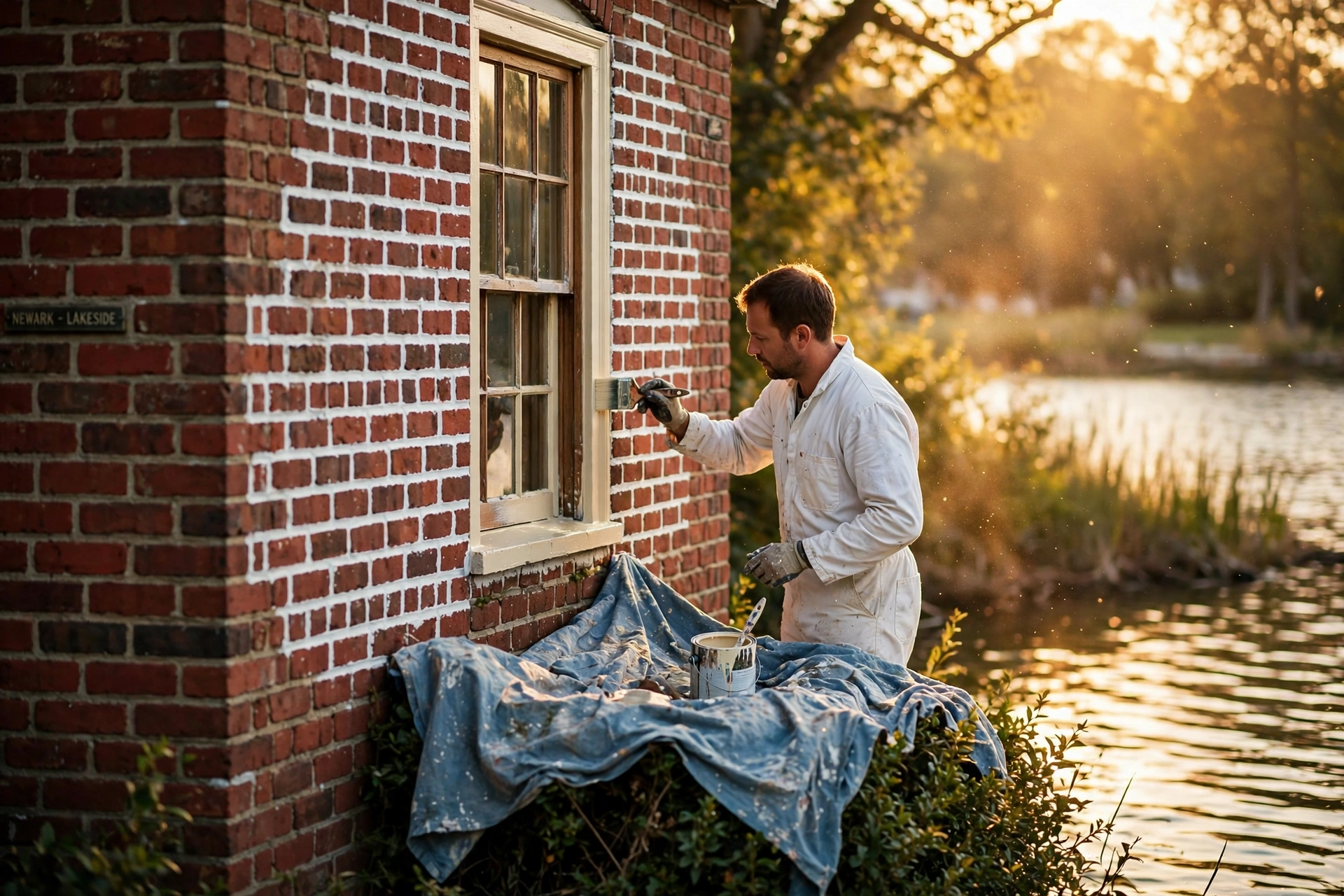
Before painting, we inspect every inch of the masonry for cracks. We perform "tuckpointing" or mortar repair where necessary. According to the California Contractors State License Board (CSLB), ensuring the structural integrity of the substrate is a prerequisite for any licensed painting project. We use high-flex masonry caulk to seal gaps around window frames and door trim, preventing water from seeping behind the paint film.
Step 3: Applying a Masonry-Specific Primer
We never use standard interior or exterior primers on brick. We apply a dedicated masonry primer that is alkali-resistant. Bricks are naturally alkaline, and this alkalinity can "burn" through cheap paint, causing discoloration. A professional primer stabilizes the pH of the surface and provides a uniform base for the topcoat.
Step 4: The Topcoat Application
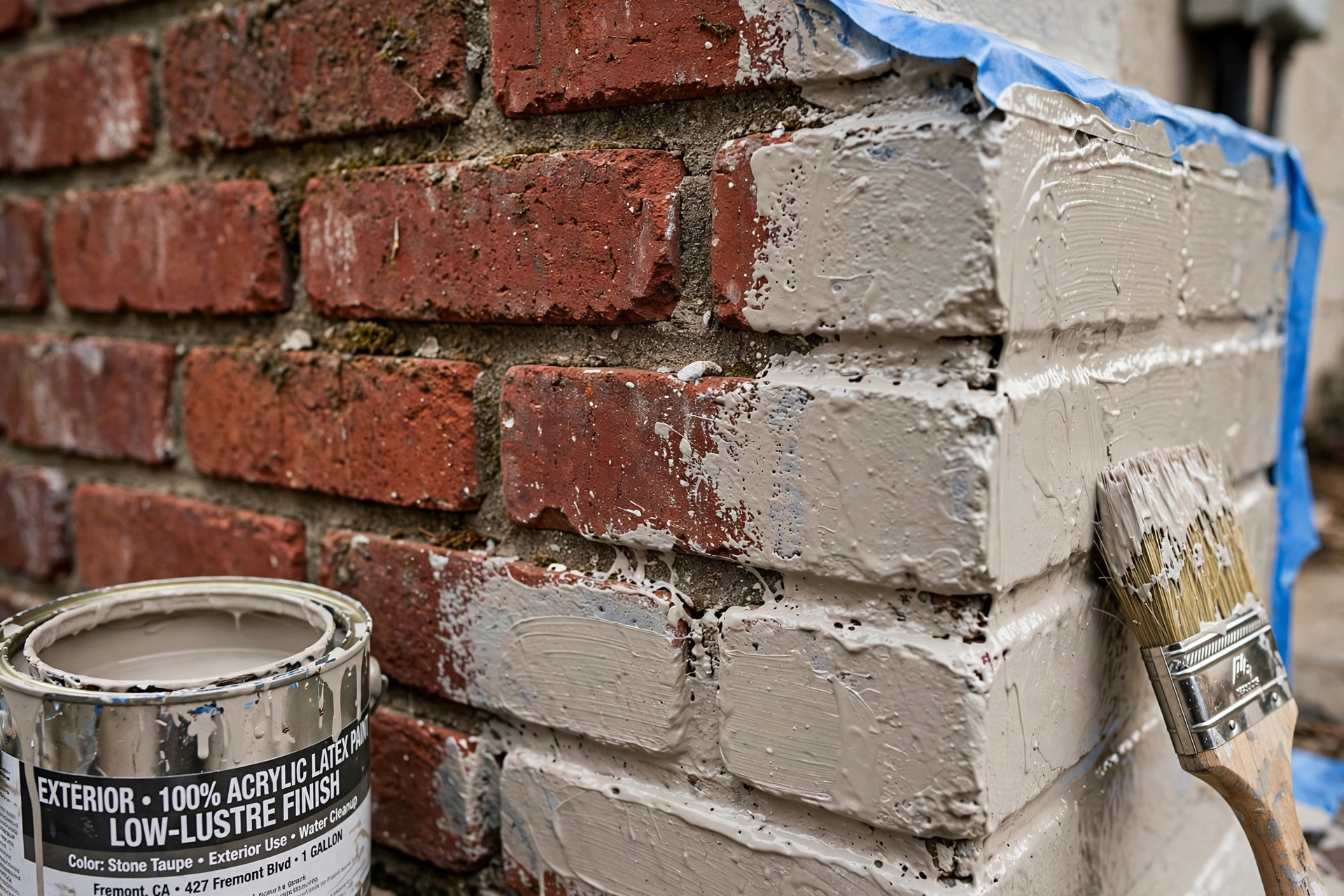
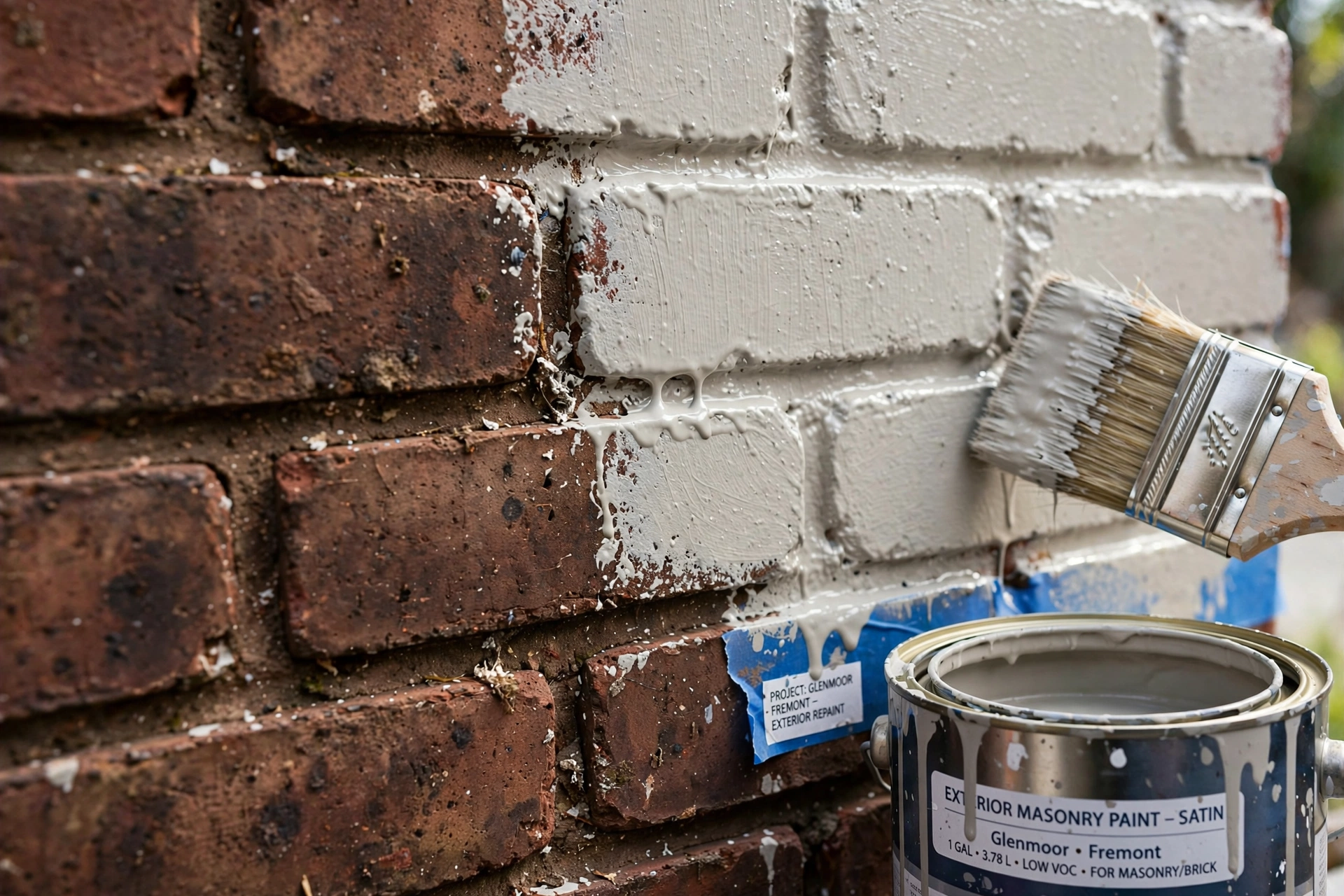
We apply two coats of premium masonry paint. Depending on the client's needs in Lakeside, we may use an elastomeric paint for its ability to bridge small hairline cracks or a silicate paint for maximum breathability. These are applied using a combination of spraying for uniform coverage and "back-brushing" to ensure the paint is pushed deep into the masonry pores.
Step 5: Quality Inspection and Curing
Once the paint is applied, we conduct a thorough inspection to ensure there are no holidays (missed spots) or runs. The paint is then allowed to cure under the specific conditions of the Newark climate, ensuring it reaches maximum hardness and weather resistance.
For those who need similar expertise in other areas, we also provide brick & masonry exterior painting in Fremont, CA and specialized services for those seeking exterior painting in Lakeside Newark, CA.
Common Mistakes to Avoid in Masonry Painting
The most frequent error I see in the Bay Area is the use of "flat" exterior house paint on brick. While it may look good for the first six months, these paints lack the elasticity and permeability required for masonry. They trap moisture, and once that moisture tries to escape, it pushes the paint off the wall in large sheets. This is not a paint failure; it is a chemical failure due to improper product selection.
Another critical mistake is ignoring the "efflorescence" process. Efflorescence happens when soluble salts move to the surface of a porous material. If you paint over these salts without neutralizing them first, the salts will continue to crystallize under the paint, causing it to blister. A professional always cleans the masonry with a masonry-specific acid wash or specialized cleaner to neutralize these salts before the first drop of primer is applied.
Many homeowners also rush the timeline. Painting masonry during a period of extreme humidity or immediately after a heavy rain is a mistake. The brick must be completely dry—not just on the surface, but deep within the core. If you seal moisture inside the brick, you are essentially creating a steam room inside your walls once the sun hits them, which leads to rapid peeling.
Lastly, avoid the "cheap contractor" trap. Some painters will skip the priming phase entirely or use a "paint + primer in one" product. While these are convenient for drywall, they are insufficient for the high-alkali environment of brick and stone. The result is a finish that lacks adhesion and fails long before the 6-year mark.

Professional vs. DIY vs. Cheap AI-Guided Painting
When deciding how to handle your masonry project in Lakeside, it is important to understand the difference in outcomes based on the methodology used.
| Feature | Traditional DIY/Cheap Way | AI-Guided/Generic Approach | World Pro Painting Approach |
|---|---|---|---|
| Product Choice | Standard Exterior Latex | Generic "Masonry" Paint | Breathable Elastomeric/Silicate |
| Prep Work | Light rinsing with hose | Surface scrubbing | Power wash + Mortar repair + Acid wash |
| Longevity | 1-3 years (Peeling) | 3-5 years (Variable) | 6-Year Guaranteed Finish |
| Risk | High risk of spalling | Moderate risk of bubbling | Minimal risk due to technical specs |
| Outcome | Streaky, peeling finish | Uniform but lacks depth | Flawless, durable, breathable coat |
💡
Key Takeaway
The difference between a 2-year and a 10-year paint job on masonry is almost entirely found in the preparation and the permeability of the coating used.
Best Practices for Long-Term Masonry Maintenance
To ensure your Lakeside home remains stunning, maintenance is essential. Even the best professional paint job requires attention. I recommend a biannual inspection of your exterior walls. Look for any new hairline cracks in the mortar or signs of moisture buildup near the ground level. If you find a crack, address it immediately with a high-quality masonry sealant to prevent water from entering the structure.
Avoid using harsh chemicals or high-pressure washers directly against the paint film every year. A gentle rinse with a garden hose and a mild detergent is sufficient to remove dust and salt spray from the air. Over-washing with high pressure can actually create micro-pores in the paint, allowing moisture to penetrate over time.
Additionally, keep your landscaping trimmed away from the masonry. Bushes and vines that lean against a painted brick wall trap moisture against the surface, preventing the paint from "breathing" as intended. By maintaining a gap of at least 6 to 12 inches between your vegetation and your walls, you significantly extend the life of the coating.
If you are located in other parts of the region, you might also be interested in our services for brick & masonry exterior painting in Irvington, Fremont or our work regarding brick & masonry exterior painting in Glenmoor, Fremont. Both areas share similar climate challenges to Lakeside, requiring the same technical rigor.
Frequently Asked Questions
Can you paint over old lead-based paint on brick?
Yes, but it must be done following strict safety protocols. According to the Environmental Protection Agency (EPA), any renovation of a home built before 1978 must follow the RRP (Renovation, Repair, and Painting) rule to prevent lead dust from contaminating the environment. At World Pro Painting, we use HEPA-filtered vacuums and wet-scraping methods to safely remove lead-based paint before applying new coatings, ensuring your family's safety and compliance with federal laws.
How long does brick and masonry painting actually last?
When executed correctly with a breathable coating and a professional 5-step prep process, a masonry paint job should last between 7 to 12 years. However, cheap applications often fail within 24 months. Our process is designed to maximize longevity, which is why we offer a 6-year guarantee. The lifespan depends heavily on the UV exposure of your specific street in Lakeside and how well the original substrate was prepared.
Will painting my bricks cause them to crack or peel?
Painting will not cause bricks to crack, but using the wrong paint will cause the paint to peel and the brick to spall. If you use a non-breathable paint, moisture gets trapped. When that moisture freezes or heats up, it expands, pushing the paint off and potentially chipping the brick face. This is why we only use high-permeability coatings that allow the masonry to "breathe" naturally.
What is the difference between painting and staining brick?
Painting provides a solid, opaque color that completely covers the brick, allowing for a total change in appearance. Staining is a more transparent process that penetrates the brick and changes the hue while keeping the natural texture and variations of the brick visible. Painting is generally better for a modern, clean look, while staining is preferred for those who want a more traditional, weathered appearance.
How do I know if my masonry needs to be painted?
Look for signs of fading, chalking (a powdery residue on your hands when you touch the wall), or peeling. More importantly, look for structural wear; if your mortar is crumbling or the bricks look porous and weathered, a professional coating can provide an essential layer of protection. If your home's exterior no longer matches the neighborhood aesthetic in Lakeside, it may be time for a refresh.
Conclusion
Brick and masonry exterior painting in Lakeside, Newark, is a high-stakes investment. When done correctly, it transforms a home's aesthetic and protects its structural integrity for a decade. When done poorly, it creates a moisture trap that can lead to thousands of dollars in masonry repair. By prioritizing breathable materials, rigorous surface preparation, and licensed expertise, you ensure your property remains an asset rather than a liability.
Whether you are updating a mid-century brick ranch or protecting a modern masonry commercial building, the technical details matter. We invite you to see the difference that professional preparation makes. For more detailed information on the process, return to our comprehensive guide on brick & masonry exterior painting.
If you are ready to protect your home with a 6-year guaranteed finish, contact World Pro Painting today for a free on-site estimate. We serve 42+ cities across the Bay Area with CSLB license #1142478, ensuring your project is bonded, insured, and executed to the highest industry standards.
Visit us at worldpropainting.com to schedule your consultation.
Get 15% Off Exterior Painting This Month
Schedule your free estimate today and secure your spot in our calendar.
Bay Area Property Painting Prep & Architectural Color Guide
Get our complete 5-step preparation checklist and climate-appropriate Sherwin-Williams & Benjamin Moore color guide for Bay Area homes, HOAs, and commercial properties.