

How Much Does HOA and Multi-Family Painting Cost in Walnut Creek, CA?
Managing a multi-family complex or an HOA in Walnut Creek requires a delicate balance between maintaining property value and managing a strict reserve budget. For most professional HOA painting services Bay Area boards encounter, costs typically range from $3,500 to $7,000 per unit for full exterior refreshes, though these figures fluctuate based on the age of the stucco, the level of wood rot, and the complexity of the architecture. In my experience working with large-scale residential complexes, the biggest budget killers aren't the paint gallons themselves, but the unforeseen surface preparation and the lack of a proper reserve study.
When boards ask "how much," they are often looking for a number to plug into a budget, but a flat rate is a dangerous gamble. A project in the foothills of Walnut Creek faces different stressors—such as intense UV exposure and heat—compared to a coastal property. To get an accurate figure, you must account for the "Five-Step Prep" (power washing, scraping, sanding, caulking, and priming). Skipping any of these steps to save 10% on the initial quote usually results in a 40% increase in maintenance costs within three years.
For those planning their next cycle, reviewing a detailed Hiring California Bay Area Painting: Scope, Timeline & Bay Area Project Guide is the best way to ensure the quote you receive matches the actual scope of work required.
Understanding the Economics of HOA Painting Services
Calculating the cost of a multi-family project is fundamentally different from painting a single-family home. In a residential HOA, you are dealing with "economies of scale," where the cost per square foot should technically drop as the project size increases. However, this is often offset by the logistical nightmare of coordinating dozens of homeowners and managing strict HOA guidelines.
📚
Definition
A Reserve Study is a long-term financial planning tool used by HOAs to determine how much money needs to be set aside annually to cover the future replacement and painting of common area assets.
The cost of HOA painting services Bay Area complexes utilize is driven primarily by the "substrate condition." For instance, a complex in Walnut Creek with high-end stucco and minimal cracking will cost significantly less than an older property with failing seals and peeling lead-based paint. According to the Painting Contractors Association (PCA), professional painting is not just an aesthetic choice but a critical component of building envelope protection. When the paint film fails, moisture penetrates the substrate, leading to mold and structural rot that can cost ten times more to repair than a proactive paint job.
I've seen this play out repeatedly: a board chooses the lowest bidder who quotes $2,000 per unit. Six months later, the paint begins to peel because the contractor skipped the alkaline-resistant primer on the stucco. By the time the board realizes the mistake, they've spent the budget and now face a special assessment. This is why we emphasize the total cost of ownership over the initial bid price.
Why Precision Pricing Matters for Multi-Family Reserves
In the world of HOA management, an underestimated paint project isn't just a nuisance; it's a financial crisis. Most Walnut Creek HOAs operate on a reserve fund that is calculated years in advance. If a project is underestimated by 20%, the board is forced to either dip into emergency funds or levy a "special assessment," which is notoriously unpopular with homeowners.
The financial impact of deferred maintenance is staggering. Research from industry bodies indicates that for every $1 spent on preventative maintenance (like a 5-to-7 year paint cycle), an association saves approximately $4 to $7 in emergency repairs. When paint fails, the UV rays in the East Bay degrade the underlying materials. In Walnut Creek's heat, paint that isn't rated for high UV exposure will chalk and fade within 36 months, effectively wasting the entire investment.
Furthermore, the California Contractors State License Board (CSLB) mandates that any contractor performing this work must be licensed and bonded. Hiring an unlicensed "handyman" to save money is a catastrophic risk. If a worker is injured on a multi-family site and the contractor lacks proper workers' compensation insurance, the HOA's master policy becomes the primary target for litigation, potentially raising premiums by thousands of dollars annually.
Now, here's where it gets interesting: the correlation between "curb appeal" and property value in the Bay Area is extremely high. A fresh, professionally executed paint job can increase the resale value of individual units by 3% to 7% almost immediately. For a complex of 50 units, this represents a massive increase in collective equity for the homeowners.
Practical Implementation: The Road to a Fixed-Cost Project
To move from a "rough estimate" to a "guaranteed price," boards should follow a structured procurement process. The mistake I see constantly is boards requesting a "bid" based on a walk-through without a detailed Scope of Work (SOW). When three contractors bid on a vague project, they are all guessing. One might include caulking every window; another might only paint over the existing cracks.
The professional approach involves a five-step preparation sequence that World Pro Painting implements on every multi-family site:
- Deep Pressure Washing: Removing all oxidation, dirt, and mildew.
- Mechanical Scraping: Removing all loose or peeling paint.
- Sanding and Smoothing: Ensuring the transition between old and new paint is seamless.
- High-Grade Caulking: Sealing every gap around windows, doors, and trim to prevent water intrusion.
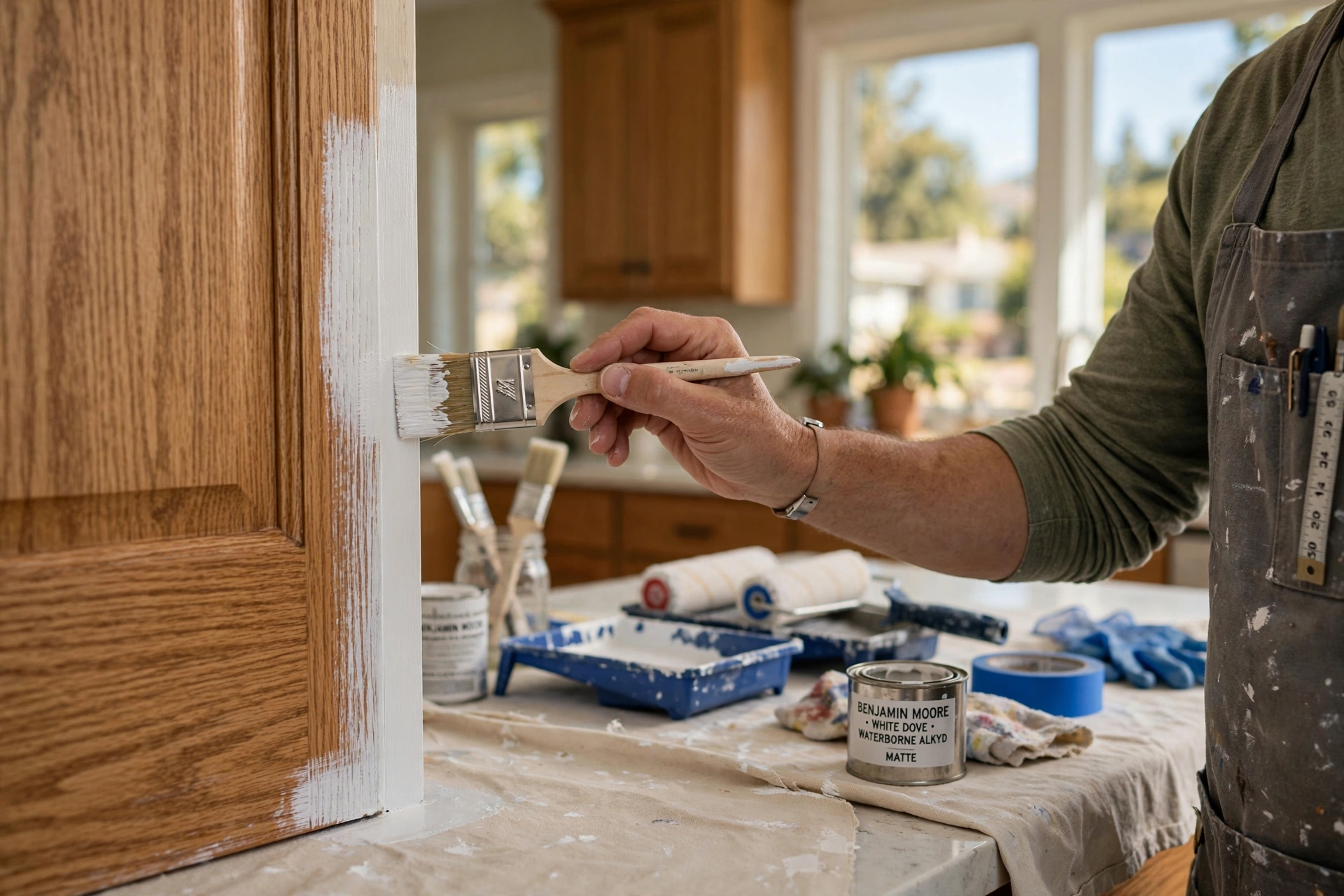
- Priming: Applying a dedicated primer to bare wood or alkaline-resistant primer to new stucco.
💡
Key Takeaway
The "Five-Step Prep" is the only way to ensure a 6-year guarantee. Any contractor who promises a "quick refresh" without these steps is selling a product that will fail within 24 months.
For those managing properties in specific pockets of the region, such as those looking for House Painters in Weibel Fremont, CA or other multi-family hubs, the logistics of staging equipment (like scaffolding and lifts) can add 5% to 10% to the total cost. In Walnut Creek, where parking is often tight, the coordination of these lifts requires a professional project manager to avoid blocking resident access.
Comparing Painting Approaches for Multi-Family Projects
Not all painting strategies are created equal. Boards generally choose between three paths: the "Budget" approach, the "Standard" approach, and the "Professional Grade" approach.
| Feature | Budget Approach (Lowest Bid) | Standard Approach (Average) | Professional Grade (World Pro) |
|---|---|---|---|
| Surface Prep | Power wash only | Wash + basic scraping | Full 5-Step Prep Sequence |
| Materials | Low-VOC generic paint | Mid-tier acrylics | Premium Sherwin-Williams/Benjamin Moore |
| Warranty | 1-2 years (often void) | 3 years | 6-Year Guarantee |
| Supervision | Part-time / Remote | Occasional site visits | Dedicated On-site Project Manager |
| Risk Level | High (Peeling/Failure) | Moderate (Fading) | Low (Long-term Protection) |
| Best For | Rental flips (short term) | Low-budget HOAs | Long-term value & Reserve goals |
That said, the "Budget" approach is an illusion of savings. When you factor in the cost of a second repaint three years early, the "Professional Grade" approach is actually the cheapest option over a ten-year horizon.
Common Misconceptions About HOA Painting Costs
Most guides get this wrong by suggesting that "more paint equals better quality." In reality, the quality of a project is determined by the removal of the old paint, not the application of the new.
Myth 1: "We can save money by doing the prep ourselves or hiring a separate cleaning crew."
This is a recipe for disaster. When a painting contractor is also responsible for the prep, they cannot blame the "cleaning crew" for why the paint is peeling. By keeping the scope under one licensed contractor, the HOA maintains a single point of accountability.
Myth 2: "The cheapest paint is fine as long as the color looks right."
In the California Bay Area, paint is a protective membrane. Cheap paints have lower solids content, meaning they wear thin much faster under the sun. Using a premium product like those from Sherwin-Williams or Benjamin Moore ensures the pigment stays locked in, preventing the "chalking" effect common in Walnut Creek properties.
Myth 3: "We only need to paint the areas that look bad."
Spot-painting a multi-family complex creates an uneven "patchwork" look that actually lowers property values. Furthermore, it ignores the systemic failure of the paint film across the entire building. A comprehensive approach is the only way to ensure the building envelope is sealed.
Frequently Asked Questions
How do I calculate the cost per unit for my Walnut Creek HOA?
To estimate the cost per unit, you must first determine the total square footage of the exterior surfaces and the current condition of the substrate. In the Bay Area, a general rule of thumb for mid-sized multi-family complexes is to budget between $3,500 and $7,000 per unit for a full exterior repaint, including professional prep. However, if you have extensive wood rot in the eaves or outdated siding that requires complete stripping, these costs can increase. We recommend getting a detailed line-item bid that separates labor, materials, and preparation to see exactly where the money is going.
How often should a multi-family complex in the Bay Area be painted?
For most complexes in Walnut Creek and the surrounding region, a professional paint cycle should occur every 5 to 7 years. This timeframe is dictated by the intensity of the California sun and the volatility of the weather. Waiting longer than 7 years often leads to "failure of the film," where the paint no longer protects the wood or stucco, allowing moisture to enter the walls. This can lead to dry rot and mold, which are significantly more expensive to remediate than a scheduled paint job. A proactive 6-year cycle typically keeps the reserve fund stable.
Will painting my complex increase the property value of individual units?
Yes, significantly. Curb appeal is the first thing a potential buyer sees. In competitive markets like Walnut Creek, a modern, professional color palette can make a property feel "renovated" even if the interiors are dated. According to real estate trends in the Bay Area, homes in well-maintained HOAs sell faster and for a premium compared to those in complexes with peeling paint and faded exteriors. It is one of the highest-ROI improvements a board can authorize because it benefits every single homeowner simultaneously.
What is the difference between "painting" and "coating" in an HOA context?
While the terms are used interchangeably, "coating" often refers to high-performance materials like elastomeric paints. Elastomeric coatings are thicker and can bridge small cracks in stucco, making them ideal for the shifting soils found in some parts of the Bay Area. Standard paint provides color and basic protection, whereas a professional coating provides a waterproof seal. If your complex has a history of hairline cracks in the stucco, upgrading to a coating system is an investment that pays for itself by reducing future water damage repairs.
How do we handle the "Color Selection" process without endless board meetings?
The most efficient way to handle color selection is to hire a Color Specialist who can provide 3-4 cohesive "palettes" based on the architecture of the building and the surrounding neighborhood. Instead of voting on individual colors, the board votes on a curated palette. We recommend applying 3x3 foot "test patches" in different areas of the complex to see how the light hits the colors at noon and at sunset. This prevents the "wrong color" regret that often leads to expensive repaints.
Final Thoughts on HOA Painting Services Bay Area
Investing in professional HOA painting services Bay Area boards trust is not about the color on the walls; it's about the integrity of the asset. Whether you are managing a small cluster of townhomes or a massive apartment complex in Walnut Creek, the goal is the same: maximize property value while minimizing long-term maintenance costs.
Avoid the temptation of the lowest bid. Instead, focus on the quality of the preparation and the strength of the warranty. A contractor who provides a 6-year guarantee is a contractor who trusts their prep work. When you align your painting cycle with a proper reserve study, you eliminate the need for stressful special assessments and ensure the community remains a desirable place to live.
If you are ready to protect your investment with a precision-engineered paint project, schedule a free on-site estimate with World Pro Painting. We specialize in the complex logistics of multi-family projects, ensuring a clean worksite and a flawless finish.
For more information on local services, you might also be interested in our guides on Exterior Painting in Lakeside Newark, CA or House Painting Mission San Jose Fremont, CA.
Visit us at worldpropainting.com to start your project.
Commercial Painting Cost Calculator & Color Guide
Get an instant estimation checklist for painting your office, warehouse, or house. Learn how to choose colors that boost productivity.