
📖This article is part of the complete guide to Eco Friendly & Low VOC Painting.
In my experience working with homeowners in the Peninsula, the most common complaint isn't about the final color, but the lingering chemical smell that haunts a room for weeks after a project. In Redwood City, where many homes range from historic craftsman cottages to modern tech-sector developments, the air quality inside the home is often overlooked until the paint cans are opened. Traditional paints release volatile organic compounds (VOCs) that can trigger respiratory issues and environmental degradation, making a shift toward sustainable alternatives not just a preference, but a health necessity.
For a comprehensive overview of the technology and standards behind these materials, explore our guide on eco-friendly & low-voc painting.
What is Eco-Friendly & Low VOC Painting in Redwood City?
📚
Definition
Low-VOC painting refers to the use of coatings that emit significantly fewer Volatile Organic Compounds—organic chemicals that have a high vapor pressure at room temperature—compared to standard architectural paints.
Eco-friendly and low-VOC painting in Redwood City involves utilizing specialized paint formulas that replace harmful solvents with water-based or natural alternatives. For residents of the San Francisco Bay Area, this means choosing products that minimize the "off-gassing" process, where chemicals evaporate into the indoor air over time. While traditional paints often rely on petroleum-derived solvents to keep the paint liquid, low-VOC and Zero-VOC options use advanced polymer chemistry to achieve the same flow and durability without the toxic fumes.
When we implement these solutions at World Pro Painting, we don't just swap a can of paint; we analyze the substrate. In Redwood City's specific coastal-influenced climate, humidity can affect how low-VOC paints cure. I have found that using a high-quality primer specifically designed for low-emission coatings is the only way to ensure that the final finish doesn't peel or bubble under the unique moisture levels of the Peninsula. This approach integrates residential painting with environmental science to create a living space that is safe for children, pets, and those with chemical sensitivities.

Why Does Low-VOC Painting Matter for Redwood City Homeowners?
Choosing low-VOC options in Redwood City is essential because of the direct impact on indoor air quality (IAQ) and compliance with stringent California environmental laws. According to the Environmental Protection Agency (EPA), the air inside a home can be significantly more polluted than the air outside, often due to the off-gassing of building materials and paints. For families living in dense Redwood City neighborhoods, reducing this chemical load is the most effective way to protect long-term respiratory health.
Furthermore, the Bay Area is subject to some of the strictest air quality regulations in the world. The Bay Area Air Quality Management District (BAAQMD) sets limits on VOC emissions to reduce the formation of ground-level ozone and smog. By opting for eco-friendly painting, homeowners aren't just following a trend; they are adhering to a regional standard of sustainability that protects the surrounding coastal ecosystems and the health of the local community.
From a property value perspective, "Green' certifications and the use of non-toxic materials are becoming significant selling points in the Redwood City real estate market. Buyers in 2026 are increasingly scrutinizing the materials used in home improvement. A home that can be documented as having been painted with Zero-VOC, certified sustainable materials often commands a premium because it signals a commitment to health and wellness. In my experience, a documented history of using premium, low-emission products like those from Benjamin Moore can be a decisive factor during the home inspection and disclosure process.
💡
Key Takeaway
Low-VOC paints reduce the concentration of indoor pollutants, ensuring that the air quality in your Redwood City home remains safe and breathable immediately after the project is completed.
How to Implement Eco-Friendly Painting in Your Redwood City Property
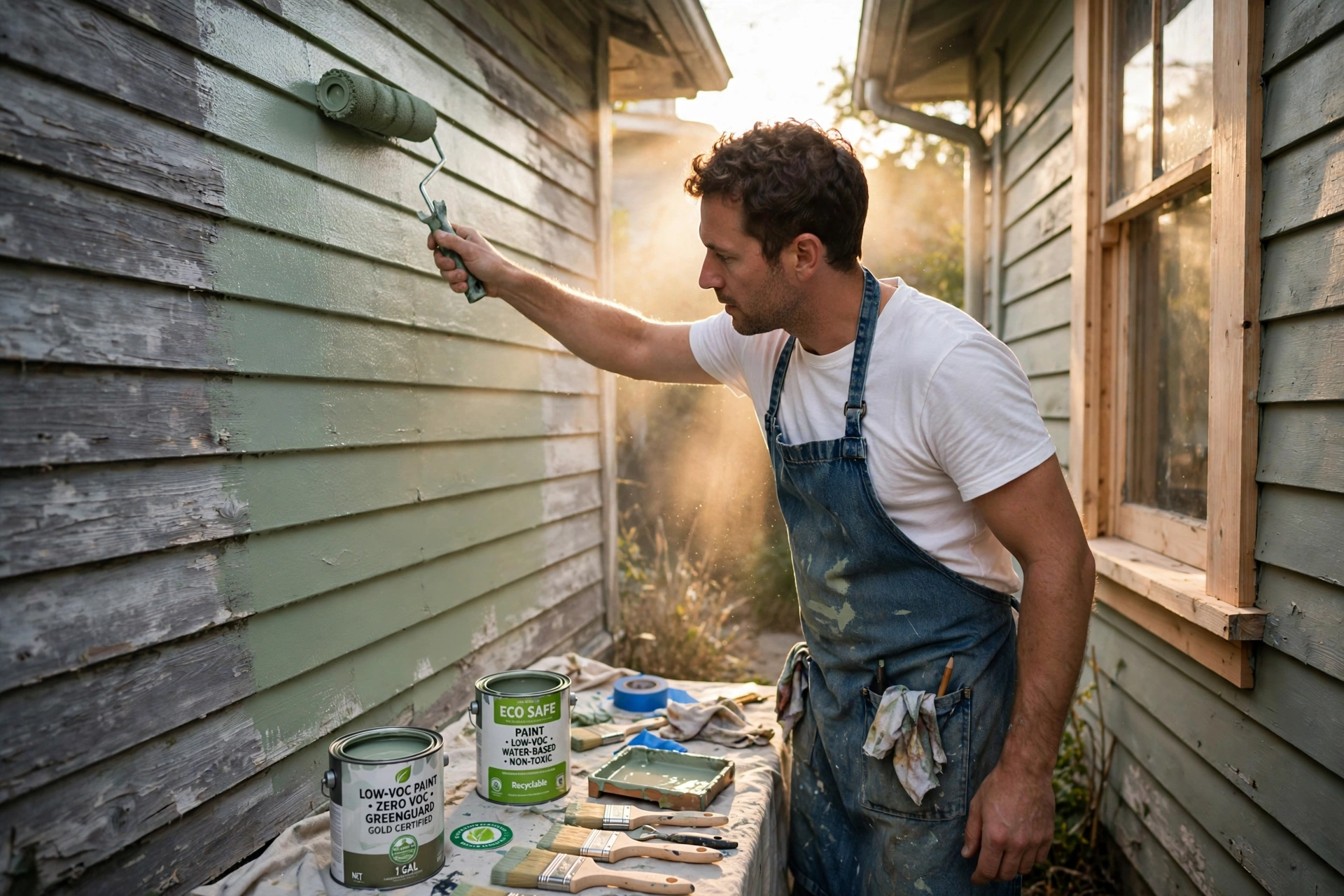
Executing a successful eco-friendly paint project requires more than just buying a "green" can of paint. It requires a rigorous 5-step preparation process to ensure the low-VOC product bonds correctly to the surface, as some sustainable paints can be more sensitive to surface contaminants than their solvent-heavy counterparts.
First, the surface must be meticulously cleaned. We utilize low-impact, biodegradable cleaners to remove dust and oils without introducing new toxins into the environment. Second, we perform detailed scraping and sanding of any peeling areas. For older Redwood City homes, this is where we check for lead-based paint; if found, we follow strict EPA RRP guidelines to ensure no lead dust enters the air. Third, we apply a high-grade, low-VOC primer. This step is fundamental because it seals the substrate and prevents the final coat from being absorbed unevenly.
Fourth, we apply a specialized sealant or caulk. We use low-emission caulking products to seal gaps around window frames and baseboards, preventing moisture infiltration which is common in the Bay Area's foggy mornings. Fifth, the final application of the low-VOC paint is performed using professional-grade brushes and rollers to minimize splatter and waste. For those coordinating larger projects, it is helpful to understand the Hiring California Bay Area Painting: Scope, Timeline & Bay Area Project Guide to ensure the curing time for eco-friendly paints is factored into the schedule.
When selecting colors, we often recommend consulting with a color specialist to see how low-VOC pigments react to the specific light quality of Redwood City. Because these paints sometimes have different refractive properties than traditional oil-based paints, a sample patch is mandatory. We've seen this frequently with clients who move from high-VOC glosses to low-VOC satins; the light hit differently, and without a sample, the room can feel colder than intended.
Sustainable Painting vs. Traditional Methods
To understand the value proposition of eco-friendly painting, one must look at the technical trade-offs. For years, the "Traditional Approach" was favored because solvent-based paints dried faster and were incredibly durable. However, the cost was a toxic environment. The "Cheap AI-Driven' or DIY approach often involves buying the cheapest 'green-washed' paint from a big-box store, which often results in poor coverage and peeling within two years. Our 'Modern Professional Approach' at World Pro Painting combines the health benefits of low-VOCs with the durability of industrial-grade engineering.
| Feature | Traditional Solvent Paint | Cheap "Green" DIY Paint | World Pro Modern Approach |
|---|---|---|---|
| Air Quality | High VOCs; strong odors | Low VOCs; variable quality | Zero/Low VOC; certified safe |
| Durability | Very High | Low to Medium | High (via 5-step prep) |
| Cure Time | Fast | Very Slow | Optimized for Bay Area climate |
| Health Risk | Respiratory Irritants | Low | Negligible / Hypoallergenic |
| Longevity | 5-7 Years | 2-3 Years | 6-Year Guarantee |
As indicated in the table, the professional approach eliminates the trade-off between health and durability. By using high-performance coatings from Sherwin-Williams, we can provide a finish that withstands the wear and tear of a busy Redwood City household while maintaining a near-zero emission profile. This is a critical distinction: sustainability should not mean a compromise in the quality of the finish.

Common Mistakes to Avoid When Choosing Low-VOC Painting
One of the most frequent errors I see in Redwood City is the "Green-Washing Trap." Many homeowners purchase paint labeled as "Natural" or "Eco-Friendly" without checking the actual VOC grams per liter (g/L). Some paints claim to be eco-friendly but still contain high levels of coalescing agents that emit toxins long after the paint feels dry to the touch. Always ask for the technical data sheet to verify the actual VOC content.
Another mistake is neglecting the primer. Because low-VOC paints have a different chemical structure, they may not adhere as well to old, high-VOC oil paints. If you apply a water-based low-VOC paint directly over an old oil-based gloss without the proper bonding primer, the paint will eventually peel or "alligator." This is a common issue in the historic districts of Redwood City, where layers of 50-year-old paint often hide beneath the surface.
Finally, many people underestimate the curing time. Low-VOC paints, particularly those that are completely Zero-VOC, can take longer to reach their full hardness. If you move furniture back against a wall too quickly, you may experience "blocking," where the paint sticks to the object and tears. I always advise my clients to allow a full 72 hours before placing heavy furniture against newly painted walls in the humid Bay Area air.
For those managing multi-unit properties or larger residential complexes, we recommend looking at our specialized services, such as House Painters in Weibel Fremont, CA | World Pro Painting, as the scaling of low-VOC applications requires different logistics and ventilation strategies than a single-family home.
Frequently Asked Questions
Are low-VOC paints as durable as traditional paints in Redwood City?
Yes, modern low-VOC and Zero-VOC paints have evolved significantly. In the past, water-based alternatives were prone to fading and scrubbing off. However, current professional-grade lines from companies like Benjamin Moore and Sherwin-Williams use advanced acrylic resins that provide equal or superior scrubbability and color retention. When combined with our 5-step preparation process—including thorough cleaning and priming—these paints create a hard, durable shell that withstands the daily activities of a busy household without the toxic off-gassing. We provide a 6-year guarantee on our work to prove that sustainability does not come at the expense of longevity.
How can I tell if a paint is truly "low-VOC" or just marketing?
To verify a paint's eco-credentials, you must look beyond the front label and examine the Technical Data Sheet (TDS) or the Material Safety Data Sheet (MSDS). Look for the specific VOC content measured in grams per liter (g/L). A truly low-VOC paint will typically have less than 50 g/L, and Zero-VOC paints generally have less than 5 g/L. Be wary of terms like "natural" or "green," which are not regulated. According to the Painting Contractors Association (PCA), professional certification and adherence to established industry standards are the only ways to guarantee that a product meets health and environmental requirements.
Will my house smell during the painting process if we use low-VOC options?
While low-VOC paints significantly reduce the pungent chemical odor associated with traditional painting, they are not always completely odorless. You may notice a very faint, mild scent during application, but the overwhelming "paint smell" that causes headaches and nausea is virtually eliminated. This is a massive advantage for Redwood City homeowners who cannot vacate their homes during a project or for those with children and pets. The lack of strong fumes means you can typically return to a room almost immediately after the paint has dried to the touch, rather than waiting several days for the air to clear.
Do I need a special primer for eco-friendly painting?
Absolutely. Using the correct primer is the most fundamental step in ensuring a low-VOC finish lasts. Because sustainable paints lack the aggressive solvents that allow traditional paints to "bite" into a surface, they rely more on the primer for adhesion. We use a high-performance, low-emission primer that creates a chemical bridge between the old surface and the new eco-friendly topcoat. Without this, you risk peeling and cracking, especially in the varied microclimates of the Peninsula where temperature shifts can cause substrates to expand and contract. Our process ensures the primer is compatible with the specific chemistry of the chosen low-VOC paint.
Is low-VOC painting more expensive than standard painting?
Generally, the cost of the materials for low-VOC paints is slightly higher than entry-level traditional paints. However, when you consider the long-term value, the investment is justified. You are paying for a safer indoor environment, reduced health risks, and often a higher-quality resin that lasts longer. At World Pro Painting, we don't charge a premium just for the "green" label; our pricing is based on the comprehensive 5-step preparation process and the quality of the licensed labor. We provide free on-site estimates in Redwood City to give you a clear breakdown of costs, ensuring you get a premium, healthy finish without hidden surprises.
Conclusion
Transitioning to eco-friendly and low-VOC painting in Redwood City is an investment in both your property's value and your family's health. By eliminating the heavy load of volatile organic compounds, you create a home environment that supports wellness and adheres to the high environmental standards of the California Bay Area. Whether you are refreshing a historic bungalow or finishing a modern condo, the combination of certified low-emission materials and a professional 5-step preparation process is the only way to guarantee a finish that is both beautiful and breathable.
If you are ready to upgrade your living space without compromising on durability or air quality, we invite you to experience the professional difference. For more detailed information on choosing the right materials for your project, refer back to our complete guide on eco-friendly & low-voc painting.
Contact World Pro Painting today for a free on-site estimate in Redwood City. Our CSLB #1142478 licensed team will ensure your project is handled with the precision, care, and environmental responsibility your home deserves.
Get 15% Off Exterior Painting This Month
Schedule your free estimate today and secure your spot in our calendar.
Bay Area Property Painting Prep & Architectural Color Guide
Get our complete 5-step preparation checklist and climate-appropriate Sherwin-Williams & Benjamin Moore color guide for Bay Area homes, HOAs, and commercial properties.