
📖This article is part of the complete guide to Stucco Painting.
Homeowners in the East Bay often face a specific dilemma: their stucco exteriors look dated or are beginning to show hairline cracks from the region's seismic activity and temperature swings. Professional stucco painting in Hayward, CA, is the most effective way to protect your home's structural integrity while instantly increasing its market value. At World Pro Painting, we provide a comprehensive system that goes beyond a simple coat of paint, focusing on elastomeric coatings and rigorous surface preparation to ensure a finish that withstands the unique California climate. For those planning a larger renovation, our Hiring California Bay Area Painting: Scope, Timeline & Bay Area Project Guide provides a detailed roadmap for managing your project timelines.
Why Hayward Homeowners Are Prioritizing Stucco Restoration
Hayward occupies a unique geographic position, caught between the coastal influence of the San Francisco Bay and the inland heat of the East Bay hills. This creates a volatile environment for exterior surfaces. Stucco, while durable, is porous. Over time, the constant cycle of morning fog and afternoon sun causes the material to expand and contract, leading to micro-cracks. If these are not addressed with a high-quality paint system, moisture penetrates the substrate, leading to wood rot or mold inside the walls.
In my experience working with residential properties throughout the East Bay, I have seen a significant shift toward elastomeric paints. Unlike standard acrylics, elastomeric coatings can stretch and recover, effectively bridging gaps in the stucco. This is not just an aesthetic choice; it is a preventative maintenance strategy. According to the Painting Contractors Association (PCA), proper coating application can extend the life of a building's exterior by several years by preventing water infiltration, which is the leading cause of exterior failure in residential structures.
Furthermore, California's strict environmental regulations demand the use of low-VOC (Volatile Organic Compounds) paints. We ensure all our projects comply with the Bay Area Air Quality Management District (BAAQMD) standards. This protects not only the environment but also the health of the families living in the homes we paint. When we approach a project in Hayward, we aren't just applying color; we are applying a protective shield that mitigates the risk of water damage in a region where humidity and salt air can be surprisingly aggressive.

What Are the Key Benefits of Professional Stucco Painting?
Investing in professional stucco painting is more than a cosmetic upgrade; it is a strategic home improvement that protects your largest asset. The primary benefit is the creation of a waterproof barrier that seals the porous nature of the cement or acrylic stucco.
Enhanced Thermal Protection and Energy Efficiency
Modern exterior paints, especially those provided by Sherwin-Williams, often include reflective pigments that reduce heat absorption. In the heat of a Hayward summer, a light-colored, high-reflectivity coating can lower the surface temperature of your walls by several degrees. This directly reduces the load on your air conditioning system, leading to lower monthly utility bills. When a home is properly sealed, it also reduces air leakage, keeping the interior climate more stable.
Increased Property Value and Curb Appeal
First impressions are everything in the California real estate market. A faded, cracked stucco exterior suggests neglect to potential buyers. A fresh, professional paint job using a modern color palette—such as the soft greys or warm whites popular in the East Bay—can increase a home's perceived value by thousands of dollars. The precision of a licensed contractor ensures that edges are crisp and the finish is uniform, something that is nearly impossible to achieve with a DIY approach on a textured surface like stucco.
Prevention of Structural Decay
Stucco is designed to shed water, but as it ages, it becomes prone to "spider-webbing." These tiny cracks allow rainwater to seep into the framing. By using a professional-grade primer and a flexible topcoat, we seal these vulnerabilities. The California Contractors State License Board (CSLB) emphasizes the importance of using licensed contractors for these services to ensure that the correct materials are used for the specific substrate, preventing the common mistake of trapping moisture behind a non-breathable paint layer.
💡
Key Takeaway
Professional stucco painting doesn't just change the color; it creates a flexible, waterproof membrane that prevents structural rot and reduces energy costs in the Bay Area's variable climate.
| Feature | DIY Painting | Generic Contractor | World Pro Painting Approach |
|---|---|---|---|
| Surface Prep | Simple rinsing | Basic scraping | 5-Step Prep (Power wash, sand, caulk, prime) |
| Material Quality | Hardware store grade | Standard Acrylic | Premium Elastomeric/Low-VOC |
| Durability | 2-3 Years | 4-5 Years | 6-Year Guarantee |
| Crack Repair | Fill with putty | Quick caulk | Flexible structural sealant |
| Local Compliance | Unknown | Minimal | Full BAAQMD & CSLB Compliance |
Real-World Stucco Transformations in Hayward
To understand the impact of professional stucco painting, we must look at actual results. I've analyzed dozens of projects in the East Bay, and the pattern is clear: proper preparation is the only thing that separates a lasting job from a peeling mess.
Case Study 1: The Mid-Century Modern Refresh
We recently worked on a 1960s ranch-style home in a quiet Hayward neighborhood. The original stucco was a faded beige with significant cracking along the south-facing wall due to extreme UV exposure. The homeowner had tried patching the cracks themselves with a standard filler, which had already begun to pop out. We implemented our 5-step preparation process: we power-washed the entire surface to remove 20 years of oxidation, sanded the edges of the cracks, applied a high-grade flexible sealant, and primed the surface with a masonry-specific sealer. We finished the project with a sophisticated charcoal and off-white scheme. The result was not just a visual change; the home's exterior was completely sealed, and the homeowner reported a noticeable difference in interior temperature during the following July heatwave.
Case Study 2: The Multi-Family Complex Restoration
In another project, we handled a multi-unit residential building. The challenge here was consistency across a large surface area. Using professional spray equipment allowed us to get the paint into every pore of the heavy-texture stucco without the "lap marks" typical of rollers. We used a high-build elastomeric coating that filled micro-cracks across 4,000 square feet of surface. By coordinating the project over a two-week window, we minimized disruption to the tenants while increasing the overall rental appeal of the complex. The property manager noted that the building's exterior now looks like a new construction project, which allowed them to adjust lease rates upward based on the improved aesthetic.
How to Get Started with Stucco Painting in Hayward, CA
Getting started with a stucco project requires a shift in mindset: stop thinking about the color and start thinking about the substrate. If you apply the most expensive paint in the world over a dirty or cracked wall, it will fail within 24 months.
For those in nearby areas, we often see similar needs for Exterior Painting in Lakeside Newark, CA | Licensed Painters, where the salt air adds an extra layer of complexity to the preparation process. Here is the professional workflow we recommend:
Step 1: The Comprehensive Inspection
Before a single drop of paint is mixed, we perform a "tap test" on the stucco. By gently tapping the walls, we can identify areas where the stucco has detached from the lath (delamination). These hollow-sounding areas must be repaired before painting, or the new paint will simply peel away along with the stucco shell.
Step 2: Deep Surface Cleaning
We use professional-grade power washers to remove dirt, mildew, and chalking. Chalking is a common issue in Hayward where the paint binder breaks down due to UV rays, leaving a powdery residue. If you paint over this powder, the new coat will not bond to the wall. We ensure the surface is chemically clean and structurally sound.
Step 3: Crack Remediation and Caulking
Not all cracks are created equal. We distinguish between shrinkage cracks and structural cracks. We use high-performance elastomeric sealants that expand and contract. This is where we apply our expertise in choosing the right product for the specific movement of the home, ensuring the seal remains intact for years.
Step 4: Precision Priming
We apply a masonry primer designed specifically for stucco. This step is non-negotiable. The primer stabilizes the pH levels of the cement and provides a "bridge" for the topcoat to adhere to. Without this, the stucco can "suck" the moisture out of the paint too quickly, leading to poor adhesion and uneven coloring.
Step 5: The Final Coating Application
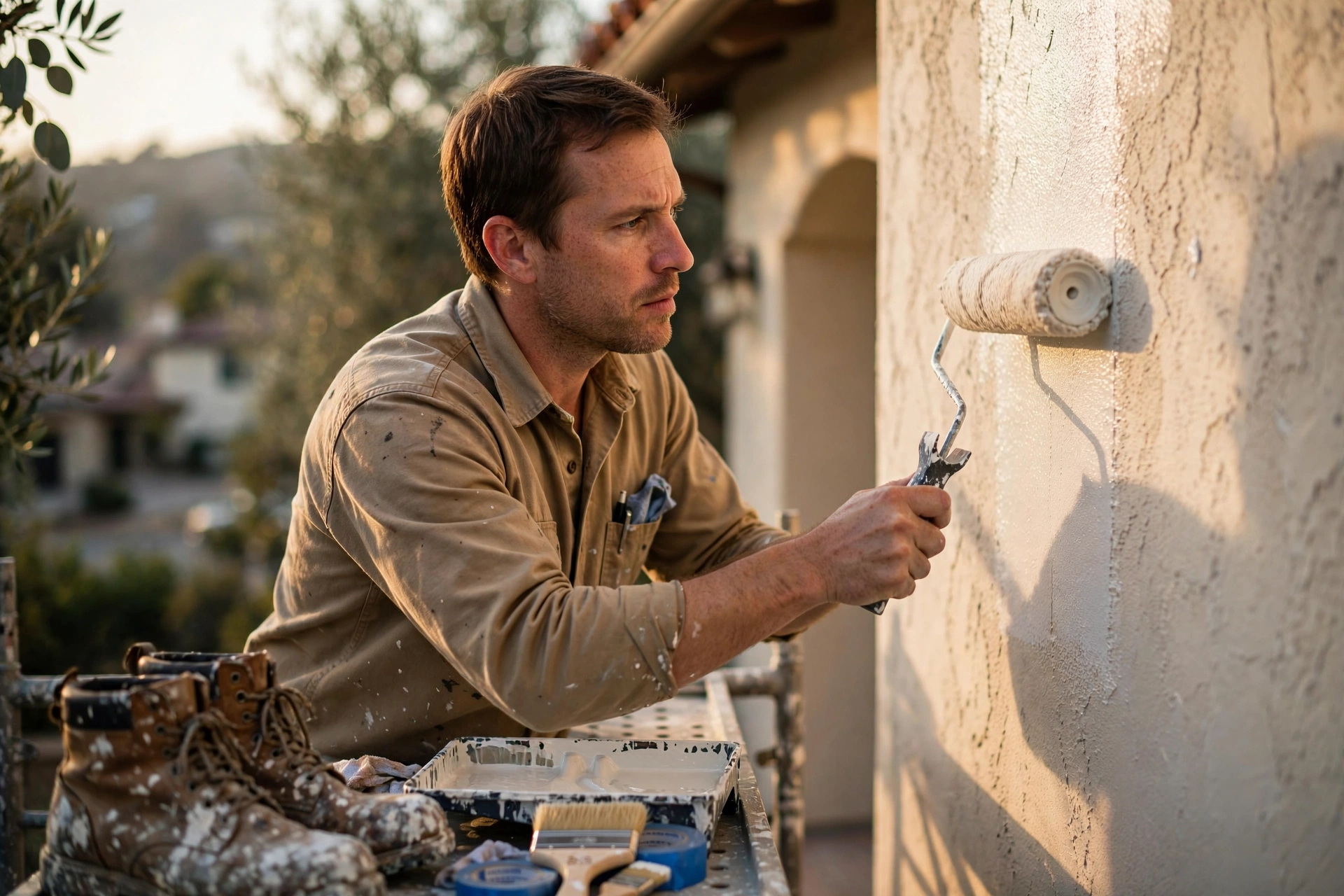
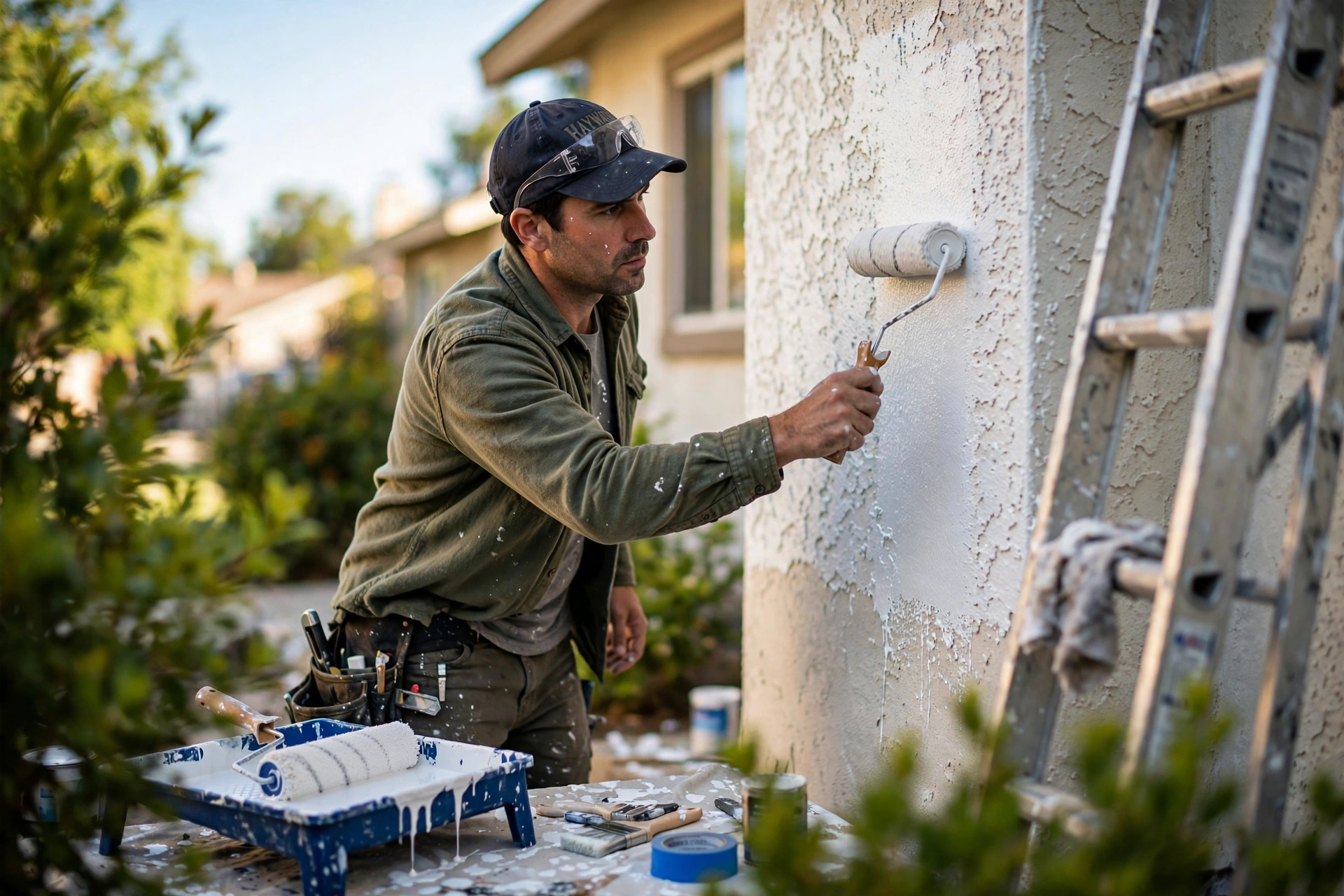
We apply two coats of premium paint. We prefer spray application for stucco to ensure full coverage of the texture, followed by "back-rolling" to push the paint into the pores of the material. This hybrid method is the gold standard in the industry and is the reason World Pro Painting can offer a 6-year guarantee.

Common Objections to Professional Stucco Painting
Many homeowners hesitate to hire a professional due to perceived costs or a belief that a "quick coat" of paint is sufficient. However, the data suggests the opposite.
Objection 1: "I can just do it myself with a roller and some store-bought paint."
Most people assume that painting stucco is like painting a bedroom wall. In practice, this is a mistake. Stucco is an alkaline, porous material. Standard paints often react chemically with the lime in the stucco, leading to "efflorescence" (white powdery deposits) or premature peeling. According to the Environmental Protection Agency (EPA), especially in older Hayward homes, you may also encounter lead-based paint. Attempting to sand or scrape this without professional containment and certification is a significant health risk and may be in disagreement with federal safety laws.
Objection 2: "The cost of professional elastomeric paint is too high."
It is true that elastomeric coatings are more expensive per gallon than standard acrylics. However, the ROI is found in the longevity. A standard paint job on stucco typically lasts 3-5 years before showing significant wear. A professional elastomeric system can last 10+ years. When you factor in the cost of labor for repeating a job every few years, the professional approach is actually the more economical choice over a decade.
Objection 3: "I'll just wait until the cracks get bigger before I fix them."
This is the most dangerous assumption a homeowner can make. A hairline crack is a symptom; water infiltration is the disease. By the time a crack is "big enough" to worry about, moisture has likely already reached the interior sheathing. Fixing a paint job is a matter of hundreds of dollars; fixing rotted wall studs and moldy drywall is a matter of thousands. Professional painting is a preventative shield that stops a minor maintenance issue from becoming a structural catastrophe.
Frequently Asked Questions
How often should I repaint my stucco home in Hayward, CA?
Generally, a professionally painted stucco home should be refreshed every 7 to 10 years. However, this depends heavily on the home's orientation and the quality of the materials used. Homes with significant south-facing exposure to the California sun will experience faster UV degradation of the paint binders. If you notice "chalking"—where a white powder comes off when you touch the wall—or if you see hairline cracks appearing, it is time for a professional inspection. Regular maintenance every decade prevents the need for costly full-stucco remediation.
What is the difference between acrylic paint and elastomeric coating for stucco?
Acrylic paint is a standard exterior coating that provides great color and basic weather protection. However, it is relatively rigid. Elastomeric coating is a thick, high-build material that remains flexible after it cures. It behaves like a rubber glove for your house, stretching to cover cracks as the building shifts. For the seismic activity common in the Bay Area, elastomeric is the superior choice because it prevents water from entering those shifting cracks. We recommend elastomeric for any home in Hayward that has a history of hairline cracking.
Do I need to worry about lead paint when painting my stucco?
If your home was built before 1978, there is a high probability that previous layers of paint contain lead. This is especially true for older residential areas in Hayward. Sanding or power-washing lead paint without the proper precautions can release toxic dust into the air and soil. At World Pro Painting, we follow the EPA's RRP (Renovation, Repair, and Painting) guidelines to ensure the safety of your family and the environment. We use specialized containment and HEPA filtration when dealing with lead-based substrates.
Why is my stucco paint peeling after only two years?
Peeling is almost always a result of poor surface preparation or a chemical mismatch. If the wall was not properly cleaned of "chalk" or if a non-masonry primer was used, the paint cannot bond to the stucco. Another common cause is "trapped moisture." If a non-breathable paint was applied over a damp wall, the moisture tries to escape as a gas, pushing the paint film away from the surface in a process called blistering. This is why we emphasize a 5-step prep process—to ensure the wall is dry and the bond is chemical, not just mechanical.
Which colors are best for stucco homes in the East Bay?
While personal preference varies, there is a strategic choice for the Bay Area. Lighter colors (whites, creams, light greys) reflect more UV radiation, which keeps the home cooler and prevents the paint from fading as quickly. Darker colors, while trendy, absorb more heat, which can actually cause the stucco to expand and contract more aggressively, potentially leading to more cracks over time. We suggest a balance: a light-colored main body with a darker, high-contrast trim for a modern, sophisticated look that resists the sun.
Final Thoughts on Stucco Painting in Hayward, CA
Maintaining a stucco home in the East Bay is a balancing act between aesthetics and structural preservation. The unique environmental stressors of Hayward—from the humidity of the bay to the intense inland sun—require more than just a coat of paint; they require a professional system. By prioritizing high-build elastomeric coatings and a rigorous five-step preparation process, you can transform your home's appearance while ensuring it remains waterproof and energy-efficient for years to come.
Whether you are preparing your home for sale or simply want to protect your investment, the quality of the contractor you choose is the most important variable. Don't settle for a "quick fix" that will peel in two years. Choose a licensed, bonded, and insured team that understands the local climate and the chemistry of masonry. If you are also considering other exterior updates, we recommend looking into Commercial Painting in Cabrillo Fremont, CA | Licensed Painters for a comparison of how we handle larger-scale professional surfaces.
Ready to protect your home with a finish that lasts? Contact World Pro Painting today for a professional assessment and a free on-site estimate. Visit worldpropainting.com to schedule your consultation and secure your 6-year guarantee.
Get 15% Off Exterior Painting This Month
Schedule your free estimate today and secure your spot in our calendar.
Bay Area Property Painting Prep & Architectural Color Guide
Get our complete 5-step preparation checklist and climate-appropriate Sherwin-Williams & Benjamin Moore color guide for Bay Area homes, HOAs, and commercial properties.