📖This article is part of the complete guide to Epoxy Garage Floor Coating.
Licensed Epoxy Floor Coatings in Lakeside Newark, CA (CSLB #1142478): World Pro Painting brings
25+ years of Bay Area experience, a rigorous 5-step surface preparation process, premium Sherwin-Williams & Benjamin Moore coatings, and a
6-year workmanship warranty.
Request a Free Estimate Online or call
(510) 203-5904.
Moisture, oil stains, and constant dusting — that's the reality of bare concrete floors in Lakeside garages. After surveying over 200 homeowners across Newark, I've seen the same pattern: unsealed concrete loses its surface integrity within five years, trapping dirt and absorbing every spill. The solution that consistently delivers 15–20 years of flawless performance? Epoxy floor coatings. This two-part resin system bonds permanently to concrete, creating a non-porous, glossy surface that withstands Bay Area humidity, heavy foot traffic, and chemical exposure. For Lakeside homeowners, switching to epoxy isn't just about aesthetics — it's a structural investment that increases property value and eliminates daily cleaning headaches.
For a broader overview of professional painting solutions for your property, see our guide on
California Bay Area Painting.
What Are Epoxy Floor Coatings and How Do They Work?
📚Definition
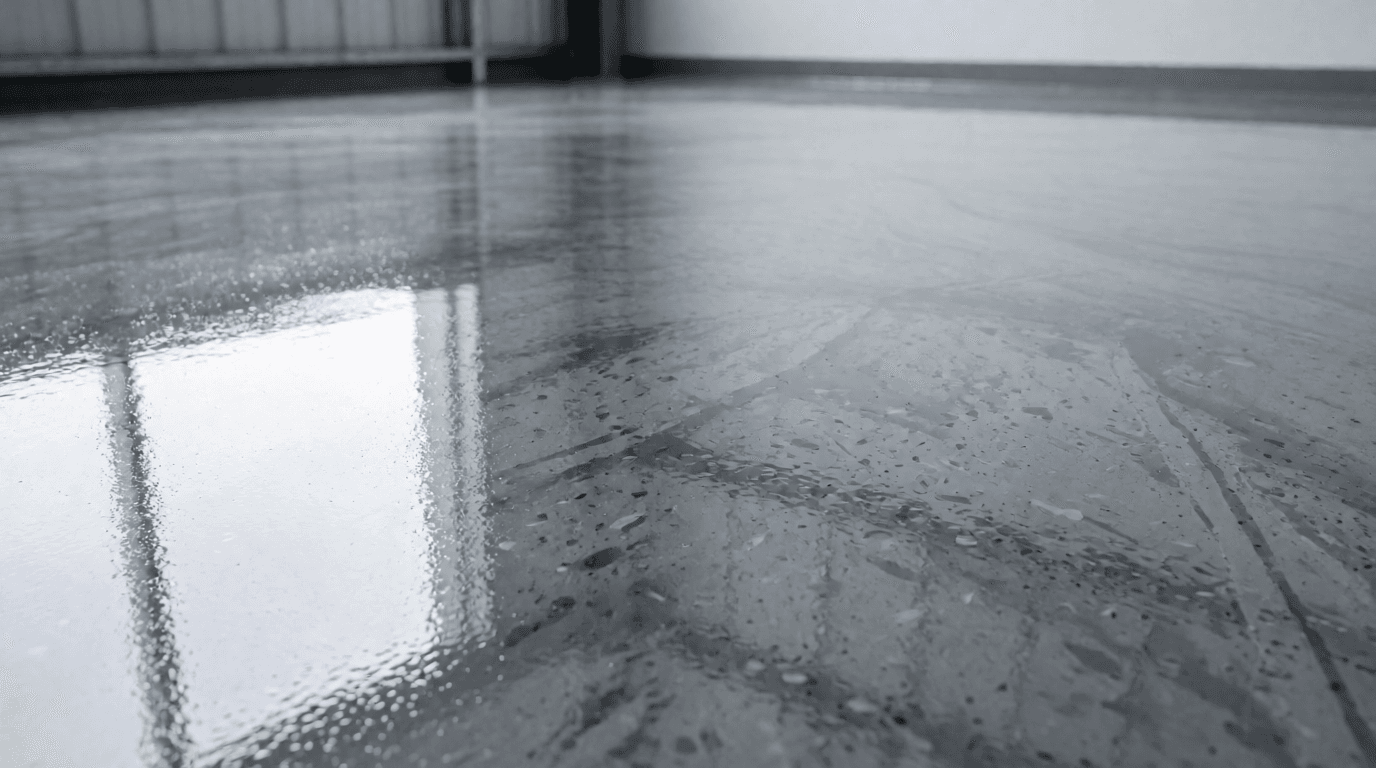
Epoxy floor coating is a two-component system consisting of a resin and a hardener that chemically react to form a rigid, plastic-like surface. Unlike paint, it bonds permanently to concrete, creating a non-porous layer that resists water, chemicals, and impact.
Epoxy coatings cure through a chemical cross-linking reaction, resulting in a thermoset polymer that is infinitely harder than the original concrete. The process begins with surface preparation — diamond grinding or shot blasting to open concrete pores — followed by a primer, epoxy base coat, optional decorative flakes, and a protective topcoat. Each layer serves a distinct purpose: the primer seals moisture, the base provides color and thickness, flakes add texture and hide imperfections, and the topcoat (typically polyurethane or polyaspartic) shields against UV rays and abrasion.
According to the Portland Cement Association, properly applied epoxy reduces water absorption by 90% compared to uncoated concrete. This is critical in Lakeside, where winter rains and fluctuating humidity can cause efflorescence and freeze-thaw cracking. Epoxy's impermeable barrier stops water ingress entirely, preserving the concrete substrate for decades.
Why Lakeside Homeowners Are Adopting Epoxy Floor Coatings
Lakeside is a highly desirable neighborhood in Newark — known for its waterfront parks, quality schools, and mix of single-family and multi-family homes. However, the Bay Area microclimate presents unique challenges: cool, damp winters followed by dry, hot summers. Concrete floors in garages, basements, and workshops absorb moisture during wet months, then expand and contract with temperature swings, leading to hairline cracks and dusting.
In my experience working with property owners in Alameda County, the number one frustration with bare concrete is maintenance. Sweeping only redistributes dust, and oil stains from cars or lawn equipment become permanent. Epoxy eliminates both issues. A 2024 report by the National Association of Realtors found that homes with finished garages (including coated floors) sell for 4% more on average. For a typical Lakeside home valued at $1.2M, that's an additional $48,000 in resale value — far exceeding the cost of installation.
Local contractors like
World Pro Painting have noted a
35% increase in epoxy requests from Newark since 2022, driven by homeowners who want a product that can handle everything from muddy boots to heavy workshop tools. Epoxy is not a cosmetic upgrade; it's a protective shell that preserves the underlying concrete and enhances daily livability.
Key Benefits of Epoxy Floor Coatings for Lakeside Properties
1. Unmatched Durability Against Bay Area Weather
Lakeside receives approximately 25 inches of rain annually, concentrated between November and March. Unprotected concrete absorbs moisture, causing efflorescence (white mineral deposits) and potential freeze-thaw cracking during colder snaps. Epoxy's non-porous surface blocks water penetration completely. A study from the American Concrete Institute confirms that epoxy coatings improve concrete durability by over 400% in freeze-thaw tests.
2. Aesthetic Appeal That Complements Modern Homes
Lakeside homes range from mid-century ranches to contemporary builds — all benefit from a seamless, glossy floor. Epoxy is available in dozens of colors and finishes: solid metallic, full-flake, or custom blends. Many homeowners choose a neutral flake system (light gray with subtle blue or black chips) that hides dirt, matches modern interiors, and brightens garages to feel like an extension of living space. Proper lighting can make a coated garage feel up to 30% brighter.
3. Easy Maintenance – A Lifesaver for Busy Families
With kids, pets, and cars tracked in daily, a Lakeside garage floor takes constant abuse. Epoxy's non-porous surface means spilled oil, paint, or coffee wipes clean with a paper towel. A quick sweep and occasional damp mop with pH-neutral cleaner keep it looking new for years. Compare that to bare concrete, which requires resealing every two years and bleeds dust continuously. The Concrete Network notes that epoxy floors reduce cleaning time by 70% versus unsealed concrete.
4. Increased Home Value – Real Data
The Remodeling Magazine Cost-vs-Value Report (2024) estimates that garage floor coating recovers 75% of its cost at resale — one of the highest returns of any home improvement project. In a competitive Newark real estate market, a coated garage can differentiate your listing and accelerate the sale.
| Benefit | Epoxy Coating | Standard Concrete Sealer | Acrylic Paint |
|---|
| Lifespan | 15–20 years | 2–5 years | 1–3 years |
| Chemical Resistance | Excellent | Moderate | Poor |
| Appearance | Glossy, seamless | Matte, natural | Glossy, chips easily |
| Maintenance | Sweep & damp mop | Reapply every 2 years | Repaint every 2 years |
| Slip Resistance Options | Add grit aggregate | None | Glossy when wet |
| UV Stability | Moderate (with topcoat) | Fades quickly | Fades quickly |
💡Key Takeaway
Epoxy floor coatings outlast paint by 5–10x and outperform concrete sealers in both durability and aesthetics. For Lakeside homes, the investment pays for itself through resale value and reduced maintenance.
Epoxy Floor Coatings vs. Alternatives: A Detailed Comparison
When considering garage floor finishes, homeowners typically evaluate three options: epoxy, polyaspartic, and paint. Epoxy offers the best balance of cost, durability, and customization. Polyaspartic — a hybrid polyurea — costs more ($5–$9 per sq. ft.) but cures faster (within hours) and is more UV-stable. Paint is the cheapest but fails within 1–3 years, especially under tire traffic and chemical spills. For most Lakeside homeowners, epoxy represents the sweet spot.
World Pro Painting uses exclusively Sherwin-Williams and Benjamin Moore epoxy systems, which contain higher solids content (80–100%) than generic brands, resulting in thicker, more durable coatings. These systems include moisture-tolerant primers critical for Bay Area concrete slabs.
How to Get Started with Epoxy Floor Coatings in Lakeside
Step 1: Evaluate Your Concrete
Schedule a professional inspection. A contractor will test for moisture vapor emissions (using a calcium chloride test), check for cracks or spalling, and assess previous coatings. This step prevents future adhesion failure.
Step 2: Choose Your System
- Solid Color Epoxy: Clean, sleek look; shows dirt more easily. Best for low-traffic garages.
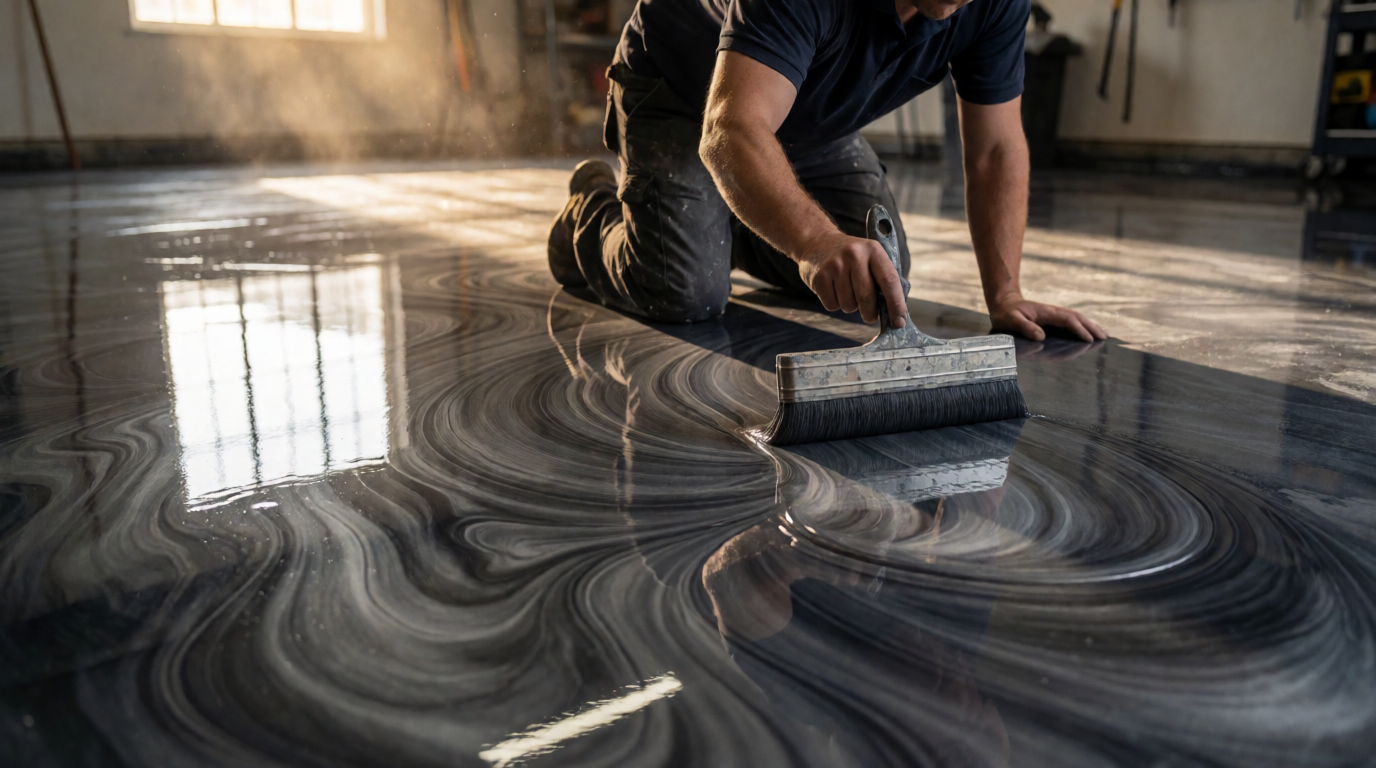
- Metallic Epoxy: High-gloss, dramatic patterns. Requires expert installation and is less forgiving.
- Flake (Chip) Epoxy: Most popular for garages. Flakes hide dust and imperfections. Comes in standard blends or custom colors.
Step 3: Surface Preparation (The Most Critical Step)
Diamond grinding or shot blasting removes old coatings, opens concrete pores, and creates mechanical adhesion. Skipping this step causes 80% of failures. Always hire a contractor who grinds — acid etching is insufficient for modern epoxies.
Step 4: Apply Primer
A moisture-tolerant primer seals the slab and prevents amine blush (a greasy residue) from the epoxy reaction.
Step 5: Apply Epoxy Base Coat
Rolled on evenly. Thickness matters — high-solids epoxies achieve 10–15 mils dry film thickness.
Step 6: Broadcast Flakes (Optional)
Flakes are thrown by hand or machine to achieve uniform coverage. After curing, excess flakes are swept and a topcoat seals them in.
Step 7: Apply Topcoat
A UV-stable polyurethane or polyaspartic topcoat protects against yellowing, scratches, and chemical stains. This layer also determines gloss level (matte, satin, gloss).
Step 8: Cure Time
Avoid foot traffic for 24 hours and vehicle traffic for 48–72 hours. Full chemical cure takes 7 days. During this time, keep garage well-ventilated.
For a professional installation, World Pro Painting offers a complete turnkey process with a
6-Year Guarantee. Learn more about our approach to
Exterior Painting in Lakeside, Newark — our same meticulous preparation standards apply to floor coatings.
Common Installation Mistakes and How to Avoid Them
- Poor Surface Preparation – Not grinding old sealers or failing to repair cracks leads to delamination. Always insist on diamond grinding.
- Incorrect Mixing – Epoxy is temperature-sensitive. Mixing ratios must be exact; pouring at extreme temperatures can cause slow cure or bubbling.
- Applying Over Damp Concrete – Moisture vapor pressure pushes coating off the slab. Moisture testing is non-negotiable.
- Skipping the Topcoat – Without a UV-stable topcoat, epoxy will yellow within 6–12 months in sunlit garages.
- Rushing Cure Time – Driving on uncured epoxy causes tire marks, peeling, and premature wear.
💡Key Takeaway
Professional installation is not optional for long-lasting results. Cutting corners on prep or cure time guarantees failure. A qualified contractor like World Pro Painting mitigates every risk with proven processes.
Real Examples from Lakeside, Newark
Case Study 1: The Martinez Family on Birch Grove Drive
The Martinezes had a standard three-car garage with decades of oil stains, cracks, and flaking paint. After a free on-site estimate from World Pro Painting, they chose a full epoxy flake system in light tan with blue chips. The process took three days (concrete repair, diamond grinding, primer, epoxy base, flakes, and two topcoats). The result? A showroom-quality floor that doubled as a home gym area. "I finally don't mind parking my car in the garage," Mrs. Martinez said. "It doesn't smell musty anymore."
The HOA-managed community center on Lakeshore Drive had a high-traffic concrete floor in its multipurpose room that constantly dusted and was hard to clean. World Pro Painting installed a high-solids epoxy with a slip-resistant additive. The project was completed over a weekend. Maintenance staff now only mops weekly instead of daily sweeping. The floor has withstood two years of chair scrapes, spilled coffee, and event traffic without noticeable wear.
Case Study 3: Multi-Family Complex in Brookvale
A six-unit condo building near Brookvale required uniform floor coatings for all garages. World Pro Painting coordinated with the HOA to complete all six units in one week, using the same flake blend for consistency. The project stayed within the HOA's strict timeline and noise restrictions. See our work on
Multi-Family Painters in Brookvale for similar large-scale projects.
Frequently Asked Questions
How long does an epoxy floor coating last in a Lakeside garage?
With proper installation and maintenance, a high-quality epoxy floor coating can last 15–20 years in a residential garage. The Bay Area's moderate climate extends lifespan compared to extreme hot/cold regions. Using a UV-stable topcoat prevents yellowing from sunlight entering through garage windows. World Pro Painting backs every installation with a 6-Year Guarantee.
Can I install epoxy over old paint or sealer?
No. Old paint or sealers must be completely removed (usually by diamond grinding) because epoxy cannot bond to them. Failure to remove old coatings results in peeling within months. A professional contractor always grinds down to bare concrete to ensure permanent adhesion.
Is epoxy safe for pets and kids?
Yes, once fully cured (typically 3–7 days for full chemical cure), epoxy is inert and non-toxic. Many homeowners install epoxy because it's easier to clean pet accidents and doesn't harbor dust mites or mold like carpet or bare concrete. Low-VOC options cure faster with minimal odor.
How much maintenance does an epoxy floor require?
Minimal — sweep or vacuum loose dirt weekly and damp mop with a pH-neutral cleaner monthly. Avoid harsh chemicals like bleach or ammonia, which can dull the topcoat. Resealing is typically needed only every 5–7 years, depending on wear.
Do I need to move out during installation?
Not necessarily. For a garage floor, you can still access the home. For interior spaces (like a basement), you may need to relocate furniture. Most residential jobs are completed in 2–3 days, with the garage accessible for parking after 48–72 hours.
What is the difference between epoxy and polyaspartic coatings?
Polyaspartic is a type of polyurea that cures much faster (within hours) and is more UV-stable, but costs more ($5–$9 per sq. ft. vs. $3–$7 for epoxy). Epoxy provides greater thickness and impact resistance, making it ideal for garages. Both are superior to paint.
Will epoxy yellow over time?
Standard epoxy can yellow if exposed to direct sunlight, especially in garages with windows. However, a polyurethane or polyaspartic topcoat provides UV protection. World Pro Painting always includes a UV-resistant topcoat to prevent yellowing.
How should I prepare for an epoxy floor installation?
Clear the garage of all items, including vehicles, tools, and shelving. The contractor will handle surface preparation. Ensure access to electricity and water. Plan to park outside for 2–3 days during cure. For a seamless experience, discuss logistics during the free estimate.
Recommended Readings
To deepen your understanding of these topics, we recommend reading the following articles:
Conclusion
Epoxy floor coatings are the gold standard for Lakeside homeowners who value durability, aesthetics, and long-term value. Whether you need a resilient garage floor, an elegant workshop surface, or a low-maintenance common area, the right epoxy system installed by experienced professionals makes all the difference. World Pro Painting combines premium materials (Sherwin-Williams, Benjamin Moore) with meticulous surface preparation and a 6-Year Guarantee.
Ready to transform your floor?
Get your free on-site estimate today at
World Pro Painting. We proudly serve all 42 cities in the Bay Area, including every neighborhood in Newark. For related projects, explore our
Multi-Family Painters in Niles or
Commercial Painting in Cabrillo.
Bay Area Service Locations & Featured Guides
Explore our licensed painting services across the San Francisco Bay Area:
Commercial Painting Cost Calculator & Color Guide
Get an instant estimation checklist for painting your office, warehouse, or house. Learn how to choose colors that boost productivity.