
📖This article is part of the complete guide to Stucco Painting.
Hairline cracks and chalking on a home's exterior aren't just cosmetic issues; in the East Bay, they are invitations for moisture intrusion. For homeowners seeking professional stucco painting in Pleasant Hill, CA, the goal is to find a licensed contractor who understands that stucco is a breathable membrane, not just a wall. The direct answer for anyone needing this service is that a high-quality stucco paint job requires a rigorous five-step prep process—power washing, scraping, sanding, caulking, and priming—to ensure the paint bonds to the masonry and prevents peeling in the varying Pleasant Hill climate.
In my experience working with residential properties across Contra Costa County, I've seen too many homeowners opt for the cheapest bid only to have their walls peel within two years. The pattern I see consistently is a failure to address the alkalinity of the stucco before applying the topcoat. At World Pro Painting, we treat the substrate first. Whether you are in the hills near Mt. Diablo or closer to the downtown corridor, your home's exterior faces specific UV exposure and thermal expansion that demands professional-grade elastomeric or acrylic coatings. For those planning a larger project, our California Bay Area Painting Project Guide provides a detailed breakdown of timelines and expectations for local residents.
Why Pleasant Hill Homeowners are Prioritizing Stucco Restoration
Stucco is ubiquitous in Pleasant Hill because of its energy efficiency and durability, but it is not maintenance-free. Many homeowners are now moving toward professional restoration because the cost of ignoring a crack is significantly higher than the cost of a timely paint job. When moisture penetrates the stucco shell, it can lead to wood rot in the framing and mold growth within the wall cavity, which often requires expensive structural repairs.
According to the Painting Contractors Association (PCA), proper coating systems on masonry surfaces can extend the life of the exterior substrate by decades by preventing water infiltration. In the Pleasant Hill area, we see a specific phenomenon where the temperature swing between the hot inland afternoons and the cooler evenings causes the stucco to expand and contract. This "thermal shock" leads to the micro-cracks that allow rain to seep in.
Furthermore, the aesthetic standards in Pleasant Hill neighborhoods are high. A faded, chalky exterior doesn't just look old; it lowers the curb appeal and market value. I've noticed that homes with freshly painted, well-maintained stucco typically sell faster and for a premium compared to those with visible weathering. This is why we emphasize the use of high-build acrylics that can bridge these small gaps. If you are comparing options for your home, you might also look at our specialized exterior painting in Lakeside Newark, CA to see how we handle similar coastal-adjacent climates.
Key Benefits of Professional Stucco Painting for Local Residences
Investing in professional stucco painting is less about the color change and more about the protective seal. When handled by a licensed CSLB contractor, the process transforms the exterior of the home into a waterproof shield.
Superior Moisture Protection
Stucco is naturally porous. Without a high-quality paint seal, it acts like a sponge. Professional-grade paints, such as those from Sherwin-Williams, are engineered to be "breathable," meaning they allow interior moisture to escape while preventing exterior rain from entering. This prevents the dreaded "bubbling" effect often seen in DIY projects where a non-breathable paint was used, trapping moisture inside the wall.
Increased Thermal Efficiency
Modern elastomeric coatings reflect a higher percentage of UV rays. By choosing a lighter, heat-reflective palette, homeowners in Pleasant Hill can actually reduce their cooling costs during the scorching July and August months. This is a critical component of home improvement in the Bay Area, where energy costs are among the highest in the nation.
Long-Term Structural Preservation
When we apply a professional coating, we aren't just painting; we are sealing. By filling cracks with high-grade elastomeric sealant and then painting over them, we stop the cycle of erosion. This preserves the integrity of the lath and plaster, preventing the need for a full stucco replacement, which can cost ten times more than a professional paint job.
📚
Definition
Elastomeric Paint is a high-build coating that can stretch and contract with the movement of the building, effectively "bridging" hairline cracks to keep water out.
Comparison of Coating Approaches
| Feature | Traditional DIY Painting | Cheap Contractor Approach | World Pro Painting Standard |
|---|---|---|---|
| Surface Prep | Simple rinse with hose | Quick pressure wash | 5-Step Deep Clean & Seal |
| Paint Type | Generic Latex | Low-grade Acrylic | Premium Elastomeric/Acrylic |
| Crack Repair | Ignore or use caulk | Cheap filler | Professional Elastomeric Patching |
| Durability | 2-3 Years | 4-5 Years | 6-Year Guarantee |
| Warranty | None | Verbal "Guarantee" | Written Licensed Bonded Warranty |
💡
Key Takeaway
The primary value of professional stucco painting is the prevention of structural water damage, which outweighs the initial cost through long-term equity preservation.

Real-World Stucco Transformations in Pleasant Hill
To illustrate the impact of professional intervention, let's look at two recent projects we managed in the region.
Case Study 1: The "Chalking" Victorian-Style Stucco Home
We encountered a home in a quiet Pleasant Hill neighborhood where the previous paint job had completely oxidized, leaving a white, powdery residue (chalking) across the south-facing walls. The homeowner had tried to paint over it themselves, but the new paint began peeling in sheets within six months.
The Solution: We stripped the failing layers, performed a chemical wash to remove the oxidation, and applied a specialized primer designed for masonry. We then used a premium Benjamin Moore exterior coating.
The Result: The home's curb appeal increased instantly, and the homeowner reported a noticeable decrease in interior wall humidity. By focusing on the substrate rather than just the color, we extended the life of the finish by an estimated 10 years.
Case Study 2: The Multi-Family Complex with Severe Cracking
A local property manager brought us in for a multi-unit complex where the stucco was showing significant vertical "spiderweb" cracks. These are common in the Bay Area due to soil shifting and thermal expansion.
The Solution: We utilized a high-build elastomeric system. Every single crack was widened slightly to allow the sealant to penetrate, filled with flexible compound, and then coated. This process is similar to the high-standard work we perform for multi-family painters in Weibel Fremont, CA.
The Result: The complex went from looking dilapidated to like a new construction. The property manager was able to increase the rental value of the units by approximately 8% based on the improved exterior appearance and the promise of a leak-free interior.
How to Get Started with Your Stucco Project in Pleasant Hill
Getting your stucco painted correctly requires a strategic approach. You shouldn't just pick a color and call a guy with a ladder. To ensure the longevity of your investment, follow this professional roadmap.
Step 1: The Comprehensive Inspection
Before a single drop of paint is applied, the walls must be inspected for "hollow" spots. By tapping the stucco, a professional can identify areas where the stucco has detached from the lath. If we paint over a detached section, the paint will eventually crack because the underlying structure is unstable. We ensure these areas are addressed first.
Step 2: Surface Decontamination
Pressure washing is non-negotiable. However, the pressure must be calibrated. Too much pressure can blast holes in old stucco; too little leaves behind mold spores and salt deposits. We use professional-grade equipment to strip away the grime without damaging the masonry. This is the same attention to detail we bring to exterior painting in Birch Grove Newark, CA.
Step 3: Sealant and Patching
We don't use standard interior caulk. We use specialized masonry sealants that can withstand the California sun. Every crack is filled, and every gap around windows and doors is sealed to prevent water from entering the framing. This is where most "budget" painters cut corners, but it's the most important step for a 2026-ready home.
Step 4: Priming for Alkalinity
Stucco is naturally alkaline. If you apply paint directly to fresh or damp stucco, the alkalinity can break down the paint's chemical bonds, leading to premature peeling. We apply a masonry primer that neutralizes the pH of the surface, creating a perfect anchor for the topcoat.
Step 5: Precision Coating Application
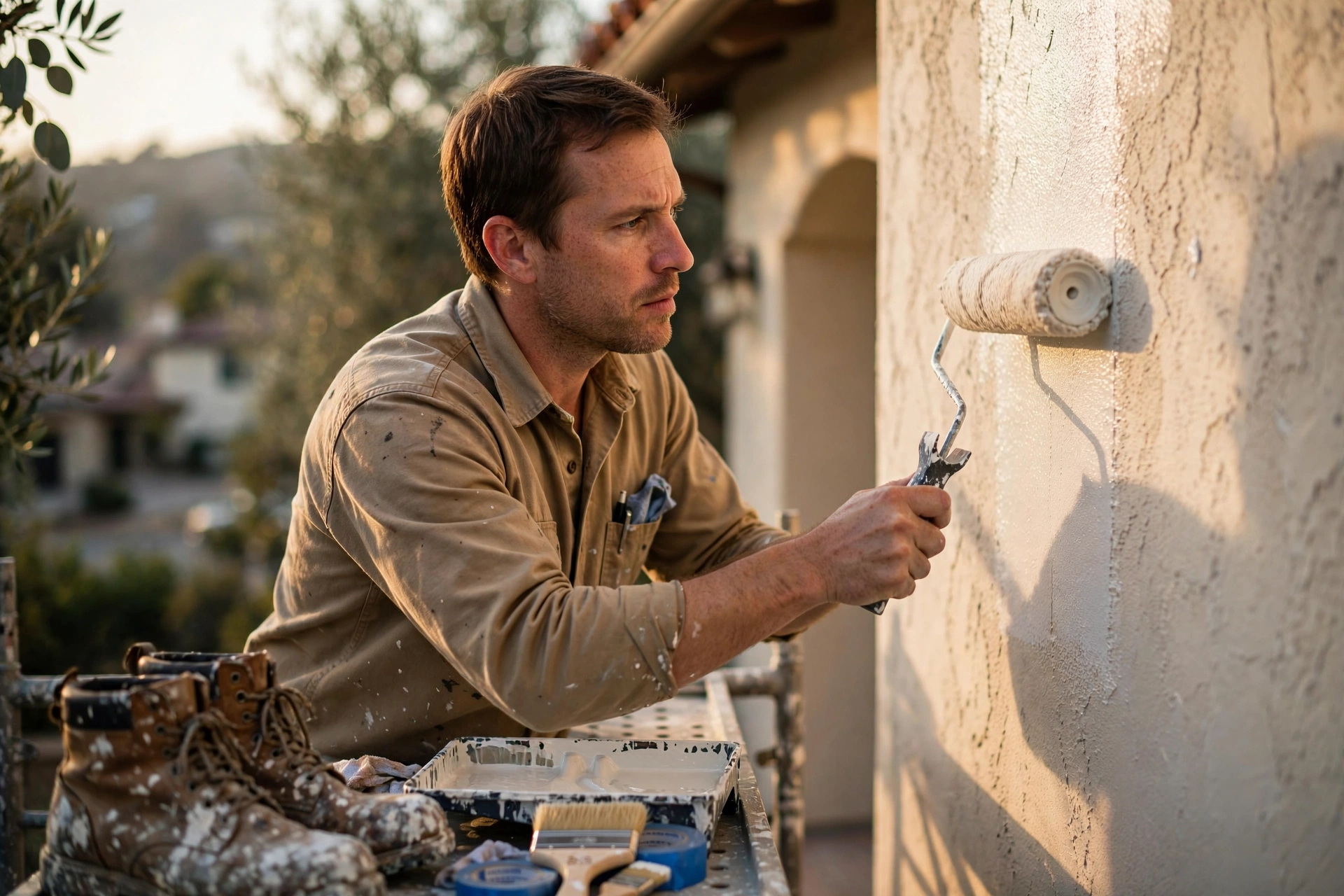
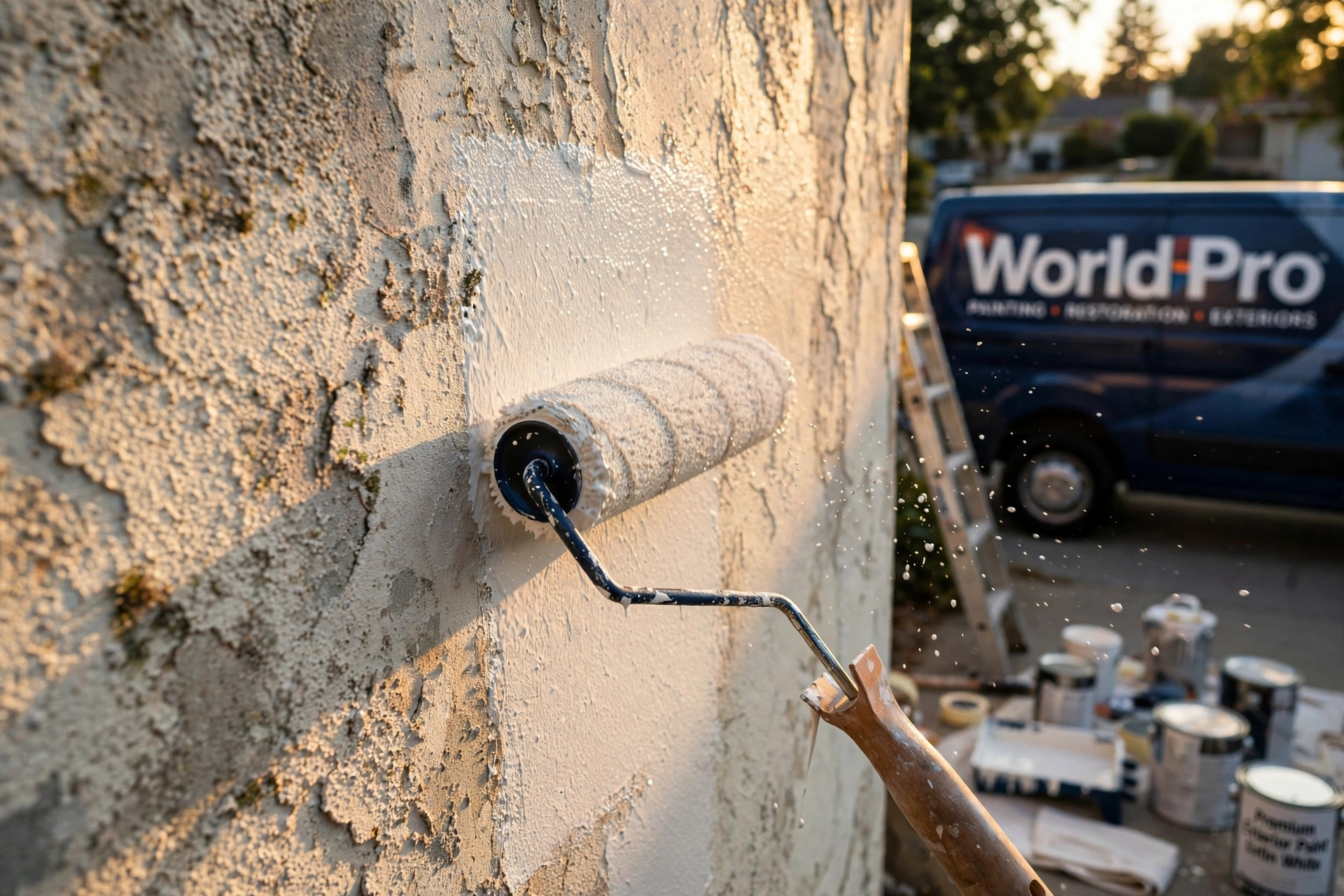
Depending on the texture of your stucco—whether it's a smooth finish or a heavy "popcorn" texture—the application method varies. We use a combination of professional spraying for uniform coverage and hand-rolling (back-rolling) to push the paint deep into the pores of the stucco. For those managing larger estates, we suggest reviewing our Mission San Jose Fremont multi-family painting standards for similar quality benchmarks.

Common Objections to Professional Stucco Painting
Many homeowners hesitate to invest in a professional service due to a few common misconceptions. Here is the reality backed by industry data.
"It's Too Expensive Compared to a Handyman"
Most people assume that a handyman with a brush is enough. However, the data shows that a low-cost, improperly prepared paint job typically fails within 36 months in the Bay Area climate. According to the California Contractors State License Board (CSLB), hiring unlicensed contractors for specialized work like masonry coating often leads to disputes over warranty and quality. A professional job costs more upfront but lasts three times longer, meaning your cost-per-year is actually lower.
"I'll Just Paint It Myself to Save Money"
DIY-ing stucco is a recipe for disaster because of the equipment required. To get the paint into the deep crevices of a stucco texture, you need high-pressure sprayers and the knowledge of how to "back-roll." Without this, the paint sits on the surface like a skin and peels off in large flakes. In my experience, we spend more time fixing bad DIY jobs than we do doing original installations.
"My Stucco Looks Fine, Why Paint Now?"
By the time you see a crack or a fade, the damage has already started. Stucco is a protective shell; once it begins to chalk or crack, it is no longer doing its job. Waiting another two years can be the difference between a simple paint job and a $20,000 structural repair. Preventive maintenance is the only way to maintain home equity in competitive markets like Pleasant Hill.
Frequently Asked Questions
How long does a professional stucco paint job last in Pleasant Hill, CA?
When performed by a licensed contractor using premium acrylic or elastomeric coatings, a stucco paint job should last between 7 to 10 years before requiring a refresh. However, factors such as direct sun exposure on south-facing walls or proximity to salt air can affect this timeline. At World Pro Painting, we provide a 6-year guarantee because we trust our 5-step preparation process. This ensures that the paint isn't just sitting on the surface but is chemically bonded to the substrate, resisting the peeling and fading common in cheaper applications.
Do I need a special kind of paint for stucco walls?
Yes, you absolutely do. Stucco requires specific "masonry-grade" paints. Standard latex paints often lack the flexibility and breathability needed for cement-based walls. Using the wrong paint can trap moisture, leading to bubbling and peeling. We typically recommend elastomeric coatings for homes with many hairline cracks and high-quality acrylics for smoother finishes. These products are specifically formulated to handle the alkalinity of the concrete and the extreme UV exposure found in the East Bay, ensuring the color remains vibrant and the seal remains airtight.
How do you handle lead-based paint on older Pleasant Hill homes?
For homes built before 1978, there is a high probability of lead-based paint layers. We strictly adhere to the EPA's RRP Rule regarding lead-safe work practices. This means we do not perform dry sanding or scraping that releases lead dust into the air. Instead, we use wet-scraping techniques and HEPA-filtered vacuum systems to ensure the safety of your family and the environment. Never hire a contractor who claims they can "just sand it off" without a lead-safe certification, as this puts your entire household at risk.
What is the best time of year to paint stucco in the Bay Area?
While we operate year-round, the ideal window for stucco painting in Pleasant Hill is from late spring to early autumn. The key is the "cure time." If it's too humid or rainy, the paint won't bond correctly. If it's excessively hot (over 90°F), the paint can dry too quickly, leading to lap marks and poor adhesion. We monitor the local microclimates daily to schedule the application during the perfect temperature window, ensuring the paint cures slowly and evenly for maximum durability and color consistency.
Can you paint over existing stucco cracks, or must they be replaced?
Most hairline cracks do not require a full stucco replacement; they can be expertly repaired through a process called "bridging." We use an elastomeric sealant that fills the crack and remains flexible as the house settles. If the crack is wider than 1/4 inch or if the stucco is actually falling off the wall (delaminating), a patch may be necessary. We assess every inch of the wall to determine which cracks need a simple seal and which need a professional masonry patch before we begin the painting phase.
Final Thoughts on Stucco Painting in Pleasant Hill, CA
Your home is likely your largest financial asset, and the exterior is its first line of defense. Neglecting your stucco painting in Pleasant Hill, CA, is a gamble with your home's structural integrity. From the moisture-trapping effects of poor paint to the long-term damage of ignored cracks, the risks are far too high to trust with an amateur. By choosing a licensed, bonded, and insured professional, you aren't just buying a new color—you are buying peace of mind and a 6-year guarantee on your investment.
Whether you are updating a single-family home or managing a large complex, the precision of the preparation is what defines the result. Don't let your home's value fade along with its paint. For an expert assessment and a detailed plan to protect your property, contact the team at World Pro Painting today for a free on-site estimate. We serve 42+ cities across the Bay Area, bringing industrial-grade quality to every residential project.
Get 15% Off Exterior Painting This Month
Schedule your free estimate today and secure your spot in our calendar.
Bay Area Property Painting Prep & Architectural Color Guide
Get our complete 5-step preparation checklist and climate-appropriate Sherwin-Williams & Benjamin Moore color guide for Bay Area homes, HOAs, and commercial properties.