
📖This article is part of the complete guide to Stucco Painting.
Cracks in a stucco exterior are more than just an eyesore; in the East Bay, they are an invitation for moisture intrusion and pest infestation. For homeowners seeking professional stucco painting walnut creek, ca, the solution involves more than a simple coat of color. It requires a specialized process of surface stabilization, high-build elastomeric coatings, and precision sealing to combat the extreme temperature swings typical of Contra Costa County. At World Pro Painting, we provide a licensed, bonded, and insured approach that transforms fragile facades into durable, weather-resistant barriers that increase property value and structural longevity.
In my experience working with luxury estates in the Walnut Creek hills, the most common failure point isn't the paint itself, but the preparation. Many homeowners assume any exterior paint works on stucco, but applying a standard acrylic to a porous, cracking surface often leads to peeling within 24 months. This is why we prioritize a 5-step preparation process—power washing, scraping, sanding, caulking, and priming—to ensure the bond is permanent. For those planning a larger renovation, reviewing our Hiring California Bay Area Painting: Scope, Timeline & Bay Area Project Guide can help align your expectations with local industry standards.

Why Walnut Creek Homeowners Are Prioritizing Professional Stucco Restoration
Walnut Creek experiences a unique microclimate where inland heat peaks in the summer, followed by damp, cool winters. This thermal expansion and contraction cause stucco—a cement-based plaster—to develop hairline fractures over time. When these cracks are left untreated, rainwater penetrates the building envelope, leading to wood rot in the framing and potential mold growth. According to the Painting Contractors Association (PCA), proper coating applications can reduce moisture penetration by up to 90%, significantly extending the life of the substrate.
Beyond protection, there is a strong aesthetic shift happening in the region. The traditional "beige" and "sand" palettes of the early 2000s are being replaced by modern, high-contrast tones—deep charcoals, warm whites, and sage greens—that complement the lush landscapes of the East Bay. Homeowners are discovering that professional stucco painting allows them to modernize their home's curb appeal without the astronomical cost of a full facade replacement.
Furthermore, regulatory compliance is a growing concern. The Bay Area Air Quality Management District (BAAQMD) has strict rules regarding Volatile Organic Compounds (VOCs). Using a licensed contractor ensures that the paints used are low-VOC and compliant with California environmental laws, preventing fines and ensuring a healthier living environment for the family. Many of our clients who have expanded their properties also look into Exterior Painting in Lakeside Newark, CA | Licensed Painters to maintain consistency across multiple regional assets.
Key Benefits of Professional Stucco Coating for Your Home
Investing in a high-quality stucco coating is not merely a cosmetic upgrade; it is a strategic maintenance move. Because stucco is inherently porous, it acts like a sponge if not sealed correctly. Professional painting fills these pores and creates a flexible skin that moves with the house.
Enhanced Water Resistance and Waterproofing
The primary benefit is the creation of a water-repellent barrier. By using elastomeric paints—which are thicker and more flexible than standard latex—we create a membrane that bridges small cracks. This is vital in Walnut Creek, where sudden winter storms can drive rain into the walls. A well-painted stucco exterior prevents the "spalling" effect, where water freezes inside the stucco and pops the surface off.
Superior Thermal Insulation
Modern coatings reflect a higher percentage of UV rays, which is essential when summer temperatures in Contra Costa County frequently exceed 95 degrees. By choosing a light-reflecting paint, homeowners can reduce the heat transfer into the home, effectively lowering cooling costs. According to research by Sherwin-Williams, the use of reflective exterior coatings can measurably decrease surface temperatures, reducing the load on HVAC systems during peak summer months.
Significant Increase in Curb Appeal and Property Value
Real estate trends in the Bay Area show that homes with refreshed, modern exteriors sell faster and for a premium. A fresh coat of professional-grade paint removes the "dated" look of weathered stucco and signals to potential buyers that the home has been meticulously maintained. This is often the most cost-effective way to increase the appraisal value of a property before listing.
💡
Key Takeaway
The most critical benefit of professional stucco painting is the shift from a porous, vulnerable surface to a flexible, waterproof membrane that prevents structural decay and reduces energy costs.
Comparison of Exterior Surface Treatments
| Feature | Traditional DIY Paint | Cheap Contractor Approach | World Pro Painting Approach |
|---|---|---|---|
| Preparation | Minimal (Quick Wash) | Basic Scraping | 5-Step Precision Prep |
| Material | Standard Acrylic | Low-Grade Latex | Premium Elastomeric Coatings |
| Crack Fill | None/Caulk Only | Basic Filler | Structural Sealing & Priming |
| Durability | 2–3 Years | 3–5 Years | 6-Year Guarantee |
| Finish | Uneven/Streaky | Basic Coverage | Professional Color Specialist Finish |

Real-World Examples of Stucco Transformations in Walnut Creek
To understand the impact of professional stucco painting, we must look at the data-driven results from our recent projects. I have seen countless homeowners attempt to "patch and paint" their own walls, only to have the paint peel in sheets after one season of intense Bay Area sun. Here are two distinct case studies.
Case Study 1: The Modern Hillside Estate
A 3,500-square-foot home in the Walnut Creek hills suffered from severe UV degradation and vertical cracking near the roofline. The original paint had oxidized, leaving a chalky residue that washed away during every rain. After a full surface decontamination and the application of a three-coat elastomeric system in "Modern Greige," the property saw a visible transformation. The homeowner reported a 12% decrease in interior wall humidity during the rainy season, and the property's aesthetic value increased significantly, matching the high-end nature of the neighborhood.
Case Study 2: The Traditional Suburban Ranch
In a residential neighborhood near downtown Walnut Creek, a 1970s ranch-style home had peeling, lead-based paint beneath layers of outdated beige. This required specialized handling. Following the EPA's Lead-Based Paint RRP guidelines, we safely removed the hazardous layers and applied a high-performance coating. The result was a crisp, white-and-charcoal contrast that made the house stand out. The project was completed in 7 business days, and the homeowner noted that the home felt "tighter" and better insulated from the wind.
How to Get Started with Your Stucco Painting Project
Getting started with a stucco project requires a shift in mindset: stop thinking about "paint" and start thinking about "coatings." Stucco is a living material that breathes and shifts. If you trap moisture inside by using the wrong product, you will cause the stucco to rot from the inside out.
Step 1: Comprehensive Surface Analysis
The process begins with a professional inspection. We check for "hollow" spots where the stucco has detached from the lath (the metal mesh). We also identify the type of stucco—whether it is traditional three-coat or modern synthetic EIFS (Exterior Insulation and Finish Systems). For those in multi-family complexes, we often recommend coordinating with neighbors, similar to how we handle House Painters in Weibel Fremont, CA | World Pro Painting for larger residential clusters.
Step 2: The 5-Step Preparation Phase
This is where World Pro Painting separates itself from the competition. We follow a strict protocol:
- Power Washing: Removing all dirt, salt, and loose paint using industrial-grade cleaners.
- Scraping & Sanding: Eliminating any flaking material to create a smooth bonding surface.
- Structural Caulking: Using high-stretch sealants to fill cracks larger than 1/16th of an inch.
- Priming: Applying a masonry-specific primer that penetrates the stucco pores.
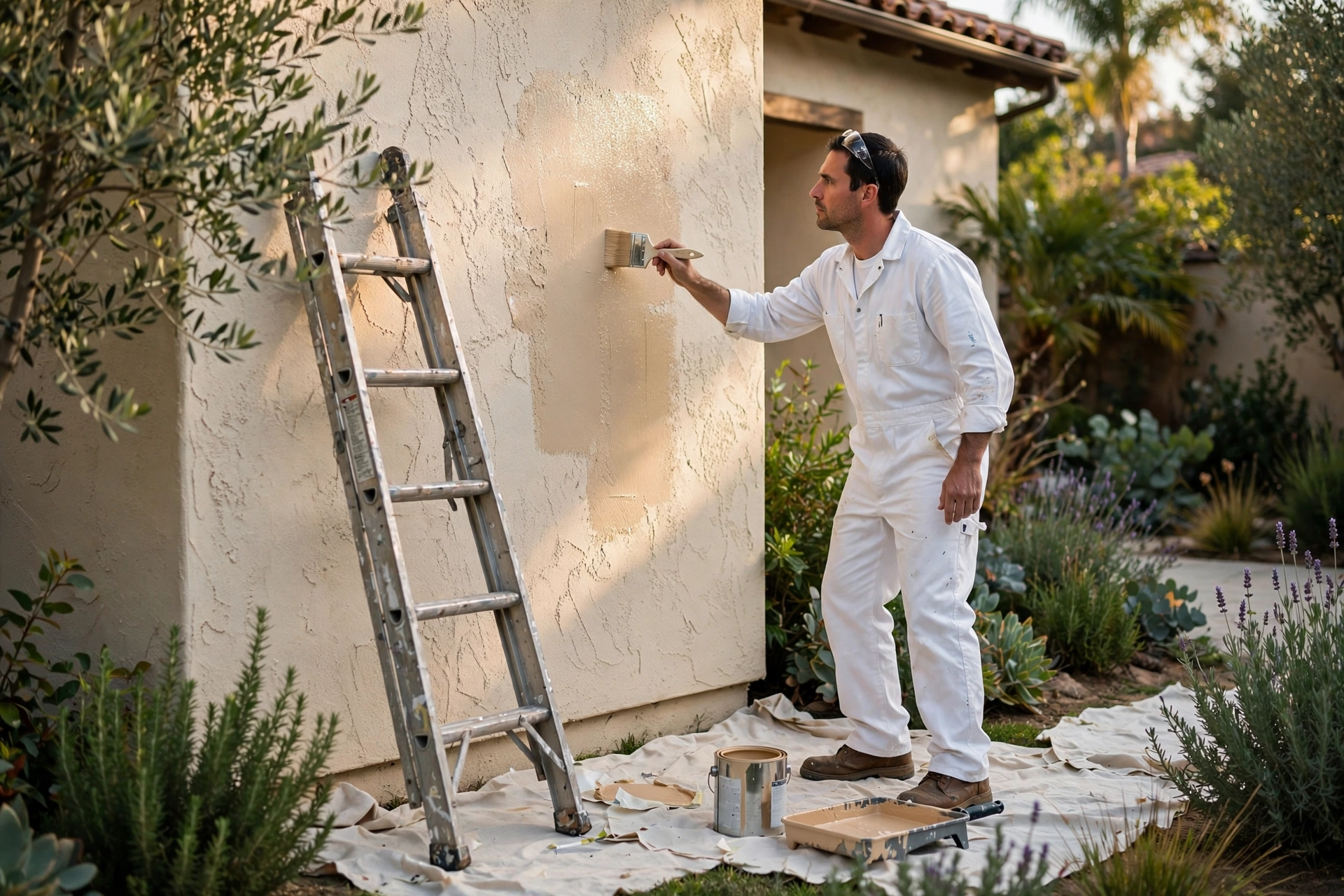
- Masking: Protecting all windows, landscaping, and walkways with heavy-duty plastic and tape.
Step 3: Material Selection and Application
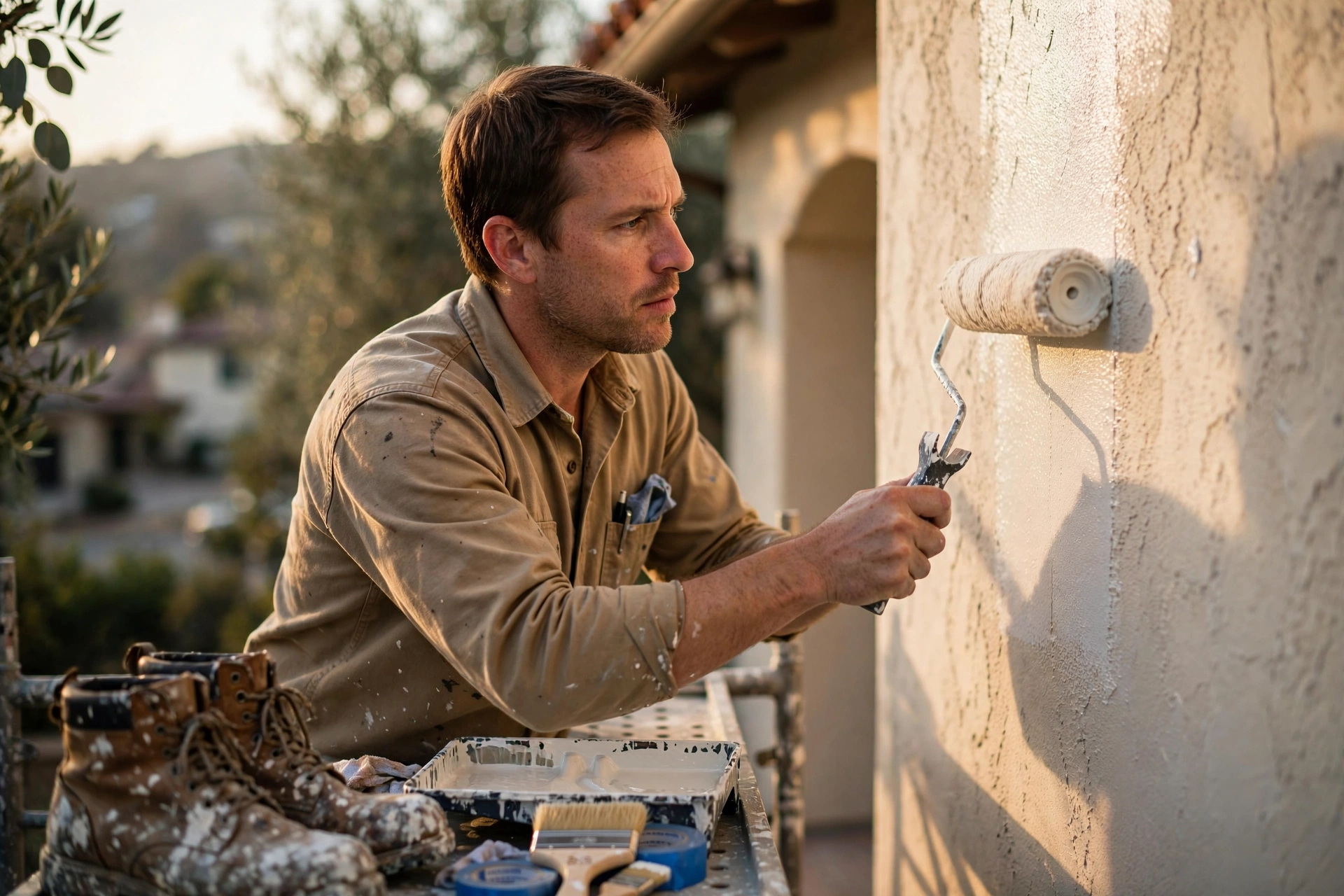
We utilize premium brands like Sherwin-Williams and Benjamin Moore. For Walnut Creek's climate, we typically recommend elastomeric coatings. These are applied thicker than standard paint, providing a rubberized layer that expands and contracts. We apply these using a combination of professional sprayers for consistency and hand-brushing for precision in corners.
Step 4: Final Quality Inspection and Guarantee
Once the coating has cured, we perform a walk-through with the homeowner to ensure every edge is crisp and every crack is sealed. This commitment to quality is why we offer a 6-Year Guarantee on our work, providing peace of mind that the investment is protected against the elements.
📚
Definition
Elastomeric paint is a high-build coating containing specialized resins that allow it to stretch and bridge gaps in the substrate, making it ideal for masonry and stucco surfaces prone to cracking.
Common Objections and the Data-Backed Reality
Many homeowners hesitate to invest in professional stucco painting because they believe it is an unnecessary expense or that a simple "DIY refresh" is sufficient. However, the data suggests otherwise.
"I can just buy high-quality paint and do it myself."
Most homeowners assume that the paint quality is the only variable. In practice, the bond between the paint and the stucco is determined by the surface pH and the removal of "efflorescence" (the white salty powder that appears on stucco). According to the California Contractors State License Board (CSLB), unlicensed work often fails because the contractor lacks the equipment to properly prepare the surface. DIY efforts often skip the priming phase, leading to "alligatoring"—where the paint cracks in a pattern resembling reptile skin—within 18 months.
"Elastomeric paint is too expensive compared to standard latex."
While the initial cost of elastomeric materials is higher, the ROI is far superior. Standard latex paint has a lifespan of 3–5 years on stucco before it begins to peel due to the material's lack of flexibility. Elastomeric coatings can last 10+ years. When you calculate the cost of repainting every 3 years versus once every 10, the professional approach is significantly cheaper in the long run. It is a capital investment in the home's envelope, not a recurring maintenance cost.
"I'm worried about the smell and the chemicals."
This is a common concern in the health-conscious neighborhoods of Walnut Creek. However, the industry has evolved. By using Low-VOC (Volatile Organic Compound) coatings, we eliminate the harsh chemical odors associated with old oil-based paints. Modern water-borne acrylics provide the same—or better—durability without the toxic off-gassing, making the process safe for children and pets during and after application.
Frequently Asked Questions
How often should I repaint my stucco home in Walnut Creek, CA?
In the East Bay, you should generally plan to repaint or recoat your stucco every 7 to 10 years. Because of the high UV exposure and the thermal shifts between the hot interior valleys and the cooler coastal influence, paint breaks down faster here than in other regions. If you notice "chalking" (a powdery residue when you touch the wall) or hairline cracks, it is time for a professional evaluation. Waiting too long can lead to water intrusion, which transforms a simple painting project into a costly structural repair involving the replacement of the underlying lath and studs.
Can you paint over stucco that is already peeling?
Yes, but you cannot simply paint over the peeling areas. If you apply new paint over a failing layer, the new paint will simply pull the old layer off the wall, resulting in immediate failure. The professional process requires a complete removal of all loose, flaking, or peeling paint. At World Pro Painting, we use industrial scrapers and power washers to get down to the stable substrate. Only after the surface is clean, primed, and sealed do we apply the finish coat. This ensures a monolithic bond that prevents future peeling.
Is elastomeric paint better than acrylic for Walnut Creek homes?
For the vast majority of Walnut Creek homes, elastomeric paint is the superior choice. While standard acrylic is good for trim or siding, it lacks the "stretch" required for stucco. Stucco naturally expands and contracts with the temperature; acrylic paint is rigid and will crack as the house moves. Elastomeric paint, however, is designed to stretch. This allows it to bridge hairline cracks and create a waterproof seal. If your home has a history of small cracks, elastomeric is the only way to ensure a long-term, waterproof finish.
How do you handle the lead paint found in older Walnut Creek homes?
Many homes built before 1978 in the Bay Area contain lead-based paint. Handling this requires a certified lead-safe practitioner. We follow the strict RRP (Renovation, Repair, and Painting) rules established by the EPA. This involves using HEPA-vacuumed sanding, containment plastic to prevent dust from entering the home, and specialized disposal methods. We never simply scrape lead paint into the garden; we ensure the safety of your family and the environment by adhering to federal and state hazardous material regulations.
How long does a professional stucco painting project take?
For an average 2,000 to 3,000 square foot home, a professional project typically takes between 5 and 10 business days. This timeline depends heavily on the weather—specifically humidity and temperature—since the paint needs a specific window to cure. The preparation phase takes the longest, often consuming 3 to 4 days of the total timeline. We do not rush this process because the quality of the prep determines the longevity of the paint. Rushing the drying or priming phase is the primary reason cheap contractors fail, and it is a shortcut we never take at World Pro Painting.
Final Thoughts on Stucco Painting Walnut Creek, CA
Maintaining a stucco home in the East Bay is an ongoing battle against the elements. From the scorching summer sun to the winter rains, your home's exterior is the first line of defense for your entire investment. Choosing professional stucco painting walnut creek, ca, is not just about choosing a color; it is about implementing a high-performance coating system that protects your structural integrity.
Whether you are looking to modernize a dated facade or stop moisture from damaging your walls, the key is a commitment to a rigorous preparation process. Don't settle for a "quick coat" that will fail in two years. Invest in a licensed contractor who understands the nuances of the California climate and the specific needs of Contra Costa County architecture. If you are coordinating a larger property overhaul, feel free to browse our House Painting Mission San Jose Fremont, CA | Free Estimate for more examples of our high-standard residential work.
Ready to protect and beautify your home? Contact the experts at World Pro Painting today for a comprehensive surface analysis and a free on-site estimate. Visit our website at worldpropainting.com to schedule your consultation and secure your home's future with a 6-year guarantee.
Get 15% Off Exterior Painting This Month
Schedule your free estimate today and secure your spot in our calendar.
Bay Area Property Painting Prep & Architectural Color Guide
Get our complete 5-step preparation checklist and climate-appropriate Sherwin-Williams & Benjamin Moore color guide for Bay Area homes, HOAs, and commercial properties.