

📖This article is part of the complete guide to Fence & Deck Staining Services.
Living on an island city like Alameda presents a unique set of challenges for homeowners, primarily due to the aggressive combination of salt-laden moisture from the San Francisco Bay and intense California UV exposure. For those seeking high-quality deck and fence staining in Alameda, CA, the answer lies in a professional multi-step preparation process—power washing, sanding, and priming—combined with marine-grade sealants that penetrate deep into the wood fibers to prevent rot and silvering. At World Pro Painting, we provide licensed and bonded staining services that specifically address these coastal microclimates to ensure a long-lasting finish.
In my experience working with residential properties throughout the Bay Area, I have seen too many homeowners attempt a "quick fix" with big-box store stains that peel within twelve months. The salt air in Alameda doesn't just sit on the surface; it penetrates the wood, trapping moisture and accelerating decay. When you understand the specific chemistry of the wood—whether it is redwood, cedar, or pressure-treated pine—you can choose a stain that chemically bonds with the material rather than just sitting on top of it. For those planning a larger renovation, it is helpful to review our Hiring California Bay Area Painting: Scope, Timeline & Bay Area Project Guide to understand how staining fits into a broader home improvement timeline.
Why Alameda Homeowners Are Prioritizing Professional Wood Protection
Alameda's unique geography makes wood maintenance a necessity rather than a luxury. Unlike inland cities, the constant humidity and salt spray create a corrosive environment that strips natural oils from wood. According to the Painting Contractors Association (PCA), professional-grade sealants can extend the life of an outdoor wood structure by up to 50% compared to untreated wood, which is a critical factor in a coastal zone. The trend among Alameda residents is shifting toward high-solids oil-based stains and penetrating sealants that offer superior water repellency.
This shift is driven by the high cost of replacement. When a deck fails due to rot, the cost of demolition and reconstruction in the Bay Area is significantly higher than the cost of biennial maintenance. Furthermore, the California Contractors State License Board (CSLB) emphasizes the importance of using licensed contractors for exterior work to ensure that environmental regulations—specifically those regarding VOC (Volatile Organic Compounds) emissions—are strictly followed. Many residents are now opting for low-VOC, eco-friendly stains that comply with BAAQMD standards while still providing a heavy-duty barrier against the elements.
In practice, this means the "standard" painting approach is no longer sufficient. We are seeing a rise in the use of semi-transparent stains that allow the natural grain of the wood to show through while providing a UV-blocking layer. This is essential because the UV index in the East Bay can be brutal, leading to "sunburn" on the wood that manifests as graying or cracking. By applying a professional stain, homeowners create a sacrificial layer that takes the brunt of the weather, protecting the structural integrity of the deck or fence beneath.
Key Benefits of Professional Deck and Fence Staining in Alameda
Investing in a professional staining service is not just about aesthetics; it is a strategic move to protect one of your home's most expensive exterior assets. The primary goal is to stop water infiltration. When water enters the wood, it causes the fibers to swell and shrink, which leads to checking (small cracks) and warping.
Enhanced UV Protection and Color Retention
UV rays break down lignin, the organic polymer that binds cellulose fibers together in wood. This process, known as photodegradation, is what causes wood to turn gray. Professional stains contain trans-oxide pigments that act as a sunscreen for your deck. By blocking these rays, the wood retains its structural strength and color. In my experience, a high-quality semi-transparent stain provides a balance between the natural look of the wood and the protection of a solid coat.
Prevention of Fungal Decay and Mold
In the damp, foggy mornings of Alameda, mold and mildew can thrive on untreated wood surfaces. Professional-grade stains often include fungicides and mildewcides that prevent the growth of these organisms. This is especially important for fences that are shaded by neighboring trees or hedges, where airflow is restricted and moisture lingers.
📚
Definition
Penetrating Stain is a type of finish that soaks into the wood fibers rather than forming a film on the surface, making it less likely to peel or flake over time.
Increased Property Value and Curb Appeal
First impressions are everything in the Bay Area real estate market. A weathered, graying fence or a peeling deck can significantly detract from a home's perceived value. Conversely, a freshly stained, rich-toned exterior signals to potential buyers that the home has been meticulously maintained. This attention to detail often translates to a higher appraisal value during the selling process.
| Feature | DIY / Cheap Approach | Professional World Pro Approach | Generic AI/Budget Approach |
|---|---|---|---|
| Prep Work | Basic sweeping/spraying | Power wash + Sanding + Priming | Surface cleaning only |
| Material | Hardware store acrylics | Premium Sherwin-Williams/Benjamin Moore | Lowest cost generic stain |
| Longevity | 6-12 Months | 3-6 Years (with maintenance) | 12-18 Months |
| Finish | Prone to peeling/flaking | Deep penetration, UV stable | Uneven patches/streaks |
| Guarantee | None | 6-Year Guarantee | No warranty |
💡
Key Takeaway
The most significant benefit of professional staining is the prevention of structural rot, which avoids the catastrophic cost of full deck replacement every decade.
Real-World Results: Staining Case Studies in Alameda
To illustrate the impact of a professional approach, let's look at two distinct projects we handled in the local area. These examples highlight the difference between a simple "coat of paint" and a professional restoration process.
Case Study 1: The Waterfront Redwood Deck Restoration
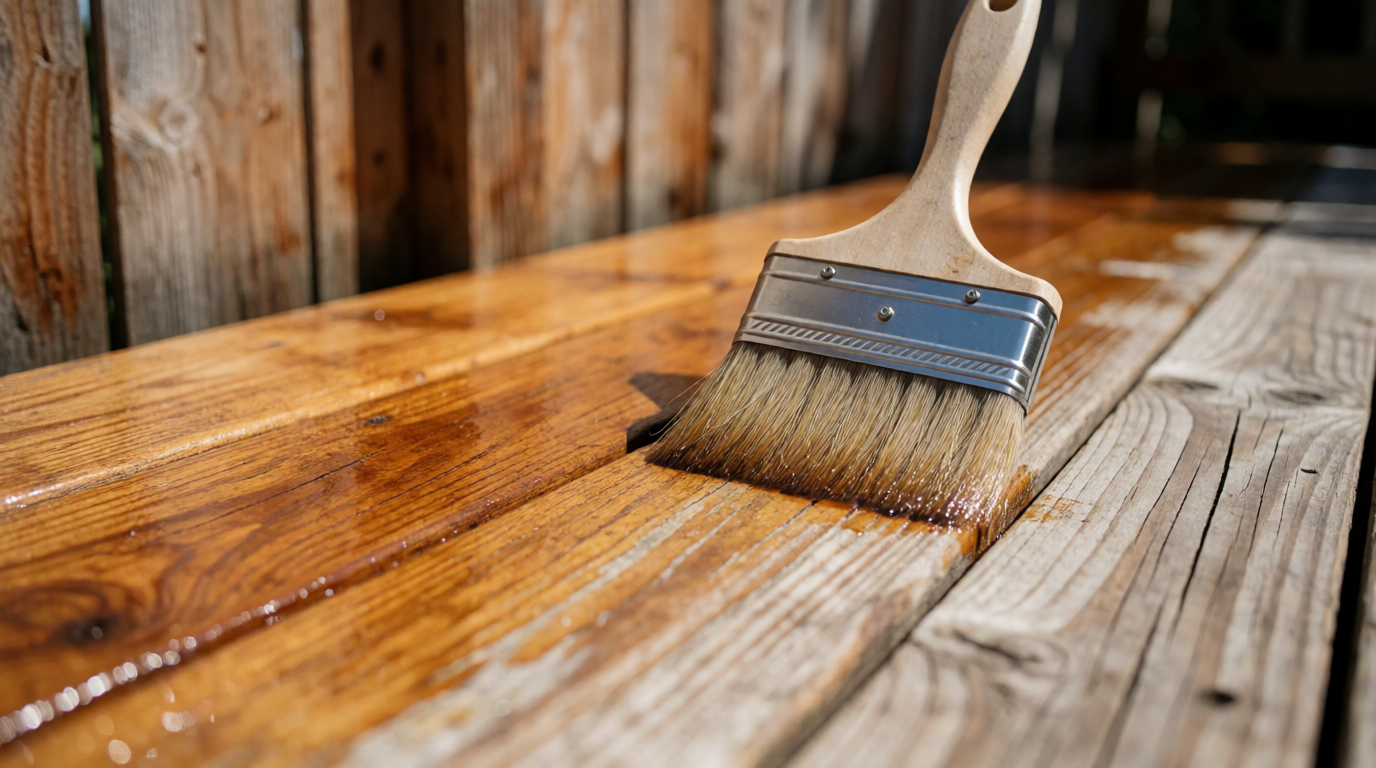
A homeowner near the Alameda shoreline had a redwood deck that had turned a stark, silvery-gray. The wood was "checked" with deep cracks, and the previous coating was peeling in large flakes. Most contractors suggested replacing the boards. Instead, we implemented our 5-step preparation process: deep cleaning with a specialized wood cleaner, light sanding to open the pores, and the application of a high-solids penetrating oil stain.
The Result: The deck was restored to a rich, mahogany hue with zero peeling. Because we used a penetrating stain rather than a film-forming one, the wood can now "breathe," allowing moisture to escape rather than trapping it under a plastic layer. The homeowner saved approximately $12,000 in replacement costs by opting for a professional restoration.
Case Study 2: The Perimeter Fence Protection Project
In a residential neighborhood in the interior of Alameda, a client had 150 linear feet of cedar fencing that was absorbing moisture and leaning due to base-rot. We stripped the old, failing stain and applied a semi-transparent cedar-tone sealant. We specifically focused on the "end-grain" (the tops and bottoms of the fence pickets), which is where 80% of moisture infiltration occurs.
The Result: By sealing the end-grains, we effectively stopped the rot from climbing further up the fence. The fence regained its structural stability and a uniform, warm glow. This project demonstrates how targeting the most vulnerable parts of the wood—a step often skipped by budget contractors—extends the life of the fence by several years. For those with multi-family properties, this level of care is similar to what we provide for House Painters in Weibel Fremont, CA, where durability is the top priority.
How to Get Started with Professional Deck and Fence Staining
Getting your deck or fence ready for the elements requires more than just a bucket of stain. The success of the project is 90% preparation and 10% application. If you apply stain to dirty or oxidized wood, the stain will not bond, and it will peel prematurely.
Step 1: Comprehensive Surface Assessment
We start by analyzing the wood species and the current state of the finish. We check for "mill glaze" on new wood or failing coatings on old wood. If the wood is gray, it means the cellulose fibers are dead and must be removed via sanding or chemical cleaning to allow the new stain to penetrate.
Step 2: Deep Cleaning and Power Washing
Using a controlled-pressure power wash, we remove dirt, algae, and loose paint. It is essential not to over-pressure the wood, as this can "furr" the grain and create a rough surface. We use biodegradable cleaners that neutralize the pH of the wood, preparing it for the stain.
Step 3: Sanding and Detail Work
After cleaning, we sand the high-traffic areas of the deck. This removes any remaining debris and ensures a smooth finish. We also caulk any gaps where the deck meets the house to prevent water from seeping into the rim joist, which is a common cause of structural failure.
Step 4: Precision Application
We use a combination of spraying and "back-brushing." Spraying ensures the stain reaches every nook and cranny, while back-brushing forces the stain deep into the wood fibers. This prevents the common "lap marks" seen in DIY projects. We recommend premium products from Sherwin-Williams or Benjamin Moore for their superior UV inhibitors.
Step 5: Final Inspection and Curing
Once the stain is applied, we ensure it has the proper environment to cure. We monitor the weather to avoid application during high humidity or imminent rain, which can cause the finish to cloud or streak. At World Pro Painting, we provide a 6-year guarantee on our workmanship, giving you peace of mind that your investment is protected.
Common Objections and Data-Backed Answers
Many homeowners hesitate to invest in professional staining due to perceived costs or a misunderstanding of the process. Here is the reality behind the most common objections.
Objection 1: "Staining is too expensive; I can just do it myself with a cheap sealer."
Most people assume that the cost of the material is the main driver of the price. However, the data shows that DIY projects often fail because of poor preparation. According to the Environmental Protection Agency (EPA), improper surface preparation is the leading cause of coating failure. When a cheap sealer peels in a year, you spend more on materials and labor to strip it off than you would have spent on a professional job that lasts five years. In practice, professional staining is a cost-saving measure over a 5-year horizon.
Objection 2: "I prefer a solid paint look over a stain."
While solid stains look like paint, they act differently. Many homeowners believe paint is more durable. In reality, paint forms a film on top of the wood. In a coastal environment like Alameda, moisture gets trapped under that film, causing the paint to bubble and peel. A semi-transparent stain allows the wood to breathe, which prevents this cycle of failure. If you want a darker look, we can use a "solid color stain" which provides the look of paint but the penetration of a stain.
Objection 3: "I'll just wait until the wood looks really bad before I stain it."
This is a dangerous mistake. Once wood begins to "silver" or crack, the structural integrity is already compromised. Deep cracks allow water to reach the core of the wood, leading to internal rot that cannot be fixed with a surface stain. Proactive maintenance every 2-3 years is significantly cheaper than a full restoration. It is similar to how we approach Exterior Painting in Lakeside Newark, CA, where early intervention prevents costly structural repairs.
Frequently Asked Questions
How often should I stain my deck and fence in Alameda, CA?
Due to the high salt content in the air and the intensity of the California sun, most Alameda decks and fences should be stained every 2 to 3 years. If you have a deck in a high-traffic area or one that receives direct sunlight all day, you may need a "refresh" coat every 2 years. A simple way to test if your wood needs staining is the "water bead test": drop a few beads of water on the wood. If the water beads up and stays on the surface, your sealant is still active. If the water soaks in quickly, it is time for a new coat of stain to prevent rot.
What is the difference between a transparent, semi-transparent, and solid stain?
Transparent stains provide the least protection but keep the wood looking most natural; they are essentially clear sealers. Semi-transparent stains add pigments that block UV rays while still showing the grain, offering a balance of beauty and durability. Solid stains are opaque and provide the highest level of UV protection, looking almost like paint. For Alameda's coastal climate, we typically recommend semi-transparent or solid stains because they provide the necessary pigment barrier to prevent the wood from graying under the intense Bay Area sun.
Can you stain a deck that is currently peeling?
Yes, but it cannot be "painted over." Peeling indicates that the bond between the previous coating and the wood has failed. If we apply new stain over peeling paint, the new layer will simply pull the old layer off, resulting in another failure. Our process involves stripping the failed coating using chemical strippers or sanding. We then clean the wood to a neutral pH before applying a new, penetrating stain. This ensures a permanent bond that won't flake off within a few months.
Is it better to use oil-based or water-based stains for coastal fences?
In the Bay Area, oil-based penetrating stains are generally superior for decks and fences. Oil penetrates deeper into the wood fibers and repels water more effectively than water-based acrylics, which tend to sit on the surface. While water-based stains have lower VOCs and dry faster, they are more prone to peeling in salt-air environments. We use professional-grade oil blends that comply with California environmental regulations while providing the deep-fiber protection required for an island city like Alameda.
Will staining my fence prevent it from leaning or rotting?
While staining cannot fix a fence that is already structurally compromised (like a rotted post), it is the best way to prevent future leaning. Rot occurs when water saturates the wood, allowing fungi to eat the cellulose. By applying a high-quality sealant, we create a hydrophobic barrier that keeps water out. We pay special attention to the bottom of the fence pickets and the tops of the rails—the areas where water naturally settles—which drastically slows the progression of decay and keeps your fence standing straight for years.
Final Thoughts on Deck and Fence Staining in Alameda, CA
Maintaining a home in the San Francisco Bay Area requires a commitment to quality and a deep understanding of local environmental stressors. Whether you are looking to refresh a weathered redwood deck or protect a new cedar fence, the key to longevity is professional preparation and the use of high-performance materials. Cheap alternatives may save money today, but they lead to expensive replacements tomorrow. By choosing a licensed contractor who understands the specific needs of Alameda's microclimate, you ensure that your outdoor spaces remain beautiful and structurally sound.
At World Pro Painting, we combine technical expertise with a commitment to clean worksites and top-tier materials. We don't just apply stain; we restore the health of your wood. From the first power wash to the final coat of UV-stable sealant, our process is designed for the long haul. If you are unsure if your wood is still protected, or if you are seeing the first signs of graying and cracking, don't wait until the damage is structural. For a detailed analysis of your property, explore our House Painting Mission San Jose Fremont, CA services or contact us today for a free on-site estimate.
Protect your investment today and avoid the cost of total replacement. Visit worldpropainting.com to schedule your consultation with the Bay Area's leading color and painting specialists.
Recommended Readings
To deepen your understanding of these topics, we recommend reading the following articles:
- Fence & Deck Staining Services
- Deck and Fence Staining in Berkeley, CA | Licensed Contractors
- Deck and Fence Staining in Newark, CA | Licensed Contractors
- Deck and Fence Staining in Oakland, CA | Licensed Contractors
Commercial Painting Cost Calculator & Color Guide
Get an instant estimation checklist for painting your office, warehouse, or house. Learn how to choose colors that boost productivity.