

Introduction
If you own a deck in the Bay Area, you know the struggle. One moment, the sun is beating down with UV rays that can dry out and crack wood in a single summer. The next, the famous fog rolls in, leaving your deck damp and prone to mildew. And then there's the rain — when it comes, it comes hard. Your deck takes a beating year-round, and without proper protection, it won't last. That's where deck staining comes in. Not just any stain, but the right stain applied the right way. In this ultimate guide, we'll cover everything you need to know about deck staining in the Bay Area — from choosing the perfect stain to the step-by-step application process, common mistakes to avoid, and why professional help can save you time, money, and frustration.
For a comprehensive overview of our services, check out our Fence & Deck Staining Services page.
What Is Deck Staining?
📚
Definition
Deck staining is the process of applying a protective coating to wooden deck surfaces to enhance appearance, prevent weather damage, and extend the lifespan of the wood.
Unlike paint, which sits on top of the wood and can peel, stain penetrates the wood fibers, providing protection from within while allowing the natural grain to show through. Deck stains come in various formulations and opacity levels — from clear sealers that offer minimal protection to solid stains that act almost like paint but with better adhesion to wood.
In my experience working with hundreds of homeowners across Fremont, Palo Alto, and San Ramon, the single biggest mistake people make is treating deck staining like ordinary painting. It's not. The chemistry is different, the prep work is more demanding, and the environmental conditions in the Bay Area require a stain that can handle both intense sun and persistent moisture. I've seen beautiful cedar decks turn gray and fuzzy within a year because the wrong stain was used — or, more commonly, because the stain was applied over dirty, unprepared wood.
A quality deck stain does three things: it protects against UV radiation, repels water, and resists mildew growth. In the Bay Area, where microclimates vary from the foggy coast to the hot inland valleys, the balance between these three factors changes. A stain that works perfectly in Half Moon Bay might fail in Livermore. That's why understanding your local conditions is the first step toward a deck that stays beautiful for years.
Why Deck Staining Matters in the Bay Area
The Bay Area's climate is uniquely harsh on wooden decks. According to the National Weather Service, the region experiences over 300 days of sunshine per year in some areas, combined with marine layer moisture that can keep decks damp until 10 a.m. even in summer. This combination of UV exposure and moisture creates the perfect storm for wood degradation.
The Sun Factor
UV radiation breaks down lignin, the natural polymer that binds wood fibers together, causing the surface to turn gray and become brittle. A study by the Forest Products Laboratory found that unprotected wood exposed to sunlight can lose up to 80% of its structural integrity over a decade. A quality stain with UV blockers can reduce this damage by 90% or more.
The Moisture Factor
From the fog in San Francisco to the rain in Oakland, moisture is a constant threat. When water penetrates wood, it causes swelling, cracking, and rot. It also creates an ideal environment for mold and mildew. According to the EPA, mildew can begin growing on damp wood within 24 to 48 hours. A good water-repellent stain prevents water from soaking in, keeping your deck dry and healthy.
The Temperature Swings
Bay Area temperatures can swing 30 degrees in a single day, causing wood to expand and contract. Over time, this leads to warping and splitting. A flexible stain that moves with the wood minimizes these effects.
In my work with homeowners in cities like Millbrae and Los Altos, I've seen decks that were stained with a cheap big-box store stain fail within two years, while decks treated with a high-quality, UV-stabilized stain from Sherwin-Williams or Benjamin Moore lasted over five years with minimal maintenance. The upfront cost difference is small — maybe 20% more — but the longevity difference is enormous.
How to Choose the Right Stain for Your Deck
Not all stains are created equal. Choosing the right one depends on your deck's wood type, age, exposure, and desired look.
Types of Deck Stains
| Stain Type | Protection Level | Appearance | Durability | Best For |
|---|---|---|---|---|
| Clear Sealer | Low | Natural wood | 1-2 years | New, well-maintained decks |
| Semi-Transparent | Medium | Natural grain | 2-3 years | Most decks |
| Semi-Solid | Medium-High | Some grain show | 3-4 years | Aging decks |
| Solid Stain | High | No grain (like paint) | 5-7 years | Old or mixed wood |
For the Bay Area, I typically recommend semi-transparent stains for newer decks and solid stains for older decks with wear. The key is to match the stain's breathability with your deck's condition. A solid stain on a new deck can trap moisture and cause peeling, while a clear sealer on an old deck won't provide enough coverage.
Oil-Based vs. Water-Based
Oil-based stains penetrate deeper and are more durable, but they take longer to dry and have higher VOC levels. Water-based stains dry faster, are easier to clean up, and are more eco-friendly — an important consideration for many Bay Area homeowners who prioritize low-VOC products. According to Benjamin Moore's 2025 product guide, their water-based Arborcoat stains now match or exceed oil-based alternatives in durability while offering better UV resistance.
For decks in foggy areas like Pacifica or Half Moon Bay, I prefer oil-based stains for their deeper penetration and resistance to moisture. For decks in sunny areas like Pleasanton or Dublin, water-based stains with advanced UV blockers work excellently.
Top Brands
- Sherwin-Williams: SuperDeck line offers excellent UV protection and comes in both oil and water-based formulations. According to Sherwin-Williams technical data, their Transparent Stain blocks 95% of UV rays.
- Benjamin Moore: Arborcoat line is a top performer, with solid colors that are highly pigmented and fade-resistant. Their 2026 formulation includes enhanced mildewcides.
- Cabot: A trusted name for decades, Cabot's Australian Timber Oil is a favorite for exotic hardwoods like ipe and mahogany.
- Behr: Widely available at Home Depot, Behr Premium Transparent Waterproofing Stain is a budget-friendly option that performs well in moderate climates.
In my experience, the best stain for Bay Area decks is Sherwin-Williams SuperDeck Semi-Transparent. I've applied it on dozens of decks — from Irvington to Niles — and the results consistently hold up for three to four years with minimal fading.
Step-by-Step Guide to Deck Staining
Proper preparation is 80% of a successful deck staining project. Skip a step, and your stain will fail prematurely. Here's the process we follow at World Pro Painting:
Step 1: Clean the Deck Thoroughly
Use a deck cleaner or a mixture of oxygen bleach and water to remove dirt, mildew, and old stain residue. A pressure washer can speed things up, but be careful — too much pressure can damage the wood. I recommend a fan tip set at 1500-2000 PSI, keeping the nozzle at least 12 inches from the surface. Let the cleaner sit for 10-15 minutes before rinsing.
Step 2: Sand and Repair
Once the deck is dry (allow 24-48 hours), sand any rough areas or splinters. Use 80-100 grit sandpaper for bare wood and 120 grit for previously stained wood. Replace any cracked or rotten boards. Countersink popped nails and fill holes with wood filler. This is where many DIYers cut corners — and it shows.
Step 3: Apply a Wood Brightener
Wood brightener restores the natural pH of the wood after cleaning and opens the pores for better stain penetration. Don't skip this step. It's cheap and makes a huge difference in stain adhesion.
Step 4: Choose the Right Day
Stain must be applied when temperatures are between 50°F and 90°F, with no rain forecast for at least 24 hours. In the Bay Area, that often means spring or fall. Avoid staining in direct sunlight — the stain will dry too quickly and leave lap marks. Work in sections, following the sun's shadow.
Step 5: Apply the Stain
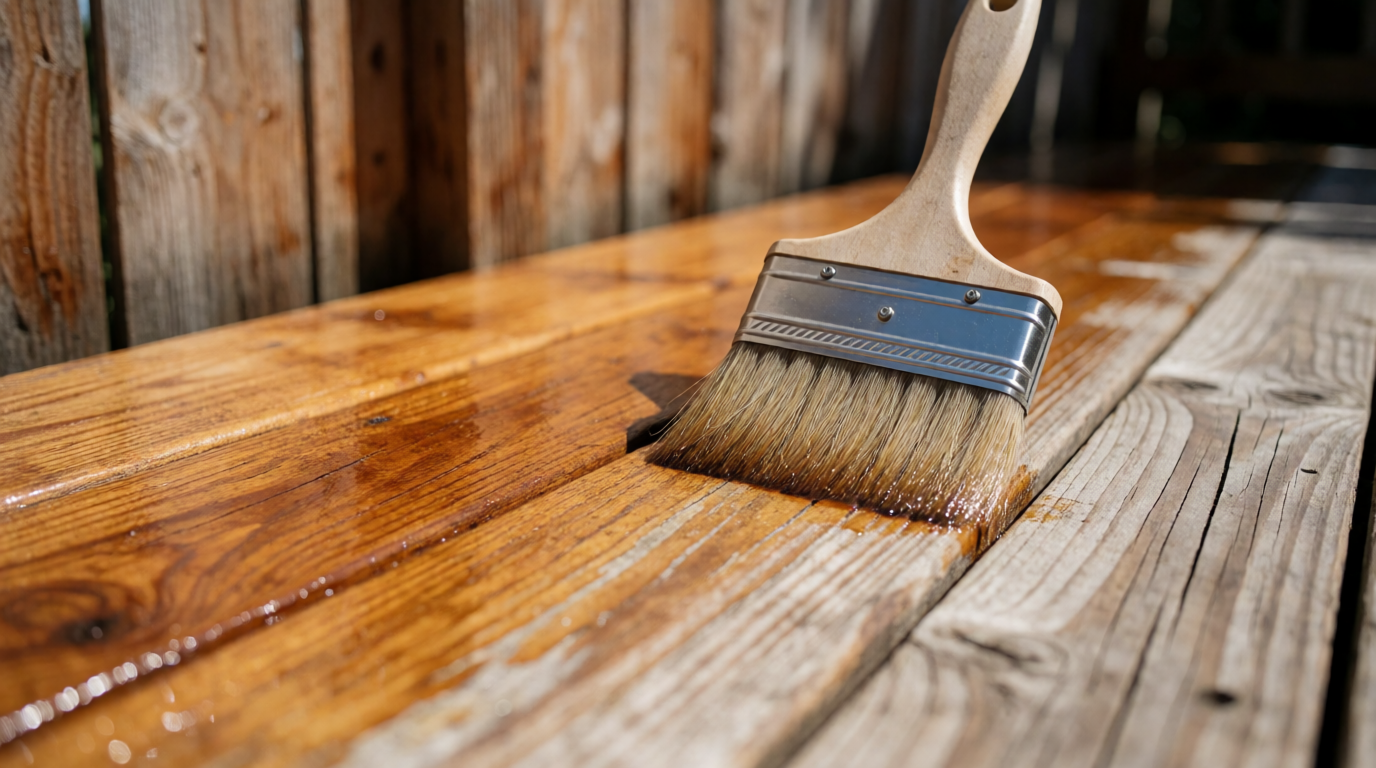
Stir the stain thoroughly. Apply with a brush, roller, or sprayer — I prefer a brush for edges and a roller for large areas. Work in the direction of the wood grain. Apply a thin, even coat. Most stains require two coats for maximum protection. Allow the first coat to dry completely (check manufacturer's instructions) before applying the second.
Step 6: Protect and Maintain
Keep foot traffic off the deck for at least 24 hours after the final coat. After that, your deck is protected. But protection isn't permanent. Plan to re-stain every 2-4 years depending on the stain type and exposure.
For a professional touch, consider our Exterior Painting in Los Altos Hills, CA service, which includes expert deck staining.
Common Mistakes to Avoid
After decades in the business, I've seen it all. Here are the most common mistakes homeowners make when staining their decks in the Bay Area:
Mistake 1: Skipping the Cleaner
Pressure washing alone isn't enough. You need a chemical cleaner to kill mildew and remove embedded dirt. Without it, the stain won't penetrate and will peel within months.
Mistake 2: Staining Over Wet Wood
Wood must be completely dry — not just surface dry, but dry all the way through. Moisture meters are cheap; use one. Aim for below 15% moisture content. Staining wet wood traps moisture and leads to rot.
Mistake 3: Applying Too Thick
More stain isn't better. Thick coats don't dry properly and will peel. Always follow the manufacturer's recommended coverage rate — usually 200-300 square feet per gallon for semi-transparent stains.
Mistake 4: Ignoring the Weather
In the Bay Area, marine layer moisture can roll in unexpectedly. Always check the forecast. If fog is predicted for the morning, start staining later in the day. Better yet, wait for a clear weekend.
Mistake 5: Using the Wrong Stain for the Wood Type
Softwoods like pine and cedar absorb stain differently than hardwoods like ipe. Some stains contain tannin blockers that prevent bleeding from redwood or cedar. Know your wood before you buy your stain.
Mistake 6: Not Testing First
Always test the stain on a small, inconspicuous area. Colors look different on wood than on the can. This is especially important for solid stains.
For more on prep work, see our Fence & Deck Staining Services in Glenmoor, Fremont guide.
Professional vs. DIY: When to Call the Experts
Deck staining is a demanding job. For a small, single-level deck in good condition, a confident DIYer can get good results. But for large decks, multi-level structures, or decks with significant wear, hiring a professional is often the smarter choice.
Benefits of Professional Staining
- Expert prep: We have commercial-grade pressure washers, sanders, and stains that aren't available to the general public.
- Time savings: A professional crew can complete in one day what might take a homeowner a weekend or more.
- Longer-lasting results: Our 5-step prep process ensures stain adhesion that lasts years longer.
- Warranty: At World Pro Painting, we stand behind our work with a 6-Year Guarantee. If there's a problem, we fix it.
When DIY Makes Sense
If your deck is small (under 200 sq ft), in good shape, and you have a free weekend, DIY is fine. Just don't skip the prep. And if you're unsure about the process, start with a small area before committing to the whole deck.
Frequently Asked Questions
How often should I stain my deck in the Bay Area?
Most decks in the Bay Area need re-staining every 2 to 4 years, depending on the stain type and exposure. Decks in sunny areas like Dublin or Livermore may need more frequent re-coating due to UV degradation, while decks in foggy areas like Pacifica may need re-coating due to moisture. A simple test: sprinkle water on the deck. If it beads up, the stain is still working. If it soaks in, it's time to re-stain.
What is the best deck stain for the Bay Area climate?
For the Bay Area's unique mix of sun and moisture, I recommend a high-quality semi-transparent oil-based stain like Sherwin-Williams SuperDeck. Oil-based stains penetrate deeper and provide better moisture resistance, while the UV blockers protect against fading. For eco-conscious homeowners, Benjamin Moore's Arborcoat water-based stain is an excellent alternative with low VOCs and strong durability.
Can I stain over old stain?
Yes, but only if the old stain is in good condition — no peeling, flaking, or heavy fading. If the old stain is sound, clean the deck thoroughly, sand lightly, and apply a new coat. If the old stain is failing, you must strip it completely before re-staining. Applying new stain over peeling old stain will result in the new stain peeling off within months.
How long does deck stain take to dry?
Drying times vary by stain type and weather conditions. Oil-based stains typically take 24-48 hours to fully cure, while water-based stains can be dry to the touch in 2-4 hours. However, even after the stain feels dry, avoid heavy foot traffic or furniture for at least 24 hours. Always check the manufacturer's label for specific instructions.
Should I use a clear sealer or a stain?
Clear sealers offer minimal protection — they block water but not UV rays. In the Bay Area, where sun damage is a major concern, clear sealers are rarely sufficient. A stain with UV blockers (semi-transparent or solid) is almost always a better choice. Use a clear sealer only if your deck is under a covered patio with no direct sunlight.
How much does professional deck staining cost?
Costs vary widely based on deck size, condition, prep work needed, and stain quality. While we never publish specific prices because every deck is unique, professional deck staining typically represents one of the best investments you can make in your home. At World Pro Painting, we offer free on-site estimates with transparent pricing — no hidden fees. Contact us to schedule yours.
Can I stain my deck in winter?
In the Bay Area, winter is often rainy and cold, making it a poor time for staining. Stains need temperatures above 50°F to cure properly, and rain within 24 hours can ruin the finish. Spring and fall are ideal — the weather is mild, and there's less moisture. If you must stain in winter, choose a water-based stain that dries faster and pick a clear, dry day.
What is the difference between deck staining and painting?
Stain penetrates the wood and protects from within, allowing the natural grain to show. Paint sits on top of the wood and forms a film that can peel, crack, and trap moisture. For decks, stain is almost always the better choice because it moves with the wood and is easier to recoat. Paint may look nice initially, but it requires extensive scraping and sanding to repaint.
Conclusion
Your deck is an extension of your living space — a place to relax, entertain, and enjoy the Bay Area's beautiful outdoor lifestyle. Protecting it with the right stain, applied correctly, ensures it remains beautiful and functional for years to come. Whether you choose to DIY or hire a professional, the key is to invest in quality materials and thorough preparation.
At World Pro Painting, we've been protecting decks across the Bay Area for over a decade. Our 6-Year Guarantee and 100% satisfaction guarantee mean you can trust us to get the job done right. For a free, no-obligation estimate, visit our Fence & Deck Staining Services page or contact us today.
For more localized advice, check out our guides for Fence & Deck Staining Services in Fremont, CA, Fence & Deck Staining Services in Mission San Jose, Fremont, Fence & Deck Staining Services in Irvington, Fremont, Fence & Deck Staining Services in Glenmoor, Fremont, and Fence & Deck Staining Services in Niles, Fremont.
Recommended Readings
To deepen your understanding of these topics, we recommend reading the following articles:
About the Author
World Pro Team is the painting expert at World Pro Painting. With years of experience serving homeowners across 42 Bay Area cities, we specialize in deck staining, exterior painting, and interior finishes that stand the test of time.
Bay Area Service Locations & Featured Guides
Explore our licensed painting services across the San Francisco Bay Area:
- Stucco Repair & Elastomeric Exterior Painting in the Bay Area
- 5-Step Exterior Surface Prep in Palo Alto, CA
- Redwood & Cedar Deck Staining Contractors in the Bay Area
Commercial Painting Cost Calculator & Color Guide
Get an instant estimation checklist for painting your office, warehouse, or house. Learn how to choose colors that boost productivity.