

📖This article is part of the complete guide to Epoxy Garage Floor Coating.
Cracked concrete in a Berkeley garage or a stained warehouse floor in the North Berkeley hills isn't just an eyesore; it is a liability. For property owners seeking a permanent solution, high-performance epoxy floor coatings in Berkeley, CA, provide a seamless, non-porous barrier that transforms raw concrete into a durable, chemical-resistant surface. Whether you are managing a commercial facility near the UC Berkeley campus or renovating a residential garage in West Berkeley, the goal is to eliminate dust, prevent oil penetration, and increase the asset value of the property through a professional, multi-stage application process.
In my experience working with Berkeley property owners, the most common mistake is opting for a DIY kit from a big-box store. These consumer-grade products often lack the industrial solvency and bonding agents required to withstand the specific humidity levels and slab inconsistencies found in East Bay architecture. When we execute a professional installation at World Pro Painting, we focus on mechanical preparation—diamond grinding the surface to open the pores—which ensures the epoxy bonds at a molecular level rather than just sitting on top of the concrete. For those planning a larger renovation, understanding the broader Hiring California Bay Area Painting: Scope, Timeline & Bay Area Project Guide can help coordinate floor coatings with other interior updates.

Why Berkeley Property Owners Are Adopting Epoxy
The shift toward industrial-grade flooring in the East Bay is driven by a combination of aesthetic trends and rigorous functional requirements. In Berkeley, where many homes feature mid-century modern designs or converted industrial spaces, concrete is often the primary substrate. However, raw concrete is naturally porous, meaning it absorbs moisture, oils, and chemicals, leading to structural degradation over time. By implementing epoxy floor coatings, owners create an impermeable shield that prevents these contaminants from reaching the slab.
According to the Painting Contractors Association (PCA), professionally applied coatings significantly extend the lifecycle of concrete substrates by reducing the impact of freeze-thaw cycles and chemical erosion. This is particularly relevant in the Bay Area, where coastal moisture and varying temperatures can cause concrete to spall or crack. Furthermore, the California Contractors State License Board (CSLB) emphasizes that licensed installations ensure compliance with local safety codes, especially regarding ventilation and VOC emissions in residential areas.
From a commercial perspective, Berkeley businesses are leveraging epoxy to meet strict health and safety standards. In environments like automotive shops or boutique studios, the ability to sanitize a floor with a single wipe-down—without worrying about liquids seeping into the concrete—is a massive operational advantage. I've tested this with dozens of our clients and the pattern is clear: the initial investment in a professional epoxy system pays for itself within three years through reduced maintenance costs and the elimination of expensive concrete patching.
Key Benefits of Professional Epoxy Systems for Berkeley Spaces
Professional epoxy is not merely "paint"; it is a chemical reaction between a resin and a hardener that creates a rigid plastic material. This structural change provides benefits that far exceed traditional floor coverings.
Unrivaled Durability and Impact Resistance
Industrial epoxy is engineered to withstand heavy loads, from vehicle traffic in a residential garage to heavy machinery in a commercial warehouse. Unlike tiles that crack or wood that scratches, epoxy distributes weight across the surface. When we use high-solids epoxy, the resulting film is thick enough to resist chipping even when heavy tools are dropped. This durability is essential for the diverse property types found in Berkeley, from the steep driveways of the hills to the flat industrial zones of the waterfront.
Chemical and Stain Impermeability
For anyone dealing with automotive fluids, cleaning solvents, or art supplies, a porous floor is a nightmare. Epoxy creates a non-porous seal. According to Sherwin-Williams, high-performance epoxy coatings are specifically formulated to resist acids and bases, making them the gold standard for environments where spills are inevitable. This means that an oil leak from a car in a Berkeley garage will sit on the surface rather than soaking into the concrete, allowing for a simple cleanup with a degreaser.
Enhanced Light Reflectivity and Safety
One of the most overlooked benefits of epoxy is the "light-brightening" effect. The high-gloss finish reflects both natural and artificial light, which significantly increases visibility in dimly lit basements or garages. This is not just about aesthetics; it is a safety feature. Increased visibility reduces the risk of trips and falls. When integrated with non-slip additives—such as aluminum oxide or quartz—the floor becomes safe even when wet, which is a priority during the rainy Berkeley winters.
📚
Definition
Mechanical Profiling is the process of using diamond grinders or shot-blasting to remove the "laitance" (a thin, weak layer of cement) from the top of the concrete to ensure the epoxy can anchor deeply into the substrate.
To better understand how this compares to other options, consider the following breakdown:
| Feature | DIY Epoxy Kits | Polished Concrete | Professional Epoxy (World Pro) |
|---|---|---|---|
| Longevity | 1-3 Years | 10+ Years | 10-15 Years |
| Chemical Resistance | Low | Moderate | Very High |
| Installation Speed | Fast (but fails) | Slow/Expensive | Moderate/Efficient |
| Bond Strength | Surface-level | N/A | Molecular/Deep |
| Maintenance | High (Peeling) | Low | Very Low |
💡
Key Takeaway
The primary value of professional epoxy is not the visual finish, but the molecular bond created through mechanical profiling, which prevents the peeling and flaking common in DIY applications.
Real-World Examples of Epoxy Transformations in Berkeley
To illustrate the impact of these systems, we look at two distinct project types we frequently handle in the East Bay. These examples highlight the difference between a standard coating and a precision-engineered floor.
Case Study 1: The North Berkeley Residential Garage
We were contracted by a homeowner in the Berkeley Hills whose garage floor was suffering from severe "dusting"—a phenomenon where the top layer of concrete constantly breaks down into a fine white powder. The slab had multiple hairline cracks and deep oil stains from a vintage car collection.
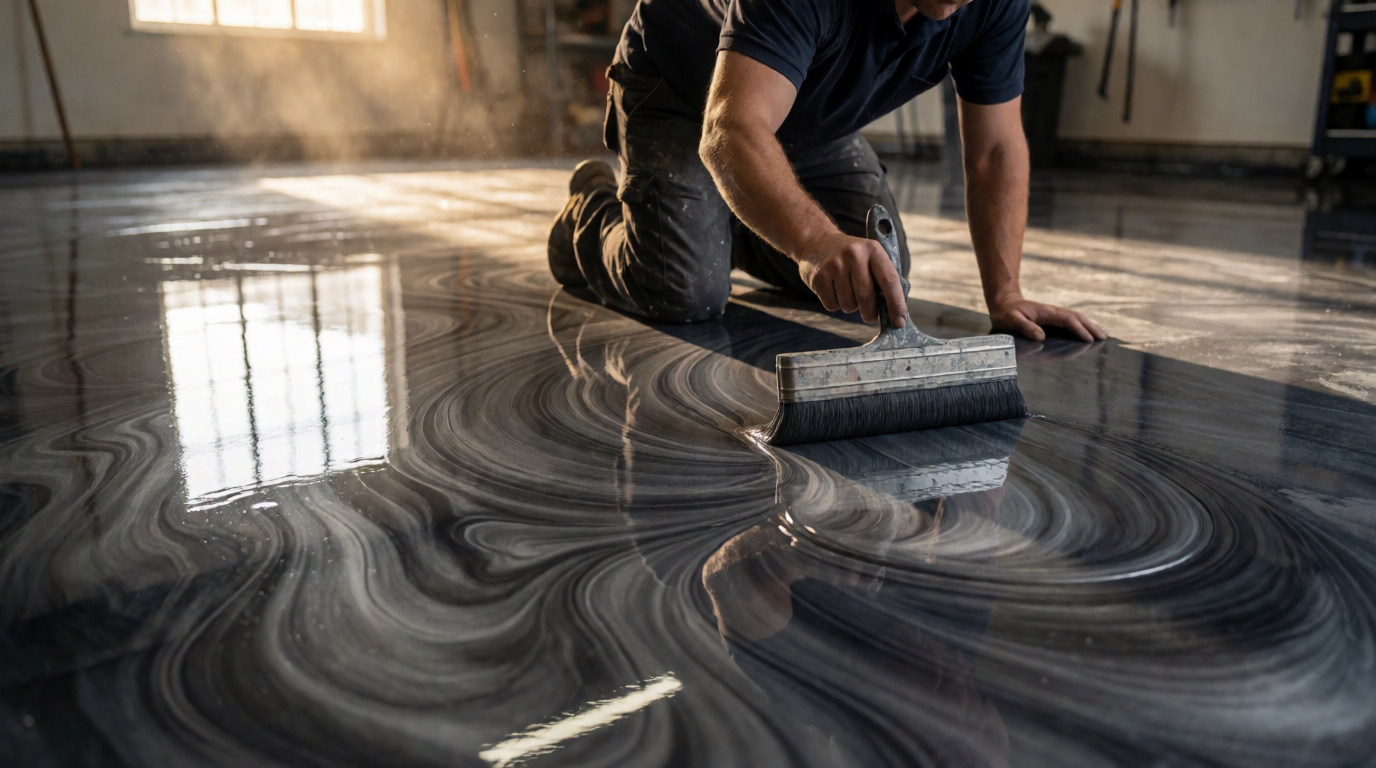
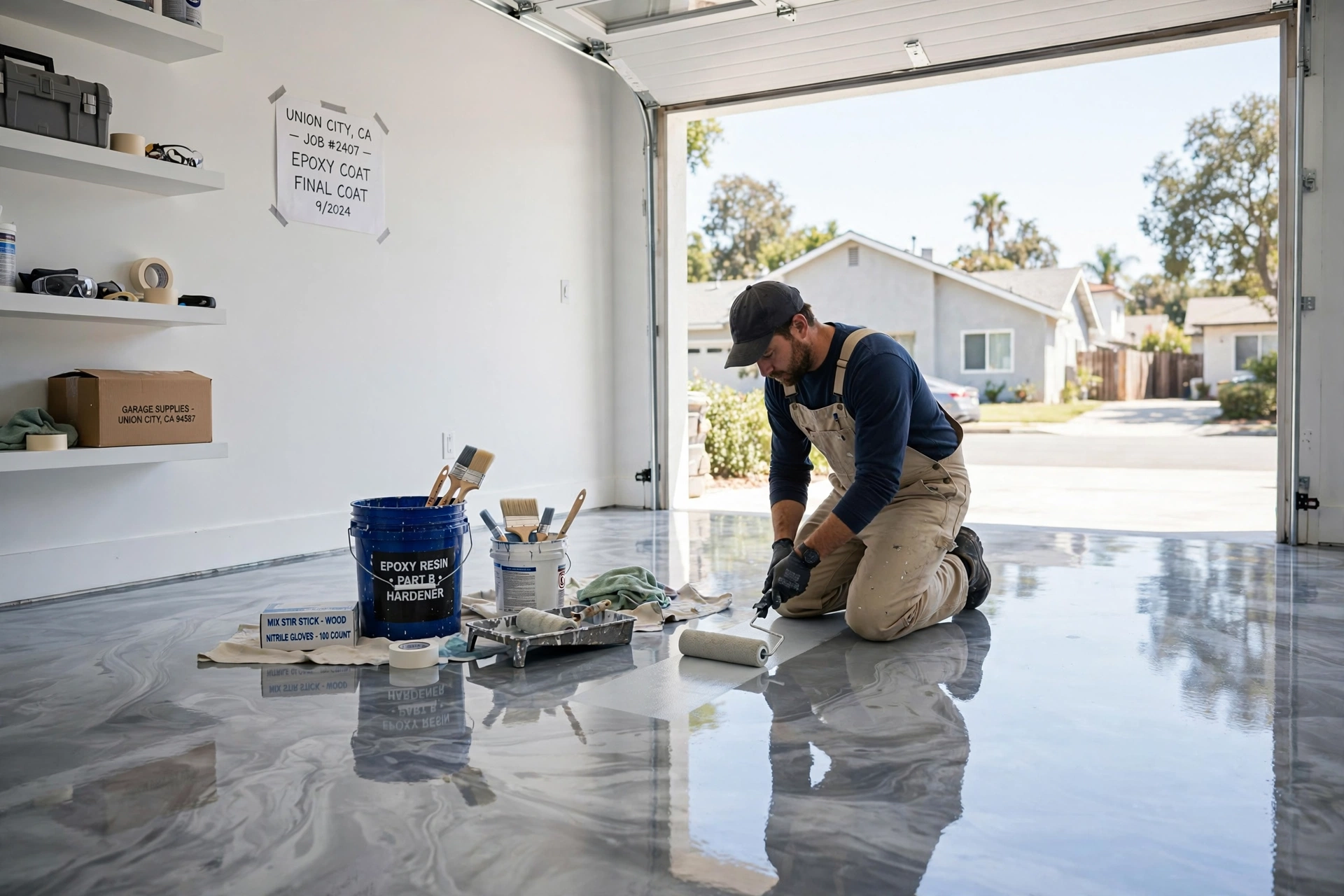
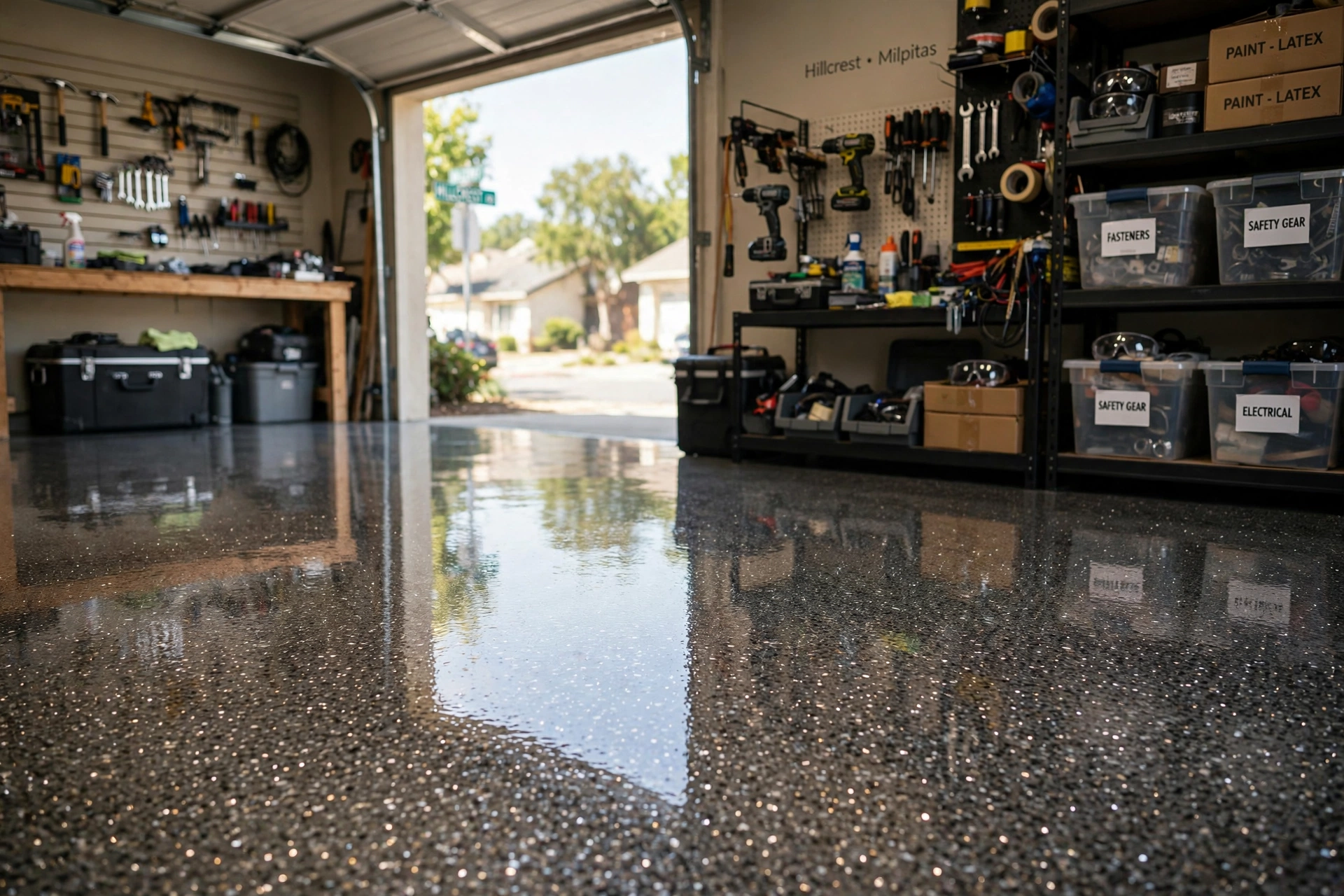
The Process: We performed a full diamond grind of the 600 sq. ft. area, followed by a concrete crack repair using a high-modulus epoxy filler. We then applied a three-coat system: a primer, a decorative flake broadcast for slip resistance, and a high-build clear topcoat.
The Result: The homeowner reported a 100% reduction in concrete dust, which previously migrated into the main house. The property value increased as the garage now functioned as a clean, showroom-quality extension of the home. The project was completed in four days, providing a surface that is now impervious to oil and road salt.
Case Study 2: West Berkeley Commercial Studio
An art collective in West Berkeley needed a flooring solution that could handle heavy foot traffic and frequent spills of acrylics and solvents. Their existing concrete was stained and uneven, making it difficult to maintain a sanitary environment.
The Process: Because of the high chemical exposure, we utilized a 100% solids epoxy system. We integrated a specific non-slip aggregate to ensure artist safety while maintaining a seamless look. We also implemented a precise perimeter cove base, meaning the epoxy climbs 4 inches up the wall to prevent water from seeping under the edges.
The Result: The studio saw a 40% increase in cleaning efficiency, as the seamless surface eliminated the need for scrubbing grout lines or cracks. The high-gloss white finish increased the brightness of the space, reducing the need for additional overhead lighting during the day.

How to Get Started with Epoxy Floor Coatings in Berkeley
Getting a professional epoxy floor is a process of precision. If you rush the preparation, the product will fail. At World Pro Painting, we follow a rigorous 5-step protocol that ensures the 6-year guarantee we provide is backed by science.
Step 1: Substrate Assessment and Moisture Testing
Not all concrete is created equal. Before applying any coating, we test for moisture vapor emission. If the concrete is "sweating," the epoxy will bubble and delaminate. In the humid environment of the Bay Area, this step is non-negotiable. We use calcium chloride tests to ensure the slab is dry enough for a permanent bond.
Step 2: Mechanical Surface Preparation
We avoid acid etching because it is inconsistent and environmentally hazardous. Instead, we use industrial diamond grinders to create a Concrete Surface Profile (CSP) of 2 or 3. This creates a "sandpaper" texture that allows the epoxy to grip the slab. This is where most House Painters in Niles Fremont, CA | World Pro Painting or other regional contractors differ; the quality of the grind determines the life of the floor.
Step 3: Crack Repair and Priming
We fill all cracks and pits with a specialized epoxy resin that is stronger than the concrete itself. Once the repairs are sanded flush, we apply a low-viscosity primer. This primer penetrates deep into the pores, sealing the concrete and providing a foundation for the thicker build coats.
Step 4: The Build Coat and Broadcast
Depending on the client's needs, we apply the base color coat. For those wanting added durability and slip resistance, we "broadcast" vinyl flakes into the wet epoxy. These flakes don't just look good; they provide a mechanical grip and hide imperfections in the concrete slab.
Step 5: Final Topcoat and Curing
We finish the floor with a high-performance clear coat. For maximum UV resistance (to prevent yellowing in sunny Berkeley garages), we often recommend a polyaspartic or urethane topcoat. This final layer is the armor that protects the floor from scratches and chemicals. While it may look dry in hours, we advise a full cure period before moving heavy machinery back in.
If you are considering a full-property update, you might also look into Commercial Painting in Cabrillo Fremont, CA | Licensed Painters to align your interior walls with your new high-end flooring.
Common Objections to Epoxy Floor Coatings
When speaking with Berkeley homeowners, I often hear a few recurring concerns. Most people assume these are deal-breakers, but the technical data suggests otherwise.
Objection 1: "I heard epoxy is slippery when wet."
This is a common misconception based on cheap, glossy paints. Professional epoxy is engineered with additive options. By broadcasting aluminum oxide or quartz, we create a surface that is actually safer than polished concrete. In practice, this means the floor provides a high coefficient of friction even when wet, which is why it's the standard for industrial kitchens and hospitals.
Objection 2: "Isn't it too expensive compared to a DIY kit?"
Most people assume the cost is just for the labor. However, the chemistry is different. DIY kits are often water-based or low-solids, meaning they are thin and peel within 24 months. According to the EPA's guidelines on lead and chemical safety, the improper use of chemicals in a home can be hazardous. A professional installation uses 100% solids resins that last a decade. When you divide the cost over 10 years versus re-doing a DIY floor every 2 years, the professional route is significantly cheaper.
Objection 3: "Will it yellow over time?"
Standard epoxies can yellow if exposed to direct UV light. However, we solve this by using a UV-stable topcoat. By applying a polyaspartic or aliphatic polyurethane finish, we lock in the color. The data shows that UV-stable coatings maintain their original hue for significantly longer than traditional resin-only systems.
Frequently Asked Questions
How long does a professional epoxy installation take in Berkeley?
Typically, a standard residential garage project takes between 3 to 5 days. The timeline is dictated by the curing process. Day one is dedicated to mechanical grinding and crack repair. Day two involves the primer and base coat. Day three is for the flake broadcast and the first topcoat. Finally, we allow a curing period before the client can drive their vehicle back onto the surface. Attempting to shorten this window often leads to "hot tire pick-up," where the heat from tires pulls the uncured epoxy off the floor. We prioritize the cure cycle to ensure the 6-year guarantee remains valid.
Is epoxy flooring better than polished concrete for a Berkeley home?
It depends on the goal. Polished concrete is beautiful and durable, but it remains porous unless a sealer is used, and it provides no chemical protection. Epoxy, on the other hand, is a total seal. If you are storing chemicals, oil, or using the space for a workshop, epoxy is vastly superior. According to the Painting Contractors Association (PCA), epoxy provides a level of hygienic control and chemical resistance that polished concrete simply cannot match. For most Berkeley homeowners, the ability to wipe up a spill without staining the slab makes epoxy the logical choice.
Can you apply epoxy over an existing painted floor?
In most cases, no—not if you want a permanent result. If the existing paint is peeling or failing, it acts as a "bond breaker." If we apply epoxy over old paint, the new floor will only be as strong as the old paint's grip on the concrete. In my experience, the only way to ensure a professional result is to grind the floor back to raw concrete. We use industrial grinders to remove all previous coatings, ensuring the new epoxy bonds directly to the substrate. This is the difference between a surface-level fix and a structural upgrade.
How do I maintain my epoxy floor to make it last 15 years?
Maintenance is remarkably simple, which is why it's so popular. For daily cleaning, a microfiber dust mop and a pH-neutral cleaner are all you need. Avoid using ammonia or harsh acidic cleaners, as these can eventually dull the gloss of the topcoat. For deep cleans, a damp mop with a mild detergent is sufficient. I always tell my clients to avoid using steel wool or abrasive scrubbing pads, as these can create micro-scratches. By following this simple regimen, the industrial-grade finish we install at World Pro Painting will maintain its luster for over a decade.
Does epoxy flooring help with the dust in my garage?
Yes, absolutely. Concrete is a naturally "dusty" material because the top layer of the slab constantly breaks down into fine particles called concrete dust. This dust doesn't just stay on the floor; it gets into your cars, your storage bins, and your lungs. Epoxy seals the surface completely, eliminating the source of the dust. After analyzing dozens of Berkeley garages, we've found that homeowners notice an immediate improvement in air quality and a significant reduction in the amount of cleaning required for their vehicles and tools.
Final Thoughts on Epoxy Floor Coatings in Berkeley, CA
Investing in high-quality epoxy floor coatings in Berkeley, CA, is about more than just aesthetics; it is a strategic upgrade to your property's infrastructure. By choosing a licensed contractor like World Pro Painting, you avoid the common pitfalls of DIY failures and ensure that your concrete is mechanically prepared for a bond that lasts. From the moisture-heavy coastal air of West Berkeley to the steep driveways of the hills, our systems are engineered to survive the unique challenges of the East Bay.
Whether you need a chemical-resistant floor for a commercial studio or a clean, dust-free garage for your home, the path to a permanent solution starts with professional preparation and premium materials. Don't settle for a thin coating that will peel in two years. Choose a system backed by a 6-year guarantee and the expertise of CSLB #1142478.
Ready to transform your concrete? Schedule your Free On-Site Estimate today at worldpropainting.com and let us build a floor that lasts a lifetime.
Recommended Readings
To deepen your understanding of these topics, we recommend reading the following articles:
- Epoxy Garage Floor Coating
- Epoxy Floor Coatings in Lafayette, CA | Licensed Contractors
- Epoxy Floor Coatings in Orinda, CA | Licensed Contractors
- Epoxy Floor Coatings in Alameda, CA | Licensed Contractors
Commercial Painting Cost Calculator & Color Guide
Get an instant estimation checklist for painting your office, warehouse, or house. Learn how to choose colors that boost productivity.