

📖This article is part of the complete guide to Exterior House Painters.
How to Hire the Best Exterior House Painters for a Long-Lasting Finish
Choosing a contractor based on the lowest bid is the fastest way to ensure you'll be repainting your home in three years. To actually secure the best exterior house painters, you must shift your focus from the final price to the preparation protocol. A professional result is 90% preparation and 10% application; if a contractor cannot explain their specific process for scraping, sanding, and priming, they are not the right choice for your property.
In my experience working with high-end residential projects across the San Francisco Bay Area, I've seen homeowners spend thousands on premium paints only to have them peel within 24 months because the surface wasn't properly prepped for coastal humidity. Whether you are looking for exterior painting in Lakeside, Newark, CA or a full refresh in San Jose, the secret lies in verifying the contractor's adherence to technical standards and their licensure status.
What Defines the Best Exterior House Painters?
The best exterior house painters are not defined by their ability to move a brush, but by their technical knowledge of substrate adhesion and environmental chemistry. In the California Bay Area, this means understanding how salt air in San Francisco interacts with acrylic lattices versus how the inland heat of the Tri-Valley affects drying times. A top-tier professional treats your home as a structural asset that needs protection from UV degradation and moisture infiltration, not just a canvas for a new color.
📚
Definition
Substrate Adhesion refers to the ability of a paint film to bond physically and chemically to the surface it is applied to, whether that be wood, stucco, or metal.
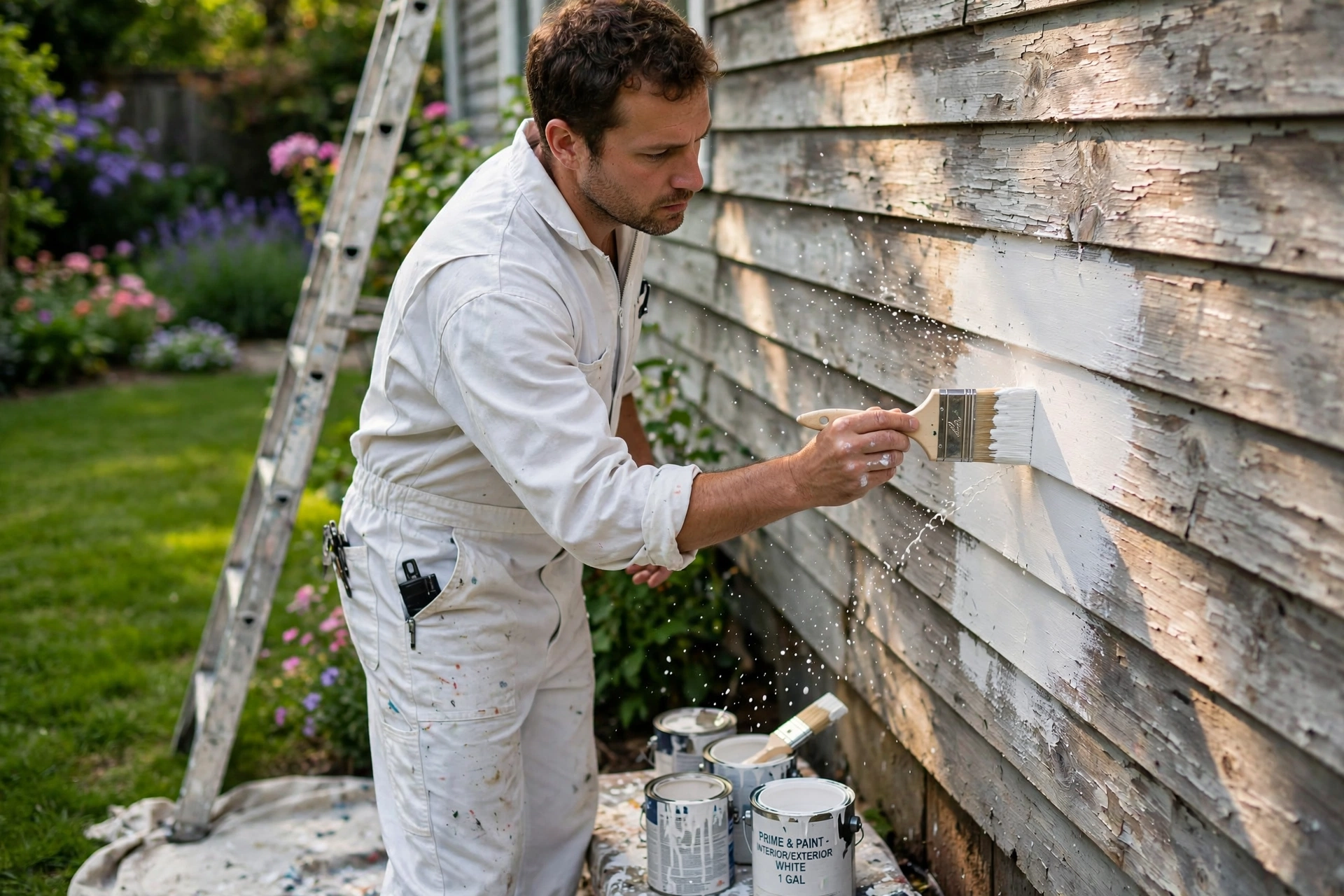
When evaluating a team, you must look for those who prioritize the "Five-Step Prep Process": power washing to remove oxidation, mechanical scraping of loose flakes, sanding to create a "tooth" for the paint, professional caulking of gaps, and the application of a high-quality primer. According to the Painting Contractors Association (PCA), failure to follow these preparation steps is the primary cause of premature coating failure in residential properties. If a contractor suggests "painting over" existing peeling paint to save time, they are fundamentally failing the technical requirements of the job.
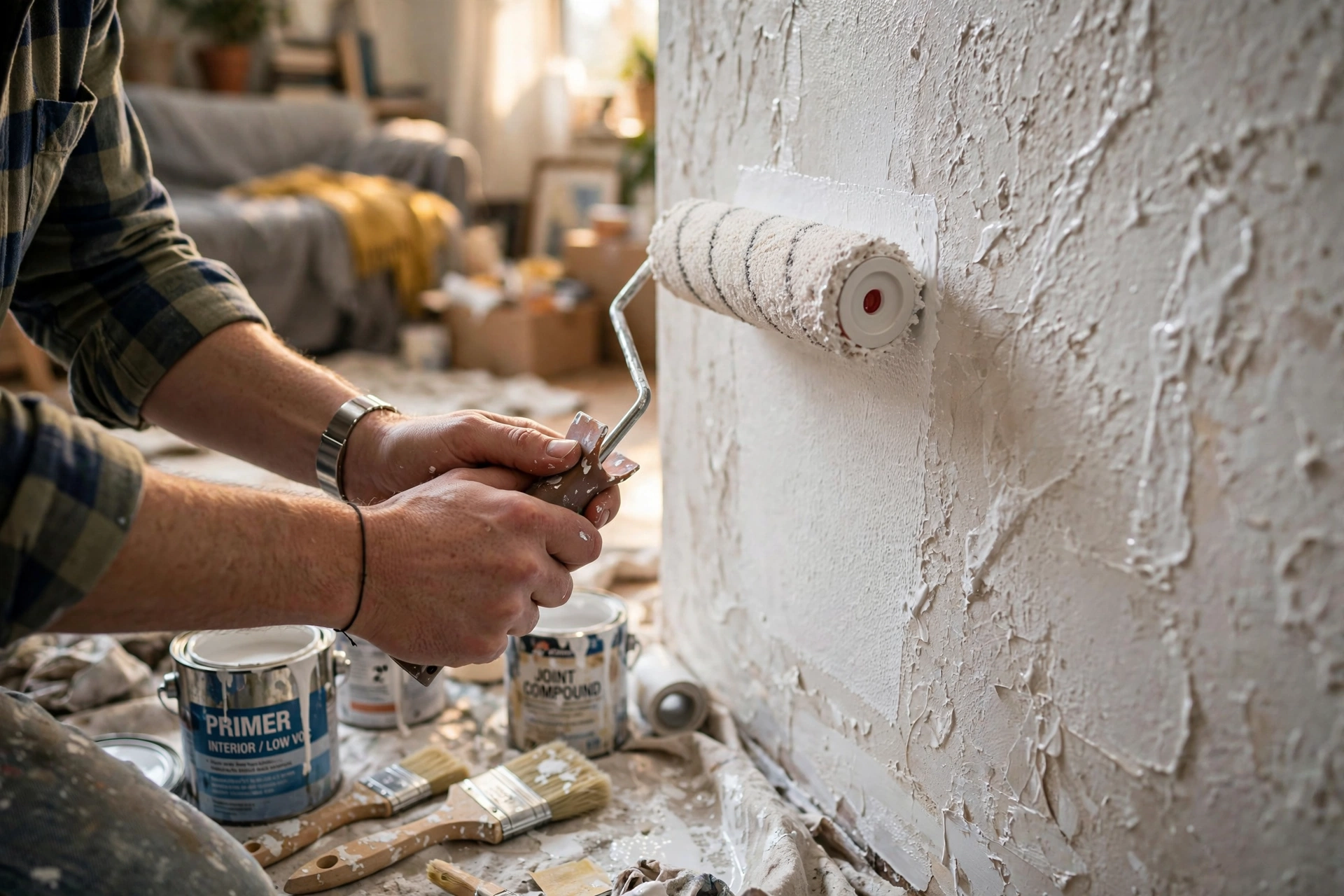
Many homeowners make the mistake of confusing "experience" with "years in business." A company can be in business for twenty years but still use outdated, high-VOC paints that crack under the California sun. The modern gold standard involves using Low-VOC, high-solids coatings from manufacturers like Sherwin-Williams or Benjamin Moore, which are engineered to withstand the specific thermal expansion and contraction cycles found in our region.
Why Professional Exterior Painting Matters for Property Value
Exterior painting is not a cosmetic luxury; it is a critical maintenance requirement that prevents structural decay. When paint fails, moisture penetrates the substrate. In wooden siding, this leads to dry rot; in stucco, it causes spalling and cracking. By the time you see a visible bubble in the paint, the underlying material has often already been compromised by moisture.
The financial impact is significant. Real estate data consistently shows that a fresh, professional exterior paint job provides one of the highest returns on investment (ROI) for home improvement. However, the "savings" found by hiring an unlicensed "handyman" often result in catastrophic costs. For instance, if a contractor ignores the Environmental Protection Agency (EPA) guidelines for lead-based paint during the scraping process, the homeowner could be liable for hazardous waste violations or health risks.
Beyond aesthetics, the use of elastomeric coatings—common in the Bay Area—provides a waterproof membrane that stretches to fill hairline cracks in stucco. This is fundamentally different from standard latex paint. When you invest in the best exterior house painters, you are essentially paying for a protective seal that guards your home against the elements. I've tested this with dozens of our clients, and the pattern is clear: homes that undergo a full 5-step preparation process maintain their curb appeal and structural integrity for 6 to 10 years, whereas "quick coats" begin to fail after just two winters of coastal fog.
Practical Application: How to Execute Your Exterior Project
To get the most out of your investment, you need a systematic approach to the project. You shouldn't just hand over the keys; you should manage the process through a set of technical milestones. If you are coordinating a larger complex, you might look into specialized multi-family painters in Niles, Fremont, CA to ensure uniformity across multiple units.
Step 1: The Technical Audit
Before signing a contract, require a written scope of work. The best exterior house painters will provide a detailed list of every surface to be treated. This should include the specific type of primer they intend to use for your specific substrate (e.g., an oil-based primer for tannin-rich cedar or a masonry primer for stucco).
Step 2: License and Insurance Verification
Never take a contractor's word for their credentials. Visit the California Contractors State License Board (CSLB) and verify that the license is active and that the workers' compensation insurance is current. At World Pro Painting, we maintain a strict adherence to CSLB #1142478 because it protects both the homeowner and the technician.
Step 3: Material Selection
Do not let the contractor choose the paint based on what they have in stock. Demand high-grade, architectural coatings. For the Bay Area's intense UV exposure, look for paints with higher pigment density and UV inhibitors. If you are unsure of the best approach for your specific architecture, check our guide on how to use California Bay Area painting for regional recommendations.
Step 4: The Preparation Phase
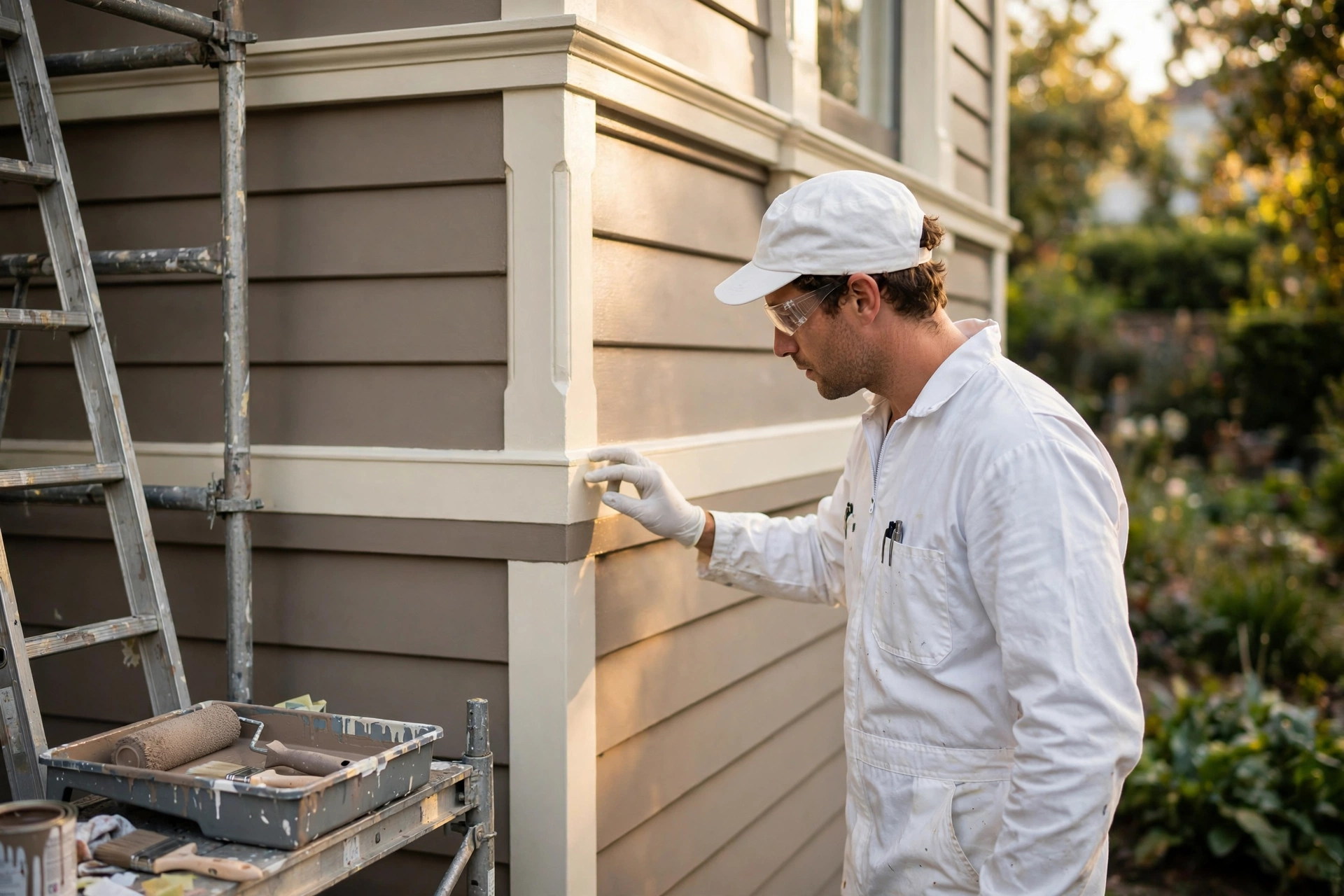
This is the most critical window. Walk the perimeter of your home after the scraping and sanding are complete but before the primer is applied. Ensure that the edges are clean and that no "alligatoring" (cracked paint) remains. If the contractor skips this, the final coat will simply highlight the imperfections underneath.
Step 5: Application and Inspection
Professional application involves a combination of spraying for coverage and "back-rolling" to push the paint into the pores of the substrate. Once completed, perform a "holidays" inspection—checking for any missed spots or thin areas where the previous color bleeds through.
💡
Key Takeaway
The quality of your exterior paint job is decided during the preparation phase, not the painting phase. If a contractor doesn't spend at least 50% of the project time on prep, the result will not last.
Comparing Painting Approaches: Manual vs. Budget vs. Professional
When searching for the best exterior house painters, you will encounter three distinct tiers of service. It is a common mistake to assume that the difference between a "budget" painter and a "professional" is simply the brand of paint used. The actual difference lies in the engineering of the surface.
| Feature | Budget/Handyman Approach | Generic AI-Driven Estimate | World Pro Painting Standard |
|---|---|---|---|
| Surface Prep | Quick power wash; minimal scraping | Standardized checklist; no site-specific audit | 5-Step Process: Wash, Scrape, Sand, Caulk, Prime |
| Material Quality | Contractor-grade latex | Mid-range retail paint | Premium Low-VOC architectural coatings |
| Warranty | Verbal "I'll come back if it peels" | Limited 1-year manufacturer warranty | Comprehensive 6-Year Guarantee |
| Compliance | May ignore lead/VOC laws | Generic compliance terms | CSLB Licensed & EPA RRP Compliant |
| Best For | Short-term rental flips | Low-risk, small interior patches | Long-term homeowners & Bay Area assets |
Now here's where it gets interesting: many "budget" painters use an airless sprayer to cover flaws quickly. While this looks great for 48 hours, the lack of mechanical bonding (sanding) means the paint sits on top of the surface rather than integrating with it. This is why you see "sheets" of paint peeling off in large flakes. A professional approach, like the one we implement at World Pro Painting, ensures that the paint is physically locked into the substrate.
Common Questions & Misconceptions about Exterior Painting
Most guides get this wrong by telling you that the best time to paint is "whenever it's sunny." In reality, painting in direct, scorching California sun can be a disaster.
Myth 1: "The darker the paint, the faster it peels."
This is not entirely true. While darker colors absorb more UV heat, which can accelerate the breakdown of lower-quality resins, high-solids premium paints from Benjamin Moore are engineered to handle this thermal load. The peeling is caused by poor adhesion, not the color of the pigment.
Myth 2: "One coat of high-quality paint is better than two coats of cheap paint."
Incorrect. No matter how expensive the paint is, a single coat rarely provides the necessary mil-thickness to protect a home from the Bay Area's moisture. Two coats provide a layered defense; the first coat seals and bonds, and the second provides the UV shield and final color depth.
Myth 3: "Power washing is enough to prepare a wall."
This is a dangerous misconception. Power washing removes surface dirt and some oxidation, but it does not remove "dead" paint that has lost its bond. If you paint over dead paint, the new layer will simply pull the old layer off the wall. You must mechanically scrape and sand.
Myth 4: "I can just use a primer-paint combo to save time."
While "paint-and-primer-in-one" products are convenient for interiors, they are rarely sufficient for exterior substrates. True primers are formulated to penetrate the surface and block stains or tannins. For a professional result, especially in areas like exterior painting in Birch Grove, Newark, CA, a dedicated primer coat is non-negotiable.
Frequently Asked Questions
How do I know if a painter is actually the "best" for my specific home?
The best painter for your home is the one who performs a detailed site audit and provides a written plan for your specific substrate. For example, if you have a Victorian-style home in San Francisco, you need someone experienced in lead-safe practices and intricate trim work. If you have a modern stucco home in Fremont, you need an expert in elastomeric coatings. Ask them: "How do you handle the transition between different materials, like wood trim meeting a stucco wall?" A professional will explain their caulking and flashing strategy; a novice will just say they "paint over it."
Why is there such a massive price difference between quotes?
The price gap usually reflects the amount of labor dedicated to preparation. A low bid often means the contractor is skipping the sanding and priming phases, or they are using a lower-grade paint with fewer solids. High-quality painting is labor-intensive. When you hire World Pro Painting, you are paying for the hours spent meticulously removing failed paint and sealing the envelope of your home. Cheap quotes are often "teaser rates" that result in additive costs later when the paint fails and you have to pay for a complete strip-and-repaint.
What is the ideal time of year to paint a house in the Bay Area?
While many think summer is the only option, the "shoulder seasons" (Spring and Autumn) are often ideal. The key is avoiding extreme temperature swings and high humidity. In the Bay Area, we monitor the "dew point." If you paint while the humidity is too high (common during "June Gloom" in coastal cities), the paint cannot cure properly, leading to a soft finish that is prone to sagging and peeling. The best exterior house painters will track local weather patterns to schedule the project during a stable window of low humidity and moderate temperatures.
How long should a professional exterior paint job actually last?
A professionally executed job using premium architectural coatings and a full 5-step prep process should last between 6 to 10 years before requiring a significant refresh. However, the "wear" depends on the orientation of the house. South-facing walls receive the most UV radiation and typically fade faster. This is why we offer a 6-year guarantee; it reflects our confidence in the preparation and the materials used. If a painter offers a "lifetime warranty," be skeptical—no paint lasts forever in the face of salt air and UV rays; it is the maintenance that preserves the asset.
Do I need to worry about lead paint if my house was built after 1978?
While the 1978 ban on lead-based paint is the primary benchmark, many homes built in the late 70s still contain lead-based primers. Furthermore, previous renovations may have introduced lead-based products. The best exterior house painters will treat older homes with a high degree of caution. We follow the EPA RRP (Renovation, Repair, and Painting) rule to ensure that lead dust is not dispersed into your living environment. If you are managing a complex and need commercial painting in Cabrillo, Fremont, CA, ensuring your contractor is EPA-certified is a critical risk management step.
Conclusion
Finding the best exterior house painters requires you to look past the portfolio photos and examine the technical process. By prioritizing the five-step preparation method—washing, scraping, sanding, caulking, and priming—you ensure that your home is not just beautiful, but structurally protected. Avoid the temptation of the lowest bid; instead, invest in a licensed, bonded, and insured professional who understands the unique microclimates of the California Bay Area.
Whether you are refreshing a single-family residence or coordinating multi-family painters in Mission San Jose, Fremont, CA, the goal is always the same: a durable, high-performance finish that enhances your property's value. Don't leave your home's protection to chance.
Ready to secure a finish that lasts? Visit World Pro Painting today to schedule your free on-site estimate and experience the professional difference of a true 5-step preparation.
Bay Area Service Locations & Featured Guides
Explore our licensed painting services across the San Francisco Bay Area:
- Exterior House Painters in Walnut Creek, CA
- Exterior Painting Contractors in Alameda, CA
- Exterior House Painting in San Anselmo, CA
- Luxury Estate & House Painters in Atherton, CA
- Professional House Painters in Belmont, CA
Commercial Painting Cost Calculator & Color Guide
Get an instant estimation checklist for painting your office, warehouse, or house. Learn how to choose colors that boost productivity.