

How to Choose the Right Cabinet Refinishing Experts: A Professional Comparison Guide
Stripping old lacquer and applying a factory-grade finish to kitchen cabinets is a high-stakes operation; one wrong chemical choice or a missed sanding grit can result in peeling paint within six months. To achieve a professional result, you need a rigorous cabinet refinishing experts comparison that evaluates technical preparation over surface-level aesthetics. The process requires a precise sequence: degreasing, chemical stripping or sanding, priming with high-adhesion bonding agents, and spraying with industrial-grade enamels. In my experience working with high-end homes across the Bay Area, the difference between a "handyman" and a "specialist" is found in the preparation phase, not the final coat of paint.

What Exactly is Professional Cabinet Refinishing?
When homeowners look for a cabinet refinishing experts comparison, they often confuse "painting" with "refinishing." Painting is the simple act of applying a new color over an existing surface. Refinishing is a comprehensive restorative process that involves removing the existing finish, repairing the substrate, and applying a durable, protective coating that mimics a factory finish.
📚
Definition
Cabinet Refinishing is the technical process of removing old finishes, repairing imperfections in the wood or MDF, and applying a multi-stage coating system—typically including a primer and a topcoat—to revitalize the cabinetry without replacing the physical boxes.
This distinction is fundamental because the failure rate of simple "painting" projects is incredibly high. Most DIY attempts fail because the painter ignores the chemical bond between the old finish and the new paint. Professional refinishers use specialized equipment, such as High-Volume Low-Pressure (HVLP) sprayers, to ensure a smooth, orange-peel-free surface. According to the Painting Contractors Association (PCA), the longevity of a coating is directly proportional to the quality of the surface preparation and the adherence to the manufacturer's specified drying times.
In the California Bay Area, environmental factors like humidity and salt air in coastal cities like San Francisco or Pacifica can impact how paint cures. This is why we emphasize the use of Low-VOC, high-performance coatings that comply with local BAAQMD regulations while maintaining industrial durability. If you are managing a larger project, such as updating multiple units, you might look into Multi-Family Painters in Mission San Jose - Fremont, CA to ensure consistency across various properties.
Why Does the Choice of Expert Impact Your Home Value?
The financial implications of choosing the wrong expert are staggering. A poor refinishing job doesn't just look bad; it can actually decrease the appraisal value of a home because it signals "deferred maintenance" or "low-quality renovations" to a potential buyer. When you perform a detailed cabinet refinishing experts comparison, you aren't just shopping for a price—you are protecting an asset.
According to data from the California Contractors State License Board (CSLB), a significant percentage of consumer complaints in the home improvement sector stem from unlicensed contractors performing specialized work they aren't equipped for. In the case of cabinetry, the cost of "fixing" a failed paint job—which involves sanding off the new paint, removing the primer, and starting over—often costs 1.5x more than if the job had been done correctly the first time.
Furthermore, the ROI of kitchen updates remains one of the highest in the real estate market. However, this ROI depends on the finish. A factory-grade finish suggests quality, whereas brush marks and drips suggest amateurism. For business owners updating commercial spaces, this is even more critical. We often advise those looking at Commercial Painting in Cabrillo - Fremont, CA: A 2026 Guide for Business Owners that the durability of the finish in high-traffic areas is the primary driver of long-term cost savings.
The risk also extends to safety. In many older Bay Area homes, particularly Victorians in San Francisco, there is a high probability of lead-based paint in the lower layers of cabinetry. Experts who follow the Environmental Protection Agency (EPA) RRP rules ensure that lead dust is contained, whereas cheap alternatives may expose your family to toxic particles during the sanding process.
The Step-by-Step Professional Refinishing Process
To understand a cabinet refinishing experts comparison, you must know what a gold-standard workflow looks like. If a contractor tells you they can "just spray and go," they are skipping the steps that guarantee a 6-year guarantee.
Step 1: Deconstruction and Labeling
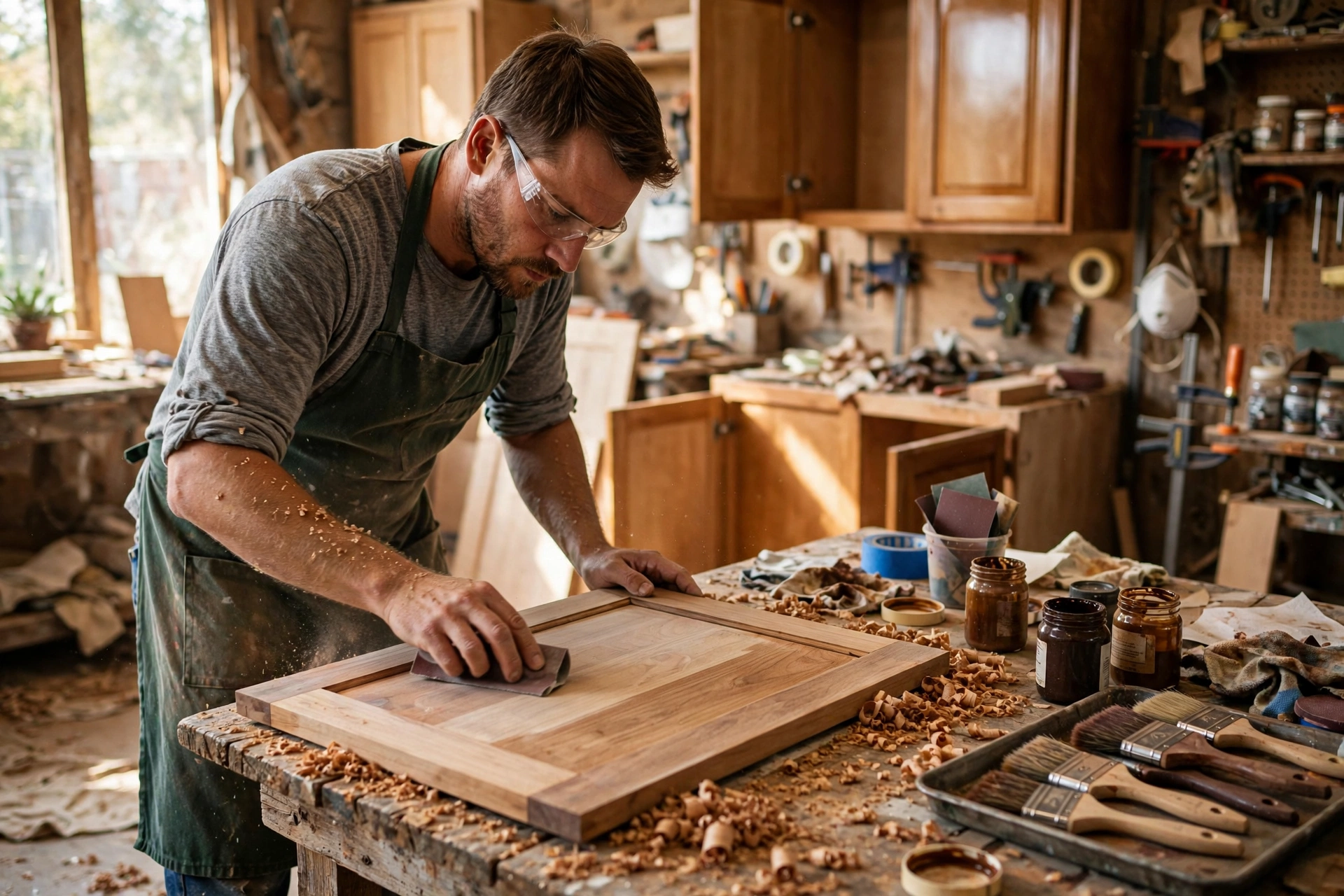
Professionalism begins with organization. Every door and drawer face is removed, hardware is bagged, and every piece is labeled with a corresponding number to ensure they return to their original positions. This prevents the "misaligned door" syndrome common in cheap jobs.
Step 2: Deep Degreasing
Kitchens are oily environments. Applying paint over grease is a recipe for immediate peeling. We use industrial degreasers to strip away years of cooking oils and cleaning residues. This is a stage where many "experts" fail, leading to "fish-eyes" or bubbles in the finish.
Step 3: Mechanical and Chemical Preparation
Depending on the substrate, we use a combination of chemical strippers and precision sanding. The goal is to create a "tooth" on the surface. We start with a coarse grit to remove the bulk of the old finish and move to a fine grit for a smooth transition. The mistake I made early on—and that I see constantly—is relying solely on "liquid sandpaper" or deglossers. These chemicals often leave a residue that inhibits the bond of the primer.
Step 4: High-Adhesion Priming
We utilize premium primers from brands like Benjamin Moore or Sherwin-Williams that are specifically engineered for cabinetry. These primers block tannins (the brown spots that bleed through white paint on oak) and create a chemical bond with the wood.
Step 5: Precision Spraying (The Finish)
The final coats are applied using HVLP sprayers in a controlled environment. This ensures a level, mirror-like finish. We typically apply two topcoats to ensure full opacity and depth of color. For those integrating this into a larger home overhaul, understanding how to use California Bay Area painting strategies can help coordinate the kitchen finish with the rest of the interior.
💡
Key Takeaway
The quality of cabinet refinishing is decided in the preparation phase. If the contractor spends more time sanding and cleaning than painting, they are likely a true expert.

Comparing Your Refinishing Options
When conducting a cabinet refinishing experts comparison, you will generally encounter three levels of service. Understanding the technical differences helps you align your budget with your expectations.
| Feature | DIY / Budget Handyman | Mid-Range Painting Co. | World Pro Painting (Expert) |
|---|---|---|---|
| Application Method | Brush and Roller | Basic Airless Sprayer | HVLP Professional Spray |
| Prep Work | Light sanding/Wiping | Basic priming | Full degrease, sand, and bond |
| Material Quality | Standard Latex Paint | Cabinet-specific paint | Industrial-grade Enamels |
| Durability | Low (Peels in 1-2 years) | Moderate (3-5 years) | High (6-Year Guarantee) |
| Finish Quality | Visible brush marks | Some "orange peel" texture | Factory-smooth finish |
| Best For | Temporary rentals | Low-budget flips | Forever homes & Luxury rentals |
Now, here's where it gets interesting: many homeowners choose the mid-range option thinking they are saving money, only to find that the "orange peel" texture (a bumpy surface caused by improper spray pressure) makes the kitchen look cheap. By investing in a high-end refinishing process, you avoid the cycle of repainting every few years.
Common Questions and Misconceptions
Most guides get this wrong by suggesting that "any high-quality paint" will work on cabinets. That is a myth. Cabinets are high-touch surfaces; they are subjected to fingernail scratches, steam from dishwashers, and chemical cleaners. Standard wall paint, even "premium" versions, is too soft and will develop a "tack" that attracts dust.
Another common misconception is that you can skip the primer if you use a "Paint + Primer in One" product. This is fundamentally incorrect for cabinetry. These hybrid products are designed for drywall, not for the non-porous surface of a factory-finished cabinet. Without a dedicated bonding primer, the paint is essentially sitting on top of the surface like a sheet of plastic, waiting for a small impact to cause it to flake off.
Finally, some believe that "painting over the old finish" is the most efficient way to go. While this is faster, it increases the thickness of the door edges, which can lead to doors not closing properly or the paint cracking at the joints. A professional expert knows when to strip the finish entirely and when to scuff-sand, based on the condition of the original wood. This level of discernment is what separates a master painter from a general contractor. For those managing exteriors as well, comparing exterior painting in Lakeside, Newark, CA: A complete guide for 2026 can show the same commitment to preparation that we bring to interiors.
Frequently Asked Questions
How long does the professional cabinet refinishing process actually take?
A high-quality refinishing project typically takes between 7 to 14 days. This timeline is non-negotiable because it accounts for the necessary cure times between the degreasing, priming, and top-coating phases. Many budget contractors claim they can finish a kitchen in 3 days, but this usually means they are skipping the cure times or using paints that dry quickly but lack long-term durability. At World Pro Painting, we adhere to the manufacturer's specifications for drying, as rushing this process leads to "blocking"—where the paint remains slightly soft and sticks to other surfaces.
Is it better to paint cabinets or replace them entirely in 2026?
For most homeowners, refinishing is the superior choice if the "bones" of the cabinetry are structurally sound. Replacing cabinets is an invasive process that often requires plumbing and electrical changes, costing 5x to 10x more than refinishing. Refinishing allows you to achieve a brand-new aesthetic—including modern colors like charcoal, navy, or creamy whites—without the waste and cost of a full demolition. It is the most sustainable and cost-effective way to modernize a kitchen while retaining the high-quality hardwood often found in older Bay Area homes.
What is the best type of paint for kitchen cabinets?
The industry gold standard is an alkyd-modified acrylic or a waterborne urethane enamel. These coatings provide the hard, durable shell of an oil-based paint but without the yellowing and the toxic fumes. We avoid standard latex because it is too soft. A professional-grade enamel resists stains, stands up to frequent scrubbing, and levels out as it dries to eliminate brush marks. When selecting colors, we often recommend consulting with a color specialist to ensure the hue complements the lighting specific to your neighborhood's microclimate.
How do I handle the "dust" problem during cabinet sanding?
This is one of the biggest pain points for homeowners. Professional experts utilize HEPA-filtered vacuum sanding systems that capture 99% of the dust at the point of contact. If your contractor is simply sanding with a block and a piece of sandpaper, your entire home will be covered in fine white powder. We also employ plastic zoning to seal off the kitchen from the rest of the living area. For those with larger properties, we apply similar containment strategies when working on Exterior Painting in Birch Grove, Newark, CA: A Complete Guide for 2026 to protect landscaping and siding.
Why is my current cabinet paint peeling in certain areas?
Peeling usually occurs in two areas: around the handles (due to skin oils) and near the stove/dishwasher (due to heat and moisture). This happens when the surface wasn't degreased properly or when a low-adhesion paint was used. If the paint is flaking off in large sheets, it is a clear sign that the bonding primer was skipped. To fix this, the failing paint must be completely removed, the surface neutralized, and a professional-grade bonding agent applied. This is why a rigorous cabinet refinishing experts comparison should prioritize the "Prep" section of the quote over the "Finish" section.
Final Thoughts on Your Cabinet Refinishing Experts Comparison
Choosing the right partner for your kitchen transformation comes down to a simple truth: you are paying for the preparation, not the paint. A company that offers a low price usually does so by cutting corners on the degreasing and sanding phases, which inevitably leads to a finish that fails within a few years. By focusing on a technical cabinet refinishing experts comparison—evaluating the equipment used, the brands of primer applied, and the adherence to environmental and safety standards—you ensure that your investment lasts for years.
Whether you are updating a luxury condo in San Francisco or a family home in Fremont, the goal is a finish that looks and feels like it just came from the factory. We pride ourselves on a 6-year guarantee because we don't guess—we follow a proven, five-step industrial process.
Ready to transform your kitchen with a finish that lasts? Skip the guesswork and get a professional assessment.
Schedule your Free On-Site Estimate today at World Pro Painting.
For more specialized services, explore our guides on Multi-Family Painters Brookvale - Fremont, CA or Multi-Family Painters in Niles - Fremont, CA.
Commercial Painting Cost Calculator & Color Guide
Get an instant estimation checklist for painting your office, warehouse, or house. Learn how to choose colors that boost productivity.