What Are Epoxy Coatings and How Do They Work?
📚Definition
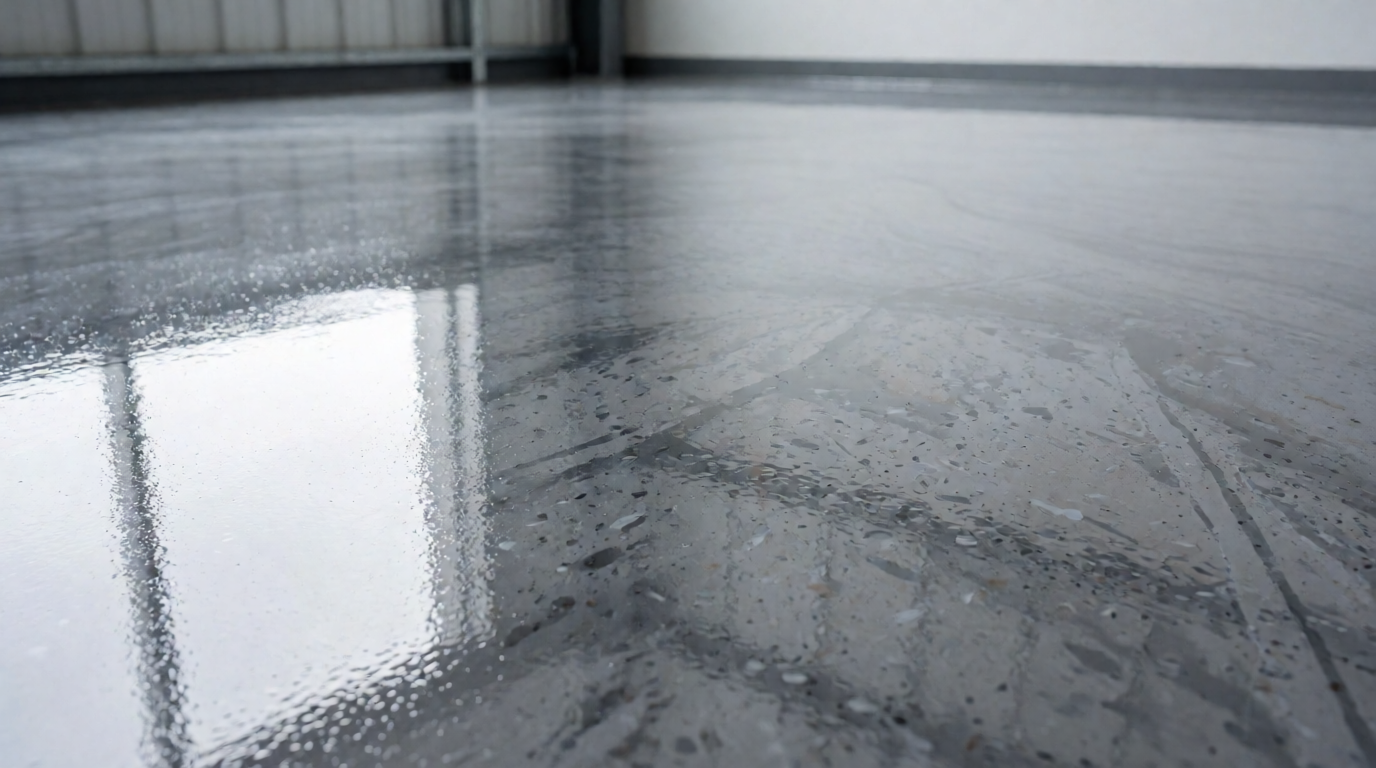
Epoxy coatings are a two-part system consisting of epoxy resin and a polyamine hardener that chemically react to form a rigid, durable plastic material. When applied to concrete floors, it creates a high-gloss, seamless, and waterproof surface that bonds molecularly with the substrate.
Epoxy is not paint. While paint sits on top of the surface, epoxy penetrates and bonds with the concrete, creating an integral layer that can withstand heavy foot traffic, vehicle tires, chemical spills, and impacts. For Bay Area properties—where garages often double as workshops, storage areas, home gyms, or even art studios—this durability is transformative. According to Sherwin-Williams' technical documentation, properly applied 100% solids epoxy achieves a tensile strength exceeding 2,000 psi and a bond strength of over 400 psi, far surpassing any latex or acrylic coating.
In my experience working with hundreds of Bay Area homeowners across 42 cities, I've seen epoxy transform everything from oil-stained garage slabs in Fremont to porous warehouse floors in San Leandro. The chemical curing process takes about 7 days to reach full hardness, after which the floor can handle forklifts, hot tire pickup, and even dropped tools without chipping. For a deeper dive into painting fundamentals, see our
house painting guide for Grimmer, Fremont.
Why Is Epoxy Coating Essential for Bay Area Properties?
The Bay Area presents unique challenges for concrete floors: morning fog moisture, seasonal temperature swings from East Bay summer heat to coastal dampness, and the salt-laden air near the San Francisco Bay. Standard floor paints and sealers fail within 12–18 months under these conditions. Epoxy coatings, however, form a non‑porous barrier that resists both moisture vapor transmission from below and chemical attacks from above.
1. Exceptional Durability in Bay Area Microclimates
Epoxy floors can last 10–20 years with proper installation and maintenance. A study by the Concrete Network confirms that epoxy coatings can withstand up to 1,000 psi of impact—far exceeding most residential needs. This makes them ideal for garages in Pleasanton where residents park vehicles and store gardening equipment. The real advantage is thermal cycling resistance: unlike paint that peels when concrete expands and contracts, epoxy flexes with the substrate.
2. Chemical and Stain Resistance
Bay Area homes often store automotive fluids, pool chemicals, and cleaning agents. Epoxy resists oil, gasoline, antifreeze, bleach, and most household chemicals. A single spill wiped up immediately leaves no trace. The Portland Cement Association confirms that properly applied epoxy forms a non‑porous barrier preventing liquid penetration. In commercial spaces like retail stores in San Mateo or car repair shops in Hayward, this resistance extends the floor's life by years.
3. Easy Maintenance for Busy Lifestyles
Say goodbye to sweeping concrete dust and scrubbing oil stains. Epoxy floors require only a mop and mild detergent. This is a major selling point for homeowners in cities like Dublin and Livermore, where time is at a premium. The seamless surface even reduces allergen buildup—a benefit for health‑conscious families.
4. Enhanced Safety with Anti‑Slip Options
Standard epoxy can become slippery when wet, but additives like aluminum oxide or quartz sand create a textured finish. This is crucial for commercial kitchens in San Jose or pool decks in Hillsborough. Additionally, the high‑gloss finish reflects light, brightening dark garages and reducing the need for extra lighting.
5. Property Value Boost
Real estate agents across the Bay Area consistently report that detached garages with upgraded epoxy floors sell faster and at higher prices. A 2025 study by the National Association of Realtors found that garage upgrades can increase home value by 3–7%. For homeowners in Atherton or Palo Alto, a showroom‑quality floor is a significant differentiator.
What Are the Different Types of Epoxy Coatings?
Not all epoxy is created equal. The type you choose depends on traffic, exposure, and budget. Here's a comparison table:
| Type | Best For | Durability | Mil Thickness | Cost per Sq Ft |
|---|
| Water‑Based Epoxy | DIY projects, light foot traffic | 3–5 years | 4–6 mils | $1–$3 |
| Solvent‑Based Epoxy | Garages, moderate traffic | 5–8 years | 6–10 mils | $3–$5 |
| 100% Solids Epoxy | Commercial, heavy traffic | 10–15 years | 10–20 mils | $4–$7 |
| Quartz‑Filled Epoxy | High‑end residential, showrooms | 15+ years | 15–25 mils | $6–$10 |
Water‑based epoxy is easier to apply but less durable. Solvent‑based offers a good balance for typical garages. For most Bay Area homeowners, 100% solids epoxy provides the best value: it is applied at a minimum of 10 mils, bonds aggressively, and resists hot tire pickup. Quartz‑filled epoxy adds texture and color depth, making it popular for luxury homes in Woodside or Hillsborough.
💡Key Takeaway
For 90% of residential applications in the Bay Area, a 100% solids epoxy system with a urethane topcoat delivers the optimal balance of durability, appearance, and cost.
How Do You Install Epoxy Coatings Step by Step?
Professional installation is critical for long‑lasting results. Here is the 6-step process we follow at World Pro Painting:
-
Surface Preparation (50% of time): Concrete must be clean, dry, and free of contaminants. We degrease, acid‑etch or diamond‑grind to create a profiled surface, and repair cracks and spalls. Moisture testing (ASTM D4263) is mandatory—excessive moisture requires a moisture mitigation system.
-
Primer Application: A penetrating epoxy primer ensures adhesion on porous or previously coated concrete. This prevents delamination.
-
Epoxy Application: The mixed 100% solids epoxy is applied using a roller or squeegee at 12–15 mils wet thickness. Multiple coats may be applied for color or chip incorporation.
-
Broadcast (Optional): Vinyl chips or quartz are broadcast into the wet epoxy for decorative effect. This hides imperfections and adds traction.
-
Topcoat: A clear aliphatic urethane topcoat is applied to seal the epoxy and provide UV stability. Without this, epoxy yellows within 6 months in sun‑exposed garages.
-
Curing Time: The floor must remain untouched for 24–72 hours, with full chemical curing taking 7 days. Temperature and humidity affect cure time.
Common mistakes include skipping moisture testing, applying epoxy over old paint, or using too thin a coat. For professional results, especially with fast‑curing polyaspartic alternatives, see our
commercial painting services in Santa Clara or
exterior coating best practices.
How Does Epoxy Compare to Other Floor Coatings?
| Feature | Epoxy | Polyurethane | Polyaspartic | Acrylic Paint |
|---|
| Durability | Excellent | Very Good | Excellent | Poor |
| UV Resistance | Low (needs topcoat) | High | High | Fair |
| Cure Time | 24–72 hrs | 24–48 hrs | 1–4 hrs | 4–24 hrs |
| Cost per Sq Ft | $3–$7 | $4–$8 | $5–$10 | $1–$3 |
| Lifespan | 10–20 yrs | 5–10 yrs | 10–15 yrs | 1–3 yrs |
| Repair Complexity | Moderate | Moderate | Difficult | Easy |
💡Key Takeaway
For most Bay Area applications, 100% solids epoxy with a UV‑stable urethane topcoat offers the best balance of cost, durability, and appearance. Polyaspartic coatings cure faster but are more expensive and require expert application—ideal for commercial spaces needing next‑day service.
Best Practices for a Lasting Epoxy Floor
-
Test for Moisture – Concrete slabs in the Bay Area often have high moisture vapor emissions. Tape a 2x2 ft plastic sheet to the floor for 24 hours; condensation indicates a problem. Mitigation systems (e.g., Moistop) add $1–$2 per sq ft but prevent blistering.
-
Choose the Right Color and Flakes – Light gray or beige hides dust better than black or white. Vinyl flakes (1/16” to 1/8”) add texture and mask minor imperfections. For a modern look, use a 60% gray base with 40% black/white flakes.
-
Plan for Storage – Coat the floor before installing shelving or cabinets. Moving heavy items after curing can scratch the surface. If coating around existing fixtures, tape off at the base.
-
Maintain Proper Temperature – Apply epoxy when the concrete temperature is between 50°F and 90°F. Bay Area garages in summer can exceed 100°F; cool the slab with a fan before application.
-
Hire a Professional – According to the National Association of Home Builders' 2024 survey, 40% of DIY epoxy projects require redo within two years. In my experience, the most common failure is adhesion loss due to poor grinding or moisture.
What Are Common Mistakes and How to Avoid Them?
- Skipping Diamond Grinding – Acid etching alone cannot create the mechanical profile needed for 100% solids epoxy. Grinding to a CSP 2–3 profile (concrete surface profile) is non‑negotiable.
- Applying Over Old Paint – Epoxy will not bond to paint, especially oil‑based. The paint must be completely removed via shot blasting or scarifying.
- Not Using a Primer on High‑Porosity Concrete – Porous slabs in older Bay Area homes (e.g., pre‑1980) absorb epoxy, leading to thin spots and premature failure.
- Incorrect Mixing – Epoxy components must be mixed at the exact ratio. Failure to mix thoroughly results in soft or sticky spots.
- Rushing Cure Time – Parking a car after 24 hours can cause tire peel. Wait the full 7 days for chemical cure.
Frequently Asked Questions
How long does epoxy coating last in a Bay Area garage?
With proper surface preparation and a 100% solids system applied at 15 mils, epoxy floors easily last 10–20 years. The key factors are moisture control, a UV‑stable topcoat, and avoidance of hot tire pickup (common with thin coatings). In my experience, clients in San Ramon and Dublin have epoxy floors looking new after 12 years with simple re‑application of topcoat every 5–7 years.
Can I apply epoxy coating over existing paint?
No. Epoxy will not adhere to old paint—especially oil‑based paints—and will peel within months. The existing coating must be completely removed by diamond grinding or shot blasting. This is one of the most common mistakes DIYers make. A professional contractor always grinds to a concrete profile and tests adhesion before applying epoxy.
How much does epoxy coating cost in the Bay Area?
Costs vary widely based on garage size, concrete condition, type of epoxy, and labor. For a typical two‑car garage (400–500 sq ft), professional installation is a worthwhile investment that adds value and longevity. We never provide specific pricing online because each project requires a professional on‑site evaluation. Contact World Pro Painting for a free, no‑obligation estimate that includes a moisture test and concrete assessment.
Is epoxy coating slippery when wet?
Standard high‑gloss epoxy can become slippery when wet. However, anti‑slip additives like aluminum oxide, glass beads, or quartz sand can be mixed into the topcoat. For garages, we recommend a moderate texture that improves safety without making cleaning difficult. For commercial kitchens or pool decks, a more aggressive additive is used. At World Pro Painting, we include anti‑slip additives at no extra charge as part of our safety commitment.
What is the difference between epoxy and polyaspartic coating?
Polyaspartic is a type of polyurea that cures much faster (1–4 hours) and offers superior UV resistance—no yellowing over time. However, polyaspartic is typically 20–40% more expensive and requires expert application because it sets quickly. For most residential garages in the Bay Area, a high‑quality epoxy with a urethane topcoat provides excellent value and longevity. Polyaspartic shines in commercial settings where quick turnaround is critical.
Can epoxy coating be repaired if damaged?
Yes. Epoxy can be repaired by grinding down the damaged area, applying new epoxy, and blending the topcoat. Small chips can be filled with epoxy patching compound. The repair is often invisible if done correctly. Because epoxy bonds to itself, patches work well—unlike paint which shows clear lines.
Does epoxy yellow in sunlight?
Standard epoxy will yellow after 6–12 months of direct UV exposure. This is why a UV‑stable aliphatic urethane topcoat is essential for sun‑exposed garages. With a quality topcoat, the floor remains clear and gloss‑rich for years. For garages with windows or skylights, always request UV‑inhibited topcoats.
How do I clean an epoxy floor?
Daily sweeping or dust mopping prevents grit buildup. For deeper cleaning, use a neutral pH cleaner and a mop—avoid harsh chemicals like bleach or ammonia that can dull the topcoat. For oil spills, wipe immediately with paper towels. Avoid using scrub brushes with hard bristles that can scratch the glossy finish.
Conclusion
This ultimate guide to epoxy coatings in the Bay Area has covered everything from chemical composition to installation steps, cost considerations, and maintenance. Epoxy coatings are a smart investment for any Bay Area homeowner or business owner looking to protect concrete floors, improve aesthetics, and increase property value. Whether you have a garage in Newark, a warehouse in Hayward, or a showroom in Palo Alto, a professionally installed epoxy floor with a solid 6‑year guarantee will serve you for decades.
At World Pro Painting, we specialize in high‑quality epoxy coatings using premium materials like Sherwin‑Williams and Benjamin Moore. Our 5‑step preparation process ensures a flawless bond and a finish that lasts. We offer a 6‑Year Guarantee on all work and serve 42 cities across the Bay Area, from Alameda to San Jose.
Ready to transform your floor? Schedule your free on‑site estimate today at
World Pro Painting. Our team will assess your concrete, recommend the ideal system, and provide a transparent quote with no hidden fees.
Recommended Readings
To deepen your understanding of these topics, we recommend reading the following articles:
About the Author
World Pro Team is the (Painting Experts) at
World Pro Painting. With over a decade of experience coating concrete floors across the Bay Area, we’ve installed thousands of epoxy floors for residential and commercial clients. We’re licensed (CSLB #1142478), bonded, and insured in California.
Bay Area Service Locations & Featured Guides
Explore our licensed painting services across the San Francisco Bay Area:
Commercial Painting Cost Calculator & Color Guide
Get an instant estimation checklist for painting your office, warehouse, or house. Learn how to choose colors that boost productivity.