

📖This article is part of the complete guide to Exterior House Painters.
How to Conduct a Professional Exterior House Painters Comparison
Picking the wrong contractor for your home's exterior is a recipe for peeling paint and costly lawsuits. To conduct a proper exterior house painters comparison, you must evaluate three non-negotiable pillars: verified licensure, a documented five-step preparation process, and a performance-based guarantee. Most homeowners make the mistake of comparing only the bottom-line price, but the real cost of a paint job is determined by the quality of the surface preparation and the durability of the materials used.
In my experience working with high-end properties across the California Bay Area, I've seen "budget" paint jobs fail within 24 months because the contractor skipped the sanding and priming phase. When you are analyzing quotes, look specifically for the "prep" line item. If a contractor lists "power wash and paint" without mentioning scraping, caulking, or priming, they are not providing a professional service; they are providing a temporary cosmetic cover-up. For those managing larger properties, exploring multi-family painters in Mission San Jose - Fremont, CA often reveals how specialized equipment can impact the efficiency and longevity of a project.

What is the Gold Standard for Evaluating Exterior Painters?
To accurately measure quality, you need a framework that goes beyond a simple portfolio of photos. A professional comparison requires a technical audit of the contractor's operational standards. You aren't just hiring someone to apply color; you are hiring a technician to protect your building's envelope from moisture, UV radiation, and salt air corrosion.
📚
Definition
Surface Preparation is the systematic process of removing contaminants, repairing defects, and applying primers to a substrate to ensure maximum paint adhesion and longevity.
The gold standard for any exterior house painters comparison is the adherence to a rigorous preparation sequence. According to the Painting Contractors Association (PCA), professional painting is 80% preparation and 20% application. If a contractor cannot explain their specific approach to substrate repair, they are risking the integrity of your home. In the Bay Area, this is especially critical due to the extreme temperature swings between the coastal fog of San Francisco and the inland heat of the Tri-Valley region.
When I evaluate a contractor's proposal, I look for the "Five-Step Prep Protocol." This includes:
- Pressure Washing: Removing oxidation, dirt, and mildew.
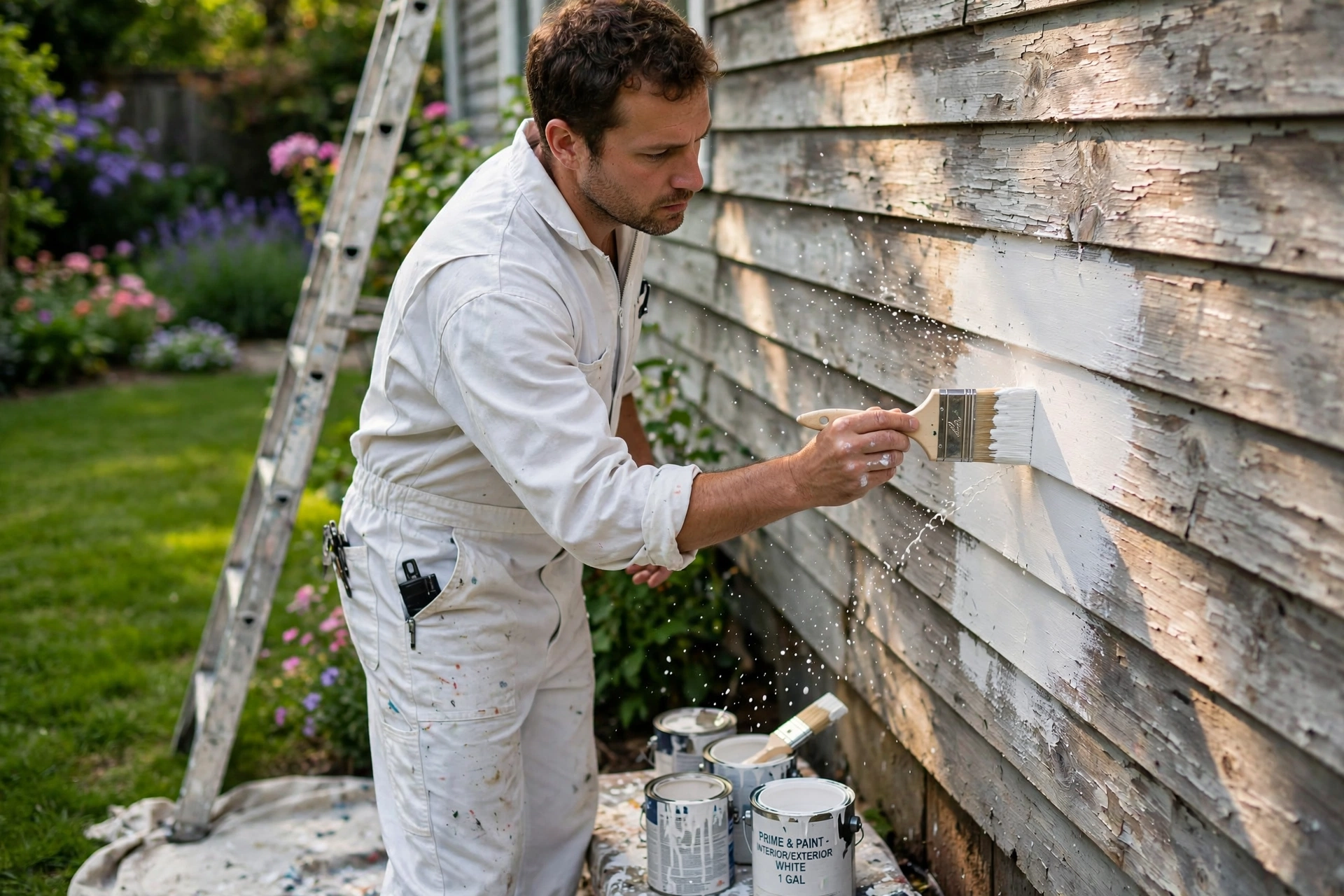
- Scraping and Sanding: Eliminating loose, peeling paint to create a mechanical bond.
- Caulking and Sealing: Using high-grade elastomeric sealants to prevent water intrusion.
- Priming: Applying a dedicated primer to bare wood or metal to stop tannins from bleeding.
- Painting: Applying two coats of premium, low-VOC paint.
If you are looking for specific regional standards, reviewing exterior painting in Lakeside, Newark, CA can provide a benchmark for what high-quality preparation looks like in the local climate.
Why Proper Contractor Comparison Matters for Your ROI
The financial implications of a poor painting choice are staggering. A low-bid paint job that fails in three years costs significantly more than a premium job that lasts ten, when you factor in labor, materials, and the devaluation of the property. Painting is not just an aesthetic choice; it is a critical maintenance task for the structural health of your home.
According to the California Contractors State License Board (CSLB), unlicensed contractors are a primary source of homeowner disputes and financial loss. Hiring an unverified painter doesn't just risk a bad finish; it exposes you to massive liability if a worker is injured on your property. A licensed, bonded, and insured professional—like World Pro Painting (CSLB #1142478)—transfers that risk away from the homeowner.
Furthermore, the choice of paint affects the energy efficiency of your home. The use of "cool roof" coatings or reflective exterior paints can reduce heat absorption, which is a vital consideration for homeowners in Fremont or San Jose. Using high-quality products from manufacturers like Sherwin-Williams ensures that the paint can withstand the intense UV exposure typical of Northern California.
The risk of ignoring lead paint protocols is another critical factor. For homes built before 1978, the Environmental Protection Agency (EPA) mandates the RRP (Renovation, Repair, and Painting) rule. A contractor who isn't lead-certified during your exterior house painters comparison is a liability, as improper sanding can contaminate your soil and air with lead dust, leading to severe health risks and government fines.
Step-by-Step Guide to Executing Your Painters Comparison
If you want to ensure your home is protected for the next decade, follow this systematic approach to comparing contractors. Do not rely on "gut feelings"; rely on documentation.
Step 1: Verify the "Paperwork Trinity"
Before you even look at a color palette, demand three documents: the CSLB license, the current insurance certificate (General Liability and Workers' Comp), and a written guarantee. If a contractor hesitates to provide these, terminate the conversation immediately.
Step 2: Request a Detailed "Scope of Work"
Avoid quotes that simply say "Paint House - $5,000." A professional quote should be granular. It should specify:
- The brand and line of paint (e.g., Sherwin-Williams Emerald RainGuard).
- The exact method of surface preparation.
- The number of coats being applied.
- The timeline and daily work schedule.
Step 3: Conduct the "Reference Deep-Dive"
Don't just look at the website photos. Ask for three references from projects completed 3 to 5 years ago. This tells you how the paint is holding up over time, not how it looked the day it was finished.
Step 4: Analyze the Pricing Structure
Understand that the cheapest quote is often the most expensive. When you see a massive price gap in your exterior house painters comparison, it is usually because the cheaper contractor is skipping the sanding or using a lower-grade "contractor grade" paint that lacks the resins needed for durability.
For those managing complex residential complexes, seeing how multi-family painters in Weibel - Fremont, CA handle logistics and staging can be a great indicator of a company's professional capacity. World Pro Painting utilizes a streamlined staging process that ensures minimal disruption to residents while maintaining a pristine worksite.
💡
Key Takeaway
Never hire a contractor based on a flat-rate quote without a detailed scope of work; the "missing" steps in a cheap quote are where the future failures of your paint job are hidden.

Comparing Your Options: Professional vs. Budget vs. DIY
When you sit down to finalize your exterior house painters comparison, you will likely be choosing between three distinct paths. The following table breaks down the actual value proposition of each.
| Feature | DIY Approach | Budget Contractor | World Pro Painting Standard |
|---|---|---|---|
| Prep Quality | Minimal/Inconsistent | Surface-level (Power wash only) | Full 5-Step Protocol |
| Material Grade | Store-brand/Economy | Contractor Grade | Premium (Sherwin-Williams/Benjamin Moore) |
| Risk Profile | High (Ladder falls) | Moderate (Uninsured/Unlicensed) | Zero (Fully Bonded & Insured) |
| Longevity | 2–4 Years | 3–5 Years | 6-Year Guarantee |
| Equipment | Consumer Grade | Basic Sprayers | Professional Industrial Grade |
| Best For | Very small touch-ups | Low-value rental properties | Primary residences & high-asset homes |
Now here's where it gets interesting: many homeowners believe the "Budget Contractor" is the middle ground. In reality, it's often the most dangerous choice. You pay enough to feel the cost, but not enough to get a quality result, meaning you'll be paying to have the job redone in a few years. By choosing a professional standard, you are investing in a long-term asset protection strategy. For those in more commercial settings, a similar logic applies to commercial painting in Cabrillo - Fremont, CA, where durability directly affects the bottom line of the business.
Common Questions and Misconceptions
Most guides get this wrong by suggesting that "more coats equal a better job." That is a myth.
Myth 1: "Three coats of paint are always better than two."
The truth is that if the preparation is poor, ten coats of paint will still peel. Over-applying paint can actually lead to sagging and cracking. The goal is a uniform, bonded film, not thickness. Two coats of premium paint over a perfectly prepared surface will always outperform three coats over a dirty one.
Myth 2: "Pressure washing is enough to prepare a wall."
This is a dangerous misconception. Power washing removes dirt, but it does not remove "chalking" (oxidized paint) or peeling flakes. If you paint over oxidized paint, the new layer will peel off in sheets. You must sand the edges of any peeling paint to "feather" them, otherwise, the texture of the old peel will be visible through the new paint.
Myth 3: "All exterior paints are the same as long as they are 'exterior grade'."
There is a massive difference between a basic acrylic and a high-solids, self-priming paint. In the Bay Area's diverse microclimates, using the wrong resin can lead to premature fading or bubbling. For example, homes near the coast require specific additives to combat salt spray, a detail that only a professional will include in their plan.
Myth 4: "I can just paint over the old paint regardless of the brand."
While generally true, mixing oil-based primers with water-based topcoats without a transition layer can cause "fish-eyes" or peeling. A professional exterior house painters comparison will include a check for existing paint chemistry to ensure compatibility.
Frequently Asked Questions
How do I know if a painting quote is too low to be realistic?
A quote is too low if it doesn't account for the man-hours required for preparation. In a standard residential project, preparation (scraping, sanding, caulking) should take nearly as much time as the actual painting. If a contractor claims they can paint your entire home in three days without mentioning a detailed prep phase, they are likely skipping essential steps. Compare the labor hours listed in the quote to the square footage of the home; if the math doesn't allow for a meticulous cleaning and priming phase, you are looking at a "spray and pray" operation that will fail prematurely.
Why is a CSLB license so important for exterior painting?
A CSLB license is your only guarantee that the contractor has passed a background check, demonstrated competency in their trade, and carries the required bonds. In California, painting is a regulated trade because of the risks associated with lead paint and hazardous materials. If you hire an unlicensed contractor, you are essentially inviting an unverified stranger to operate heavy machinery and chemicals on your property. In the event of a dispute or an accident, you have no recourse through the state board, leaving you financially responsible for any damages or injuries.
What is the difference between a "guarantee" and a "warranty"?
A warranty is often provided by the paint manufacturer (like Benjamin Moore) and covers the chemistry of the paint itself—it doesn't cover the labor. A professional guarantee, like the 6-year guarantee offered by World Pro Painting, covers the application. This means if the paint peels or cracks due to poor preparation, the contractor returns to fix it at no cost to you. When conducting your exterior house painters comparison, always ask if the guarantee covers both the material and the labor. If it only covers the material, the contractor is shifting the risk back to you.
Which is better for the Bay Area climate: Spraying or Rolling?
The "best" method is almost always a combination of both, often called "spray and back-roll." Spraying allows for a fast, even coat and gets into the crevices of Victorian-era trim. However, back-rolling involves a painter following the sprayer with a roller to push the paint into the pores of the substrate. This ensures a mechanical bond that spraying alone cannot achieve. If a contractor says they "only spray" for speed, they are sacrificing the longevity of the finish for the sake of their own timeline.
How does the "Bay Area Fog" affect the painting process?
The coastal fog and high humidity in cities like San Francisco and Oakland create a challenge for "drying time" and "cure time." If paint is applied when the humidity is too high, it can lead to "surfactant leaching" or a failure to cure, leaving the finish tacky. Professional painters track the dew point and humidity levels. If you see a contractor painting during a heavy fog event, they are ignoring the technical specifications of the paint, which can lead to a finish that never fully hardens and attracts dirt and grime.
Conclusion
Mastering the exterior house painters comparison process is the only way to ensure your home remains a protected asset rather than a maintenance liability. By shifting your focus from the lowest price to the highest preparation standard, you eliminate the risk of premature failure and expensive redos. Remember that the quality of your finish is determined by what happens before the brush touches the wall.
If you are tired of guessing and want a guaranteed, professional result that stands up to the unique challenges of the California Bay Area, it is time to move beyond the budget quotes. World Pro Painting provides the technical expertise, the CSLB-certified reliability, and the 6-year guarantee that your home deserves.
Don't leave your home's protection to chance. Visit World Pro Painting today to schedule your free on-site estimate and experience the difference that a true five-step preparation process makes. For more specialized information on regional needs, check out our guide on how to use California Bay Area painting to optimize your home's curb appeal.
Bay Area Service Locations & Featured Guides
Explore our licensed painting services across the San Francisco Bay Area:
- Residential Painters Bay Area Cost & Pricing Guide
- Exterior House Painting Cost Breakdown in California
- Interior House Painters in Moraga, CA
- Commercial Painting Contractors in Concord, CA
- HOA Painting Contractors in Orinda, CA
Commercial Painting Cost Calculator & Color Guide
Get an instant estimation checklist for painting your office, warehouse, or house. Learn how to choose colors that boost productivity.