

📖This article is part of the complete guide to Exterior House Painters.
How to Execute a Professional Exterior Home Transformation
Ignoring a hairline crack in your stucco or a peeling corner of your trim for one season can lead to thousands of dollars in dry rot and structural water damage. In my experience working with hundreds of homes across the California Bay Area, the difference between a paint job that lasts three years and one that lasts ten is not the brand of paint, but the rigor of the preparation. Following a structured exterior house painters guide allows homeowners to move beyond mere aesthetics and treat their paint as a protective seal against the region's unique climate challenges.
To achieve a professional-grade finish, you must follow a five-stage sequence: comprehensive surface cleaning, mechanical preparation (scraping and sanding), targeted sealing and priming, precision paint application, and a final quality audit. Skipping any of these steps—particularly the priming phase—effectively guarantees premature failure of the coating. For those managing larger complexes, exploring Multi-Family Painters in Weibel - Fremont, CA can provide insight into the scale required for industrial-grade exterior protection.
What is Professional Exterior Painting and Why is the Process Standardized?
Professional exterior painting is the application of high-performance coatings to a home's outer shell to prevent moisture infiltration, UV degradation, and biological growth. Unlike interior painting, where the environment is controlled, exterior work is a battle against the elements. In the Bay Area, we deal with extreme swings from the coastal fog of San Francisco to the intense inland heat of the Tri-Valley.
📚
Definition
Substrate is the base material (wood, stucco, brick, or fiber cement) that the paint adheres to. The condition of the substrate determines 90% of the final outcome.
When we talk about a standardized process, we are referring to the industry benchmarks set by the Painting Contractors Association (PCA), which emphasize that "the quality of the finish is directly proportional to the quality of the surface preparation." If the substrate is not chemically and mechanically clean, the paint will bond to the dirt or old peeling flakes rather than the house itself. This is why a professional approach requires a systematic "top-down" methodology, ensuring that drips and overspray from the eaves do not contaminate already finished lower sections.

In my experience, the most common failure point is the "quick coat" mentality. I have seen countless homeowners hire cheap contractors who simply paint over old, chalking paint. This creates a "bridge" of new paint over a failing layer, which eventually peels away in large sheets. A true professional process involves removing every loose particle of paint before a single drop of new color is applied.
Why Proper Exterior Execution Matters for Property Value and Longevity
A home's exterior is its first line of defense. When that defense fails, the costs shift from "maintenance" to "remediation." According to the California Contractors State License Board (CSLB), unlicensed or improper work often leads to costly disputes and structural failures because the wrong materials were applied to the wrong substrates.
The financial implications are staggering. A well-executed paint job typically increases a home's curb appeal and market value by 5% to 10%. More importantly, it prevents moisture from entering the walls. In coastal areas, salt air can accelerate the corrosion of metal fixtures and the rotting of wood trim. Without a high-quality sealant and topcoat, the wood absorbs moisture, leading to warping and fungal growth.
Moreover, we must consider the legal and safety implications of older homes. For properties built before 1978, the risk of lead-based paint is high. The Environmental Protection Agency (EPA) mandates the RRP (Renovation, Repair, and Painting) rule to protect residents from lead dust. Professionals must use HEPA-filtered vacuums and wet-sanding techniques to ensure that toxic particles do not enter the soil or the lungs of the inhabitants. This is not just a "best practice"; it is a federal requirement to prevent neurological damage in children.
For homeowners in specific neighborhoods, such as those seeking Exterior Painting in Lakeside, Newark, CA: for 2026, the focus must be on high-build coatings that can withstand the specific humidity levels of the East Bay.
The Step-by-Step Practical Application Guide
Executing a professional exterior paint job requires a disciplined sequence. At World Pro Painting, we utilize a rigorous 5-step preparation process that separates us from the "spray and pray" operators.
Step 1: Deep Surface Cleansing
You cannot paint over dust, mildew, or oxidation. We use a combination of low-pressure washing and chemical cleaners (like TSP - Trisodium Phosphate) to remove the "chalk" from old paint. Pressure washing must be done carefully; too much pressure can force water into the siding or blow out the seals around windows.
Step 2: Mechanical Surface Prep
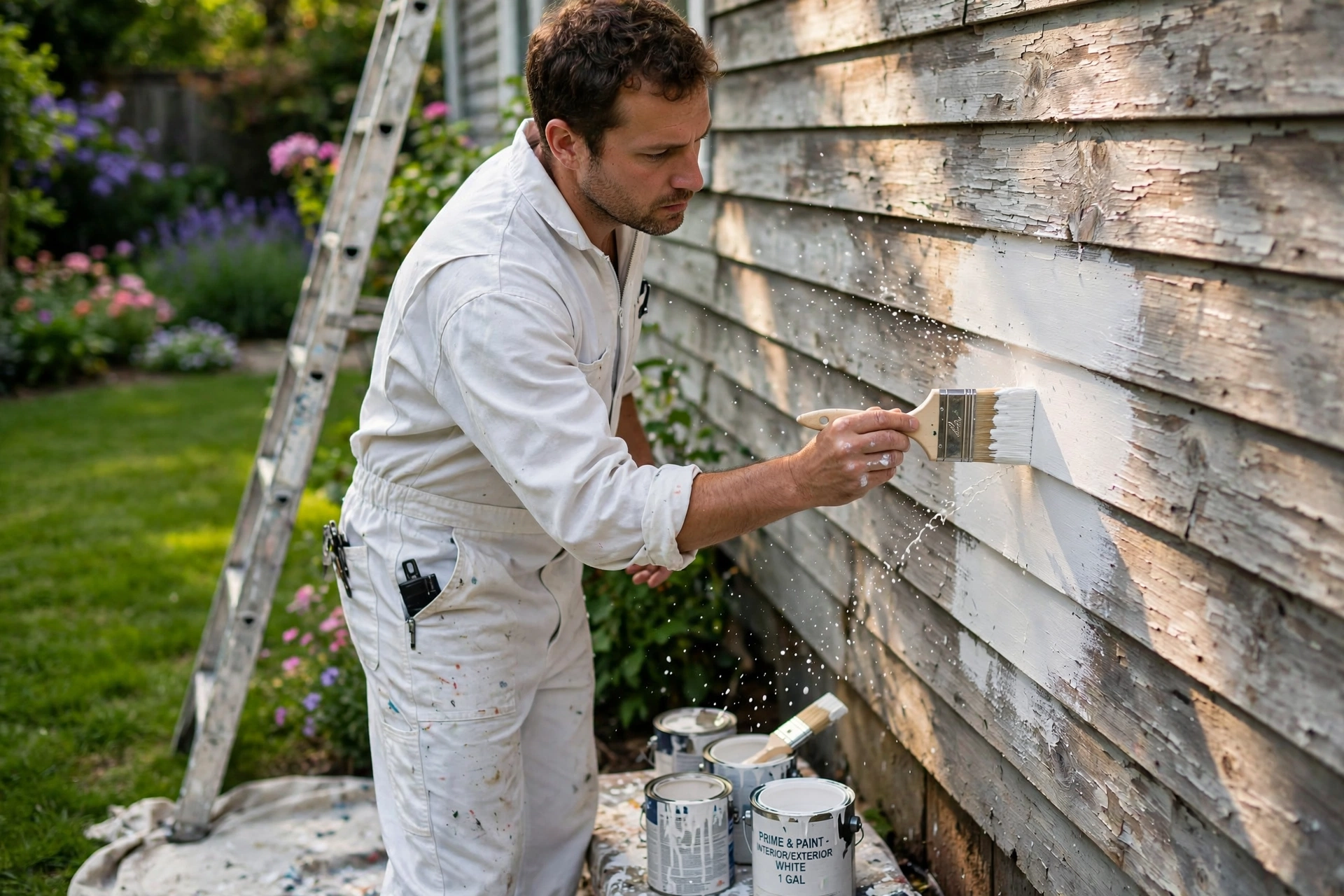
This is where the real work happens. Every peeling area must be scraped using a carbide scraper. We then sand the edges of the remaining paint to create a "feathered" edge, which prevents the new paint from showing the outline of the old peel. If you are dealing with a large residential complex, you might look into Multi-Family Painters Brookvale - Fremont, CA to see how these prep standards are scaled for efficiency.
Step 3: Caulking and Sealing
Gap filling is the only way to stop leaks. We apply a high-grade elastomeric caulk to every joint where two different materials meet (e.g., where wood trim meets stucco). This prevents rainwater from seeping behind the siding.
Step 4: Priming
Priming is not optional. A primer creates a chemical bond between the substrate and the paint. For bare wood, we use oil-based primers to block tannins; for masonry, we use acrylic primers that allow the house to "breathe."
Step 5: The Topcoat Application
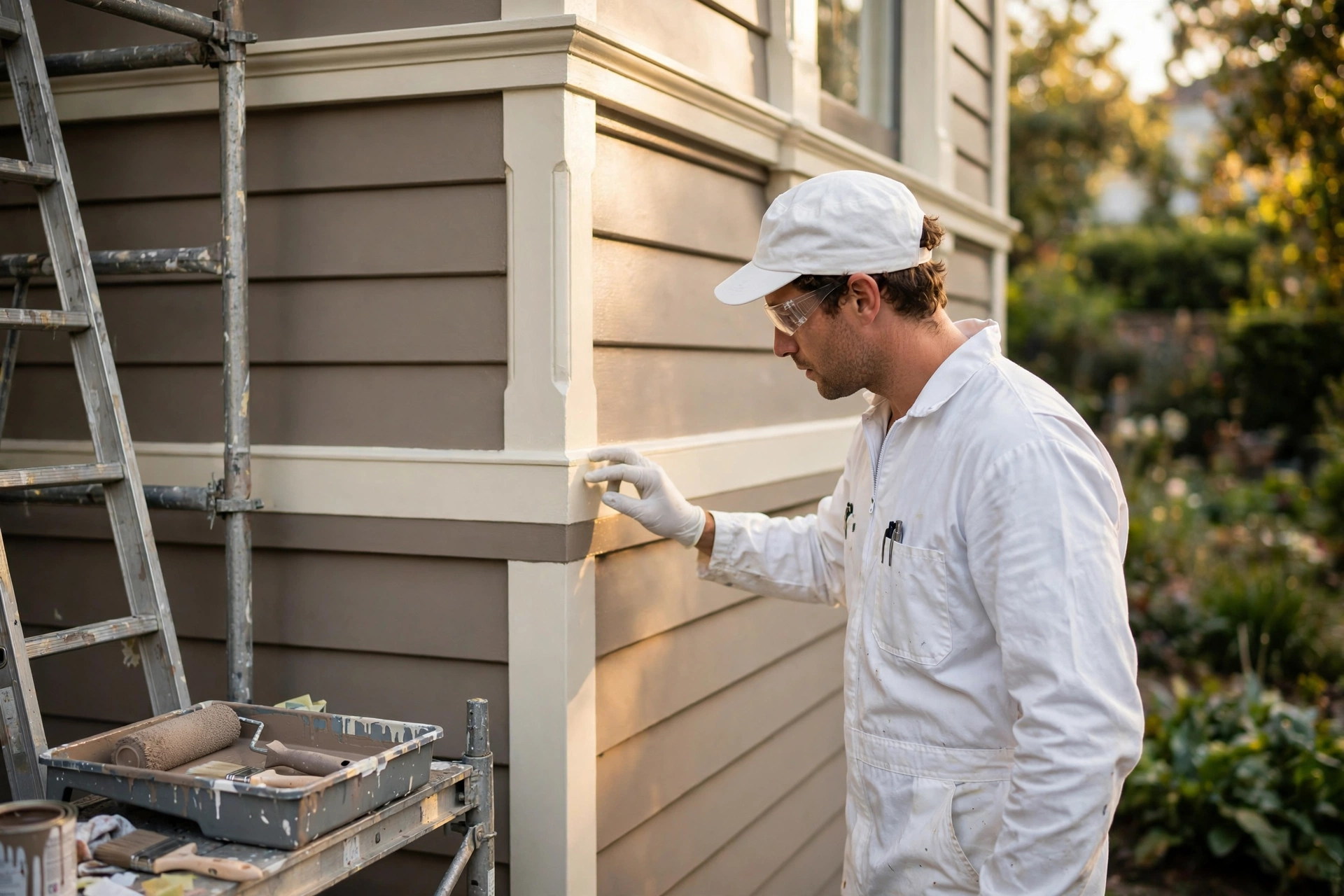
We apply two coats of premium paint. The first coat seals the surface, and the second coat provides the final color and UV protection. We typically recommend Sherwin-Williams or Benjamin Moore for their superior pigment load and weather resistance.
💡
Key Takeaway
The "Preparation-to-Painting Ratio" should be roughly 3:1. You should spend three hours preparing the surface for every one hour you spend applying the paint.
If you are overwhelmed by the technical requirements of this process, learning How to Use California Bay Area Painting services can help you identify which specific weather-resistant coatings are necessary for your specific zip code.
Choosing the Right Materials: Comparison of Modern Approaches
Not all paint jobs are created equal. The "Traditional" approach is often what you find with low-cost contractors who use basic latex paint and minimal prep. The "Generic AI-Driven" approach often involves using online color generators and cheap DIY kits without professional oversight. The "World Pro Approach" combines material science with licensed labor.
| Feature | Traditional Approach | Generic/Cheap Approach | World Pro Professional Approach |
|---|---|---|---|
| Preparation | Basic pressure wash | No prep or "spot" scraping | Full scrape, sand, and caulk |
| Priming | Optional/Skipped | Generic spray primer | Substrate-specific professional primers |
| Paint Quality | Basic Latex | Lowest bid store brand | Premium Low-VOC Sherwin-Williams/BM |
| Durability | 3-5 Years | 1-3 Years | 8-12 Years (with maintenance) |
| Warranty | Verbal/None | Short-term limited | 6-Year Guarantee |
| Compliance | Often ignores EPA | DIY/Unregulated | CSLB Licensed & EPA RRP Compliant |
Now, here's where it gets interesting: the choice of paint chemistry is just as important as the application. Acrylic latex is the standard for most Bay Area homes because it is flexible. Stucco expands and contracts with temperature changes; if the paint is too rigid, it will crack. Using a high-build elastomeric coating is often the better choice for stucco-heavy homes in Multi-Family Painters Mission San Jose - Fremont, CA due to its ability to bridge small cracks.

Common Questions and Misconceptions about Exterior Painting
Most guides get this wrong by suggesting that "more coats equal more protection." This is a myth. In reality, applying too many coats of paint—especially if the paint isn't compatible—can lead to "delamination," where the paint peels off in thick, rubbery sheets because the layers cannot bond.
Another common misconception is that you can paint your house any time of the year. In the Bay Area, painting in the dead of winter is a gamble. If the temperature drops below 50°F or if the humidity is too high during the application, the paint will not cure properly. This leads to a "tacky" finish that attracts dirt and pollutants from the air.
Finally, many homeowners believe that "caulk is just for looks." In reality, caulk is a structural sealant. I've seen homes where the paint looked perfect, but because the contractor skipped the caulking in the window corners, the interior drywall was rotting from the inside out.
For those managing commercial properties, the standards are even higher. Commercial Painting Cabrillo - Fremont, CA 2026 requires specialized coatings that can withstand higher traffic and industrial pollutants.
Frequently Asked Questions
How often should I repaint my home in the Bay Area?
Generally, a professional exterior paint job lasts between 7 to 10 years, but the timeline varies based on your specific microclimate. Homes closer to the coast in San Francisco or Pacifica face salt-air corrosion and constant moisture, which may reduce the lifespan to 5-7 years. Homes in the inland East Bay, such as those in Exterior Painting in Birch Grove - Newark, CA (2026), are more affected by UV degradation from the intense sun, which causes paint to fade and chalk. I recommend a professional "health check" every 2 years to identify small cracks before they become major leaks.
Can I just paint over my existing peeling paint?
No, painting over peeling paint is a recipe for immediate failure. Paint needs a clean, stable surface to bond to. If you apply new paint over a peeling layer, the new paint simply adds weight to the failing layer, causing it to pull away from the wall even faster. The only professional solution is to scrape away all loose material, sand the edges smooth, and apply a bonding primer. This is the core philosophy we implement at World Pro Painting to ensure our 6-year guarantee remains valid.
Which is better: Spraying or Rolling for exterior walls?
Neither is "better" in isolation; they serve different purposes. Spraying is incredibly efficient and provides a very smooth, uniform finish, especially on stucco and siding. However, spraying requires extensive "masking" to prevent paint from landing on your windows, cars, and landscaping. Rolling or brushing is essential for "back-rolling," which is the process of rolling over a sprayed coat to push the paint deep into the pores of the substrate. For the best results, a hybrid approach—spray for coverage and roll for adhesion—is the professional gold standard.
Do I need a different kind of paint for stucco versus wood?
Absolutely. Stucco is a porous, alkaline material that needs a paint that can "breathe" (allow moisture vapor to escape) to prevent bubbling. Wood, on the other hand, is organic and absorbs moisture, requiring an oil-based primer to block tannins and a flexible acrylic topcoat to handle the wood's natural expansion and contraction. Using a wood-specific paint on stucco, or vice versa, will lead to premature cracking and peeling. Always ensure your contractor uses substrate-specific products from reputable brands like Sherwin-Williams.
How do I handle HOA color restrictions when choosing a palette?
When working with a Homeowner Association (HOA), the first step is to request the "Approved Color Palette" document. Most HOAs in the Bay Area have strict guidelines to maintain neighborhood harmony. I recommend choosing a color from their pre-approved list but requesting "sample boards." We apply 2x2 foot samples of the paint on different sides of your house to see how the color changes in the morning sun versus the afternoon shade. This prevents the "color shock" that happens when a paint looks great on a small swatch but looks neon-bright on a full wall.
Final Thoughts on Your Exterior House Painters Guide
Achieving a flawless home exterior is not about the final coat; it is about everything that happens before the brush even touches the wall. By adhering to the principles of this exterior house painters guide—prioritizing deep cleaning, rigorous mechanical prep, and substrate-specific priming—you protect your largest investment from the relentless Bay Area elements.
Whether you are refreshing a Victorian in San Francisco or a modern estate in Fremont, the goal is always the same: a durable, beautiful seal that increases property value and prevents structural decay. Don't gamble with "budget" contractors who skip the prep. Invest in a licensed professional who understands the chemistry of the coatings and the requirements of the California climate.
For a comprehensive evaluation of your home's exterior and a custom protection plan, schedule a free on-site estimate with World Pro Painting today. Visit worldpropainting.com to secure your home's future.
Commercial Painting Cost Calculator & Color Guide
Get an instant estimation checklist for painting your office, warehouse, or house. Learn how to choose colors that boost productivity.