

📖This article is part of the complete guide to Fence & Deck Staining Services.
Wooden structures in Contra Costa County face a relentless cycle of intense summer UV exposure and damp winter rains. For homeowners seeking professional deck and fence staining Pleasant Hill, CA, the solution isn't just applying a coat of color; it is about implementing a chemical barrier that prevents wood rot and structural warping. To get a lasting finish, you need a licensed contractor who follows a rigorous 5-step preparation process—power washing, scraping, sanding, caulking, and priming—ensuring the stain penetrates the grain rather than sitting on the surface. At World Pro Painting, we provide this specialized protection to ensure your outdoor living spaces remain durable and aesthetically pleasing for years.
In my experience working with residential properties in Pleasant Hill, the most common mistake I see is homeowners applying a "top-coat" sealant over weathered wood without proper sanding. This leads to peeling within 12 months. When we handle a project, we focus on the moisture content of the wood first, as applying stain to overly damp timber is a recipe for immediate failure. For those planning a larger renovation, reviewing our Hiring California Bay Area Painting: Scope, Timeline & Bay Area Project Guide can help you coordinate your staining with other exterior upgrades.
Why Pleasant Hill Homeowners are Prioritizing Deck and Fence Staining
Pleasant Hill's unique microclimate, characterized by hot inland summers and periodic foggy winters, creates a high-stress environment for cedar, redwood, and pressure-treated pine. Wood is a porous biological material; without a professional barrier, it absorbs moisture and releases it unevenly, leading to "checking" or small cracks that compromise the structural integrity of a fence or deck. According to the Painting Contractors Association (PCA), proper coating applications can extend the life of exterior wood by up to 50% by preventing fungal growth and UV degradation.
Beyond simple aesthetics, the shift toward professional staining in the Bay Area is driven by the rising cost of lumber. Replacing a full perimeter fence in Pleasant Hill is significantly more expensive than maintaining one every three to five years. We have seen a surge in homeowners opting for semi-transparent stains that preserve the natural grain while providing the chemical protection of a solid stain. This trend reflects a broader move toward "preventative maintenance" rather than "reactive replacement.
Furthermore, California's strict environmental regulations regarding VOCs (Volatile Organic Compounds) mean that the old, oil-based stains of twenty years ago are no longer the gold standard. Modern, low-VOC formulas from brands like Sherwin-Williams offer superior penetration and longevity without the toxic off-gassing. In practice, this means your family can enjoy the deck shortly after the project is completed without worrying about lingering chemical odors.
Key Benefits of Professional Staining for Pleasant Hill Properties
Investing in professional deck and fence staining provides a multifaceted layer of protection that DIY methods rarely achieve. The primary advantage is the prevention of water infiltration. When water penetrates the wood fibers, it causes the wood to swell; as it dries, the wood shrinks. This constant expansion and contraction cycle creates gaps and cracks. A professional-grade stain seals these pores, keeping the moisture levels stable.
Enhanced UV Protection and Color Retention
The California sun is brutal on wood. Unprotected redwood or cedar will turn a silvery-grey within a single season due to the breakdown of lignin in the wood cells. High-quality stains contain trans-oxide pigments that act as a sunscreen for your wood. By reflecting UV rays, the stain prevents the wood from becoming brittle. According to Benjamin Moore, the use of pigmented stains provides significantly higher protection against solar degradation than clear sealants.
Prevention of Rot and Fungal Decay
In the shaded areas of a Pleasant Hill backyard, moisture lingers longer, creating a breeding ground for mold and mildew. Professional staining incorporates fungicides that inhibit the growth of these organisms. Without this, a fence can develop "soft rot," where the base of the posts begins to decay from the ground up. By sealing the end-grain of the wood, we stop the "wicking" effect that draws moisture up from the soil into the structure.
Increased Property Value and Curb Appeal
First impressions are everything in the Bay Area real estate market. A weathered, grey fence signals neglect to potential buyers, whereas a freshly stained, rich-toned deck suggests a well-maintained home. This is particularly true for properties in high-end Pleasant Hill neighborhoods where outdoor living spaces are treated as additional square footage. A professionally finished exterior can increase the perceived value of a home by thousands of dollars.
💡
Key Takeaway
The primary benefit of professional staining is not the color, but the chemical sealing of the wood, which prevents the expansion-contraction cycle that leads to structural cracking and rot.
Comparison of Staining Approaches
| Feature | DIY / Cheap Approach | Generic "Handyman" Service | World Pro Painting Approach |
|---|---|---|---|
| Preparation | Basic sweeping or light rinsing | Quick power wash, no sanding | 5-Step Prep: Wash, Scrape, Sand, Caulk, Prime |
| Materials | Big-box store generic sealants | Standard oil-based stains | Premium Low-VOC, Professional Grade (Sherwin-Williams/Ben Moore) |
| Longevity | 6–12 Months | 2–3 Years | 5–7 Years (with 6-Year Guarantee) |
| Detailing | Missed gaps and end-grains | Surface application only | Full saturation and end-grain sealing |
| Safety | No liability coverage | Basic insurance | CSLB Licensed, Bonded, and Insured |
Real-World Examples from Pleasant Hill Projects
To understand the impact of professional staining, look at two recent projects we completed in the Pleasant Hill area. In both cases, the homeowners had attempted DIY sealing in the past, which had failed prematurely.
Case Study 1: The Redwood Deck Restoration
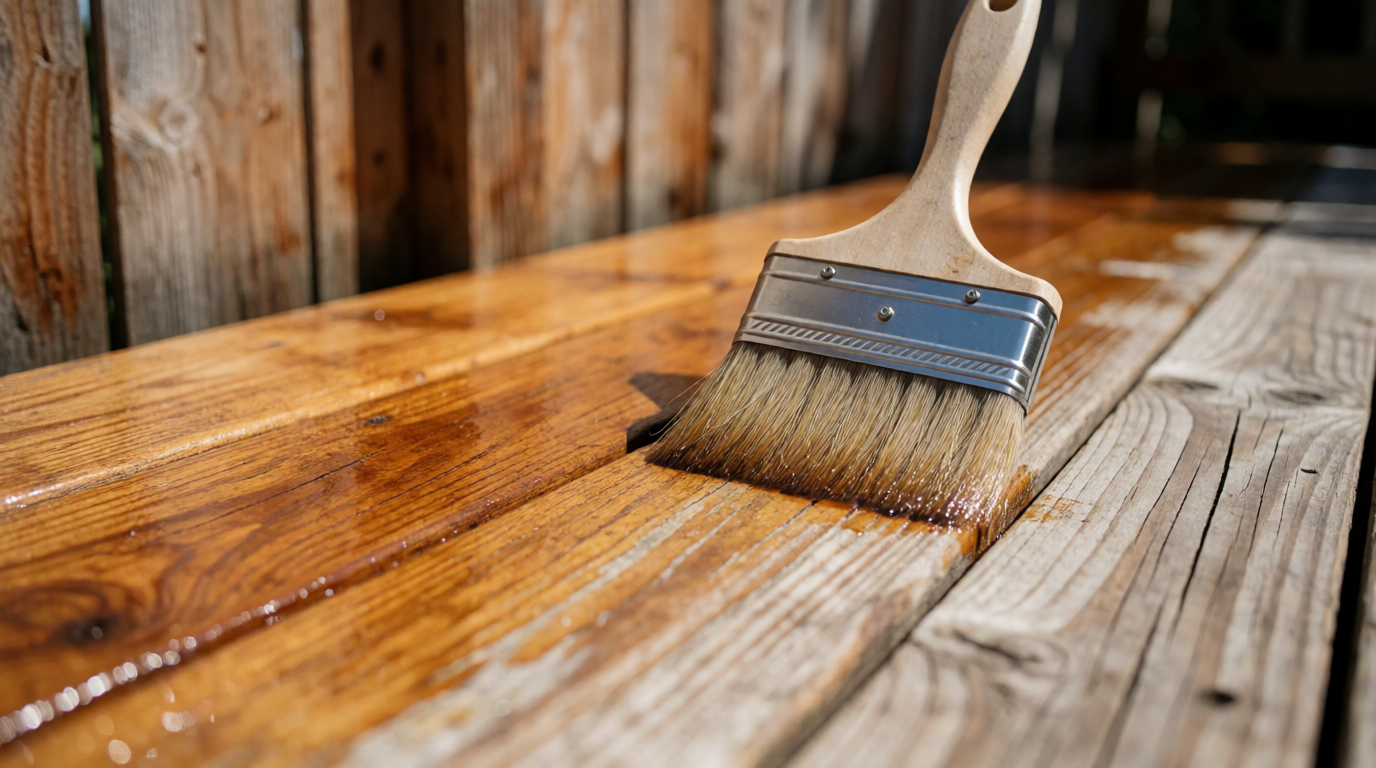
A homeowner in a quiet Pleasant Hill neighborhood had a 400-square-foot redwood deck that had turned almost entirely grey. The previous owner had used a clear sealer that had peeled, leaving the wood vulnerable. We began by using a professional-grade wood cleaner to remove organic growth, followed by a light sanding to open the pores. We applied a semi-transparent cedar stain. The result was a 100% restoration of the wood's natural warmth. Because we sealed the gaps between the boards, the homeowner reported a significant decrease in water pooling under the deck, protecting the joists from premature decay.
Case Study 2: The Perimeter Fence Overhaul
We were called to a property where a 150-foot cedar fence was showing signs of "checking" (vertical cracks). The wood was dry and brittle. We implemented a deep-penetrating oil stain. Unlike a surface film, this stain soaked into the fibers, replenishing the natural oils of the wood. By treating the bottom 6 inches of the fence with a specialized moisture barrier, we stopped the rot that was starting at the ground level. The homeowner noticed an immediate improvement in the fence's stability, and the rich walnut tone provided a stark, professional contrast to the green landscaping.
For those who are also considering updating their home's main exterior, our services for Exterior Painting in Lakeside Newark, CA | Licensed Painters offer similar high-standard preparation techniques to ensure a cohesive look across all outdoor structures.
How to Get Started with Professional Staining in Pleasant Hill
Achieving a flawless finish requires a systematic approach. Many homeowners believe staining is simply "painting wood," but it is actually a chemical treatment process. Here is the professional workflow we follow at World Pro Painting to ensure your investment lasts.
Step 1: Surface Assessment and Cleaning
We start with a thorough inspection to identify any rotting boards that must be replaced before staining. We then use a professional power washer—calibrated to a specific PSI to avoid damaging the wood fibers—to remove dirt, greyed-out wood cells, and old peeling stains. This is where most DIY projects fail; if the surface isn't chemically clean, the new stain cannot bond.
Step 2: Mechanical Preparation (Sanding)
Once dry, we sand the wood. This is not just for smoothness; sanding removes the "mill glaze" from new wood and opens the pores of old wood. This ensures the stain penetrates deep into the grain rather than sitting on top like a layer of plastic, which would eventually crack and peel.
Step 3: Product Selection and Priming
Depending on the wood species (Redwood, Cedar, or Pine), we select the appropriate stain. We offer transparent, semi-transparent, and solid stains. For most Pleasant Hill homes, we recommend semi-transparent options as they provide the best balance of UV protection and natural beauty. If there are severe knots or sap bleeds, we apply a specialized primer to prevent these from leaching through the finish.
Step 4: Precision Application
We apply the stain using a combination of spraying and "back-brushing." Spraying ensures a consistent coat, but back-brushing is the secret to longevity; it manually pushes the stain deep into the wood fibers and ensures no gaps are left untreated. This is a labor-intensive process that ensures the 6-year guarantee we offer.
Step 5: Final Inspection and Cleanup
We perform a final walkthrough to ensure no drips or uneven patches exist. We also ensure that all surrounding landscaping is protected and the worksite is left cleaner than we found it. For larger complexes, we also provide services similar to Commercial Painting in Cabrillo Fremont, CA | Licensed Painters, ensuring that large-scale fencing projects are handled with industrial efficiency.
Common Objections and Professional Answers
When discussing deck and fence staining in Pleasant Hill, I often encounter a few common misconceptions. Here is the reality based on industry data and field experience.
Objection 1: "I can just use a cheap sealer from a home improvement store."
Most people assume that any "sealant" is the same. However, the data shows that low-end sealers often contain high amounts of wax and paraffin. While these make the wood look wet and beautiful for a few months, they actually block future coats of stain from adhering. This leads to a "peeling" effect that requires a full, expensive sanding of the entire deck to fix. Professional-grade stains use resins that bond with the wood fibers, not on top of them.
Objection 2: "Staining is too expensive compared to just painting the fence."
Painting a fence creates a film on the surface. Because wood expands and contracts, that film inevitably cracks. Once a paint job starts to peel, you cannot simply "top it off"; you have to scrape every single inch of peeling paint before repainting. According to the California Contractors State License Board (CSLB), utilizing licensed contractors who use the correct product for the substrate reduces long-term maintenance costs. Stains are designed to fade naturally, meaning they can be refreshed without the nightmare of scraping paint.
Objection 3: "I'll just wait until the wood looks really bad before I do it."
This is the most costly mistake. Once wood has reached the "silver-grey" stage, the UV rays have already destroyed the surface lignin. While we can restore it, the wood is already more porous and prone to rot. Proactive staining every 3 years prevents the wood from ever reaching that state of decay, saving you from having to replace entire sections of your fence or deck.
📚
Definition
"Checking" refers to the small, longitudinal cracks that appear in wood as it dries and shrinks. Professional staining fills and seals these checks to prevent water from pooling inside the wood.
Frequently Asked Questions
How often should I stain my deck or fence in Pleasant Hill, CA?
In the Pleasant Hill climate, we generally recommend a maintenance cycle of every 3 to 5 years for semi-transparent stains and every 2 to 3 years for clear sealers. The "Water Drop Test" is the best way to determine if it is time: pour a few drops of water on the wood. If the water beads up, the seal is still intact. If the water soaks into the wood within a minute, the protection has worn off and you are at risk for rot. Given the intense UV index in Contra Costa County, waiting too long can lead to permanent wood bleaching.
Should I use a solid stain or a semi-transparent stain for my fence?
This depends on your goals. A solid stain acts more like paint; it provides the maximum UV protection and can cover up imperfections or mismatched wood tones. However, it hides the natural grain. A semi-transparent stain allows the beauty of the wood to show through while still providing essential chemical protection. For high-end homes in Pleasant Hill, semi-transparent is usually preferred for aesthetics. In my experience, solid stains are better for very old wood that has too many stains or irregularities to look good with a transparent finish.
Can you stain over an old, peeling finish?
No, and this is where many DIY attempts fail. Staining over a peeling finish is like putting a new bandage over a dirty wound; it will not stick. We must first remove the failing layers using a combination of chemical strippers and mechanical sanding. According to EPA guidelines on lead-based paint, if your home was built before 1978, we must also test for lead before sanding to ensure the safety of your family and our crew. Once the wood is "naked" and clean, the new stain can penetrate deeply and bond correctly.
Does staining protect my wood from termites and bugs?
While stains are not a substitute for professional termite treatment, they do help significantly. Many professional stains contain additives that make the wood less attractive to insects by removing the moisture and fungus that termites often follow. Furthermore, by sealing the wood, you prevent the moisture-heavy "damp wood」 environment that attracts carpenter ants. For a comprehensive exterior plan, we suggest coordinating your staining with a general pest inspection to ensure your structural beams are fully protected.
Is it better to stain in the summer or winter in the Bay Area?
The ideal time for deck and fence staining in Pleasant Hill is during the late spring or early fall. You need a window of mild temperatures and low humidity. If it is too hot (above 85°F), the stain can dry too quickly on the surface, leading to lap marks and poor penetration. If it is too damp (winter rains), the wood moisture content will be too high, and the stain will not bond. We typically schedule our largest projects during the "shoulder seasons' to ensure the curing process happens slowly and evenly.
Final Thoughts on Deck and Fence Staining in Pleasant Hill, CA
Maintaining your outdoor wood structures is an investment in the longevity of your home. Whether you have a sprawling redwood deck for entertaining or a cedar fence for privacy, the harsh California climate will eventually reclaim the wood if it is left unprotected. Professional deck and fence staining Pleasant Hill, CA, is the only way to ensure that your wood doesn't just look good today, but remains structurally sound for the next decade.
At World Pro Painting, we don't believe in shortcuts. Our commitment to the 5-step preparation process and the use of premium, low-VOC materials ensures that your property is protected against UV rays and moisture. If you are tired of seeing your wood fade or peel, it is time to move beyond the DIY approach. For a flawlessly finished exterior, we also recommend looking at our House Painting Mission San Jose Fremont, CA | Free Estimate for a complete home transformation.
Don't let another summer of UV damage compromise your home's value. Contact us today for a Free On-Site Estimate and experience the difference that professional licensed contractors bring to every project.
Visit worldpropainting.com to schedule your consultation.
Recommended Readings
To deepen your understanding of these topics, we recommend reading the following articles:
- Fence & Deck Staining Services
- Deck and Fence Staining in Concord, CA | Licensed Contractors
- Deck and Fence Staining in Clayton, CA | Licensed Contractors
- Deck and Fence Staining in Lafayette, CA | Licensed Contractors
Commercial Painting Cost Calculator & Color Guide
Get an instant estimation checklist for painting your office, warehouse, or house. Learn how to choose colors that boost productivity.