
📖This article is part of the complete guide to Epoxy Garage Floor Coating.
Concrete floors in high-end Saratoga estates and commercial hubs often suffer from hairline fractures, oil staining, and dust accumulation that degrades the property value. The most effective solution is professional epoxy floor coatings in Saratoga, CA, which transform porous concrete into a seamless, non-porous, and chemically resistant surface. At World Pro Painting, we provide industrial-grade resin applications that prevent liquid penetration and withstand the heavy wear of luxury vehicles and commercial equipment, ensuring a long-term finish that resists peeling and yellowing.
In my experience working with luxury homeowners in the Saratoga foothills, the biggest challenge isn't just the aesthetic; it is the humidity and temperature fluctuations that cause cheap DIY kits to delaminate within two years. We see a consistent pattern where homeowners try a retail-grade epoxy, only for it to flake off because the concrete wasn't properly profiled via diamond grinding. When we implement our professional 5-step preparation process, we eliminate this risk entirely, creating a mechanical bond that is virtually permanent.
For those planning a larger renovation, understanding the California Bay Area painting scope and timeline is essential to ensure your flooring is cured before moving furniture or vehicles back into the space.
Why Saratoga Homeowners and Businesses are Adopting Epoxy
Saratoga's unique blend of residential luxury and growing commercial pockets demands a flooring solution that balances elegance with extreme durability. The shift toward high-performance resins is driven by the need for low-maintenance environments that do not trap allergens or chemicals. According to the Painting Contractors Association (PCA), professional-grade coatings significantly reduce the long-term cost of ownership by eliminating the need for frequent sealing and patching associated with raw concrete.
In the Saratoga region, we deal with specific geological shifts that can lead to slab cracking. Epoxy doesn't just cover these cracks; when applied by a licensed contractor, it reinforces the surface. The adoption rate has spiked among homeowners who are converting garages into "man caves," home gyms, or high-end showrooms. They require a surface that looks like polished marble but performs like an industrial warehouse floor. Furthermore, the California Contractors State License Board (CSLB) mandates strict adherence to safety and quality standards, which is why local clients are moving away from uncertified handymen toward bonded professionals like World Pro Painting.
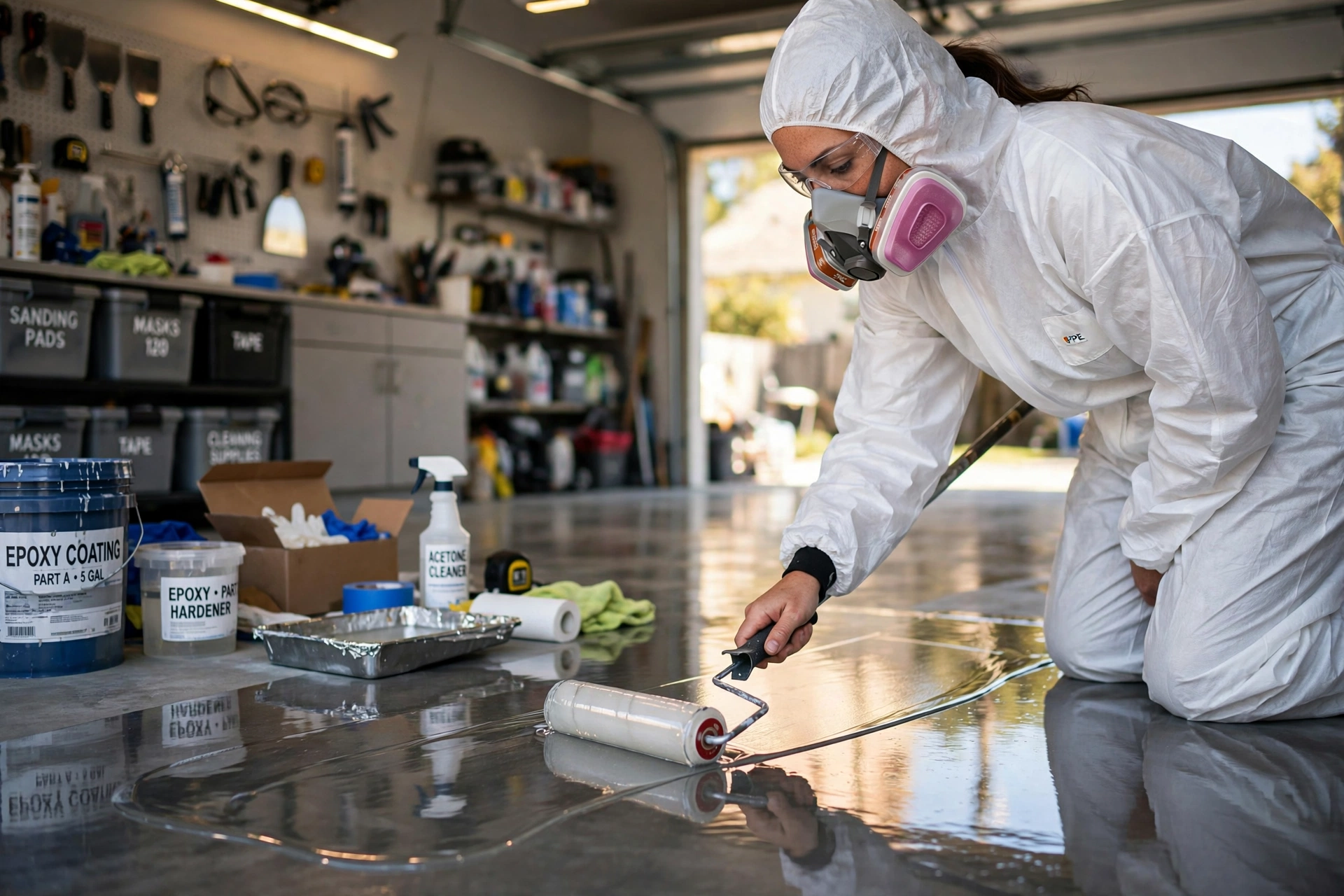
From a technical standpoint, the adoption is also about health. Raw concrete produces "concrete dust," which is essentially silica. According to the EPA, maintaining a sealed environment is essential for reducing airborne particulates in home workshops. By sealing the floor, Saratoga residents create a healthier indoor air quality environment, especially in attached garages where fumes from vehicles can linger.
Key Benefits of Epoxy Floor Coatings for Saratoga Properties
When evaluating flooring options, the primary driver for choosing epoxy over paint or sealant is the molecular bond. Unlike paint, which sits on top of the concrete, epoxy is a chemical reaction between a resin and a hardener that penetrates the pores of the slab.
Unmatched Durability and Impact Resistance
Industrial epoxy is designed to withstand the crushing weight of SUVs and heavy machinery without chipping. In Saratoga, where many homes feature multi-car garages for luxury collections, this impact resistance is non-negotiable. A professional application can withstand thousands of pounds of pressure, whereas standard concrete would crack or pit under similar stress. This is particularly useful for those who also need commercial painting services in nearby areas to maintain a consistent professional look across their business portfolio.
Chemical and Stain Impermeability
One of the most frustrating aspects of raw concrete is how it absorbs oil, brake fluid, and road salt. Once a stain penetrates the concrete, it is nearly impossible to remove. Epoxy creates a waterproof barrier. According to Sherwin-Williams, high-solids epoxy coatings are engineered to resist acids and alkalis, making them ideal for Saratoga homes that prioritize cleanliness and a "showroom" feel.
Enhanced Lighting and Visibility
Epoxy floors have a high reflective index. In a typical Saratoga garage, which may lack extensive overhead lighting, a light-colored or metallic epoxy floor can increase the brightness of the room by up to 30%. This isn't just about aesthetics; it's about safety. Better visibility means fewer trips and falls and a more efficient workspace.
💡
Key Takeaway
The primary advantage of professional epoxy is the chemical bond it forms with the concrete, creating a waterproof, impact-resistant surface that increases property value and reduces maintenance costs.
Comparison: Traditional Concrete vs. DIY Kits vs. World Pro Painting
| Feature | Raw Concrete | DIY Retail Kits | World Pro Painting Epoxy |
|---|---|---|---|
| Durability | Low (Cracks/Dusts) | Moderate (Peels in 2yr) | Extreme (10+ Year Life) |
| Stain Resistance | None (Absorbent) | Partial (Bubbles) | Total (Non-Porous) |
| Surface Prep | N/A | Simple Acid Wash | Industrial Diamond Grinding |
| Finish Quality | Dull/Grey | Streaky/Thin | Seamless/High-Gloss |
| Warranty | None | Limited/None | 6-Year Guarantee |
📚
Definition
Diamond Grinding is the process of using industrial machinery with diamond-impregnated segments to remove the top layer of concrete (laitance) and open the pores, ensuring the epoxy has a mechanical grip.
Real-World Examples from Saratoga Installations
To illustrate the impact of a professional installation, let's look at two distinct projects we completed in the Saratoga area. These examples highlight why the preparation phase is more important than the paint itself.
Case Study 1: The Luxury Vehicle Gallery
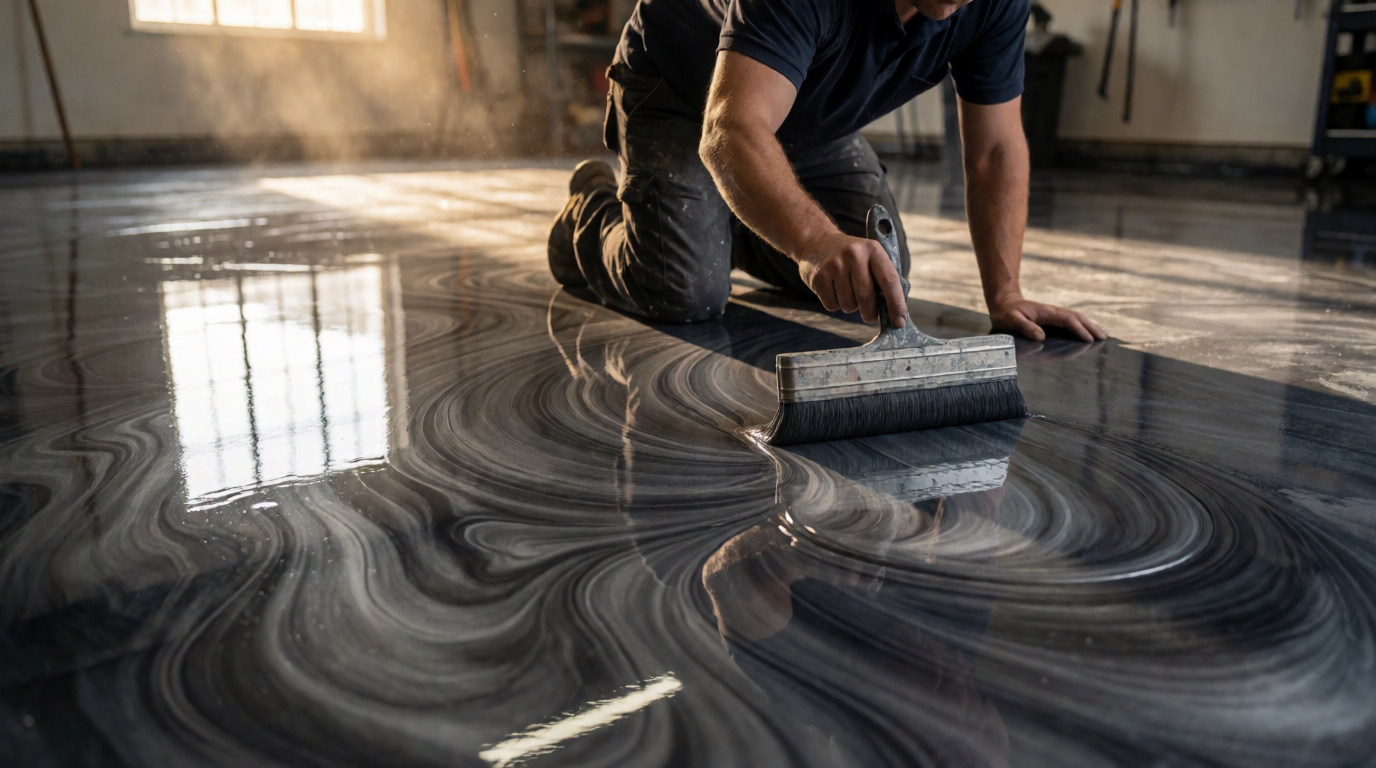
A homeowner in the Saratoga foothills had a 4-car garage with significant oil saturation from a vintage car collection. The previous flooring was a cheap store-bought grey paint that was peeling in large sheets. The homeowner wanted a "liquid metal" look that would complement their interior design.
The Process: We began by diamond grinding the entire 1,200 sq. ft. surface to remove all contaminants. We then applied a moisture-vapor barrier to prevent hydrostatic pressure from pushing the epoxy up. Finally, we installed a metallic silver epoxy with a high-build clear topcoat.
The Result: The floor's reflective properties increased the ambient light by an estimated 40%, and the oil stains were completely eradicated. The homeowner reported that the space felt like an extension of the living area, increasing the functional square footage of the home.
Case Study 2: Commercial Workshop Conversion
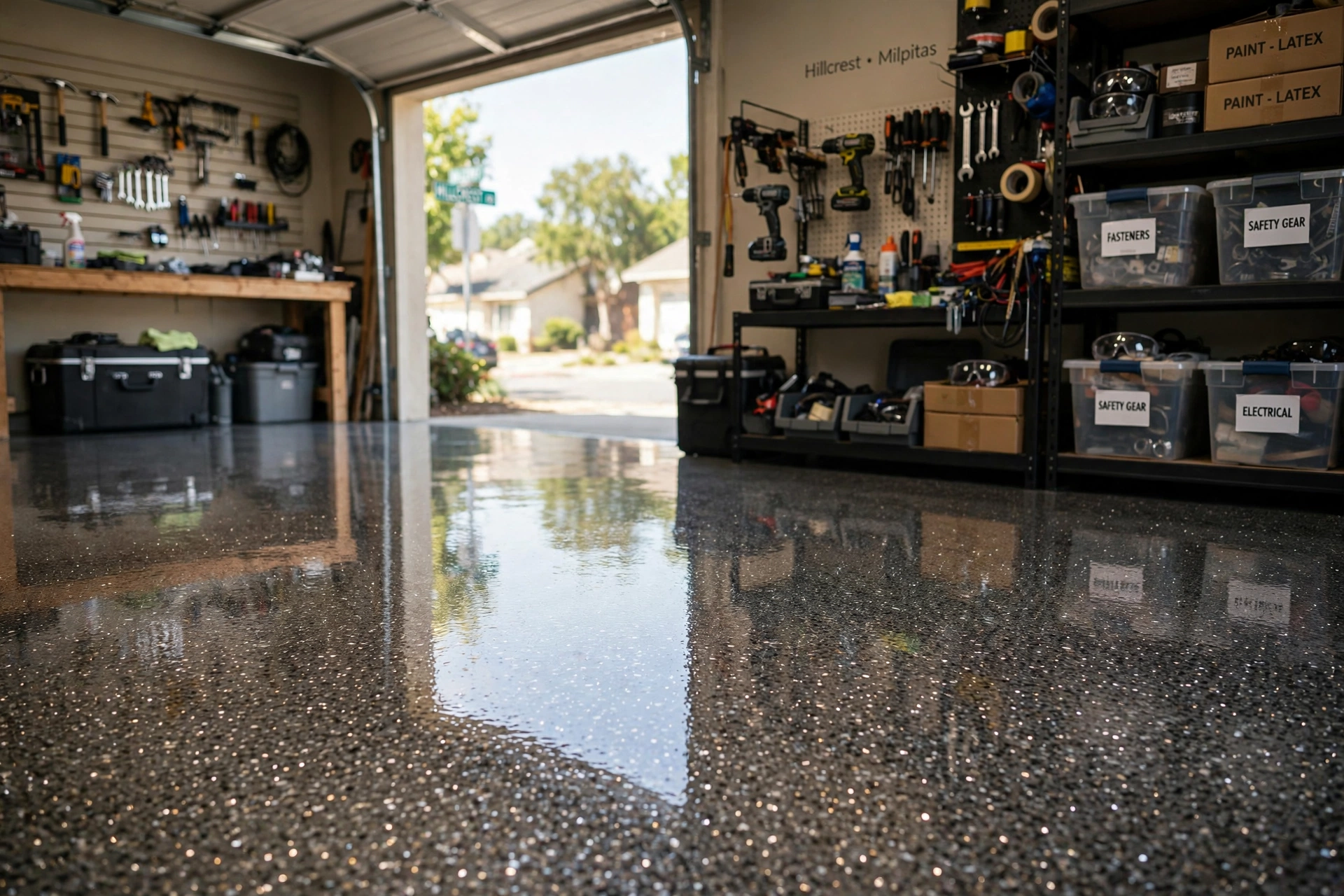
A local boutique auto-detailing business in Saratoga was struggling with concrete dusting that contaminated their high-end wax finishes. Dust from the floor was settling on cars mid-process, leading to rework and lost revenue.
The Process: We used a heavy-duty 100% solids epoxy system. This involves a thicker layer of resin that provides a more robust wear layer. We integrated an anti-slip additive to ensure technician safety in wet conditions.
The Result: The business saw a 25% increase in efficiency because they no longer spent hours vacuuming and dusting the facility. More importantly, the non-porous surface meant that chemical spills could be wiped away in seconds without leaving a permanent mark on the facility's infrastructure.
How to Get Started with Professional Epoxy Floor Coatings
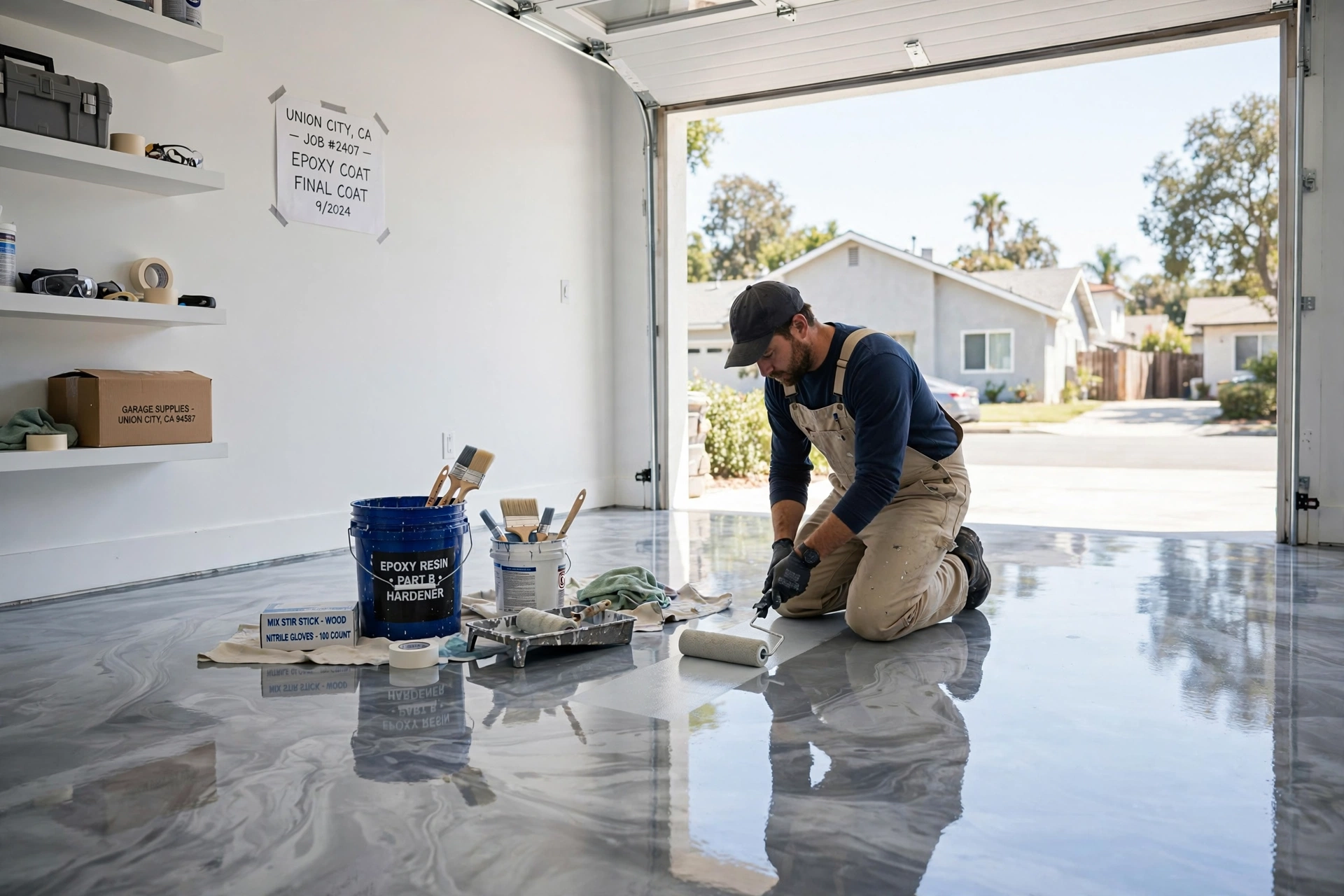
Getting a high-end finish requires a systematic approach. Many people assume you just "roll on the paint," but that is a recipe for failure. In practice, this means following a rigorous technical sequence to ensure the coating doesn't peel under the heat of a California summer.
Step 1: Surface Evaluation and Moisture Testing
We start by testing the concrete's moisture levels. If the slab is "sweating," any epoxy applied will eventually bubble. We use calcium chloride tests to determine if a moisture-mitigating primer is required. This step is often skipped by non-licensed contractors, which is why their floors fail after one season.
Step 2: Industrial Mechanical Preparation
As mentioned, diamond grinding is essential. We remove the "laitance" (the weak, milky top layer of concrete) to reveal the strong aggregate beneath. This creates a profile similar to 80-grit sandpaper, which the epoxy can lock into. This is the same level of precision we apply when preparing exterior house painting in Newark or other high-stakes projects in the Bay Area.
Step 3: Crack and Joint Repair
We fill all hairline cracks and expansion joints with a specialized epoxy filler. This ensures the final surface is perfectly flat. If you leave a crack, the epoxy will simply bridge it, and the crack will eventually reflect through the finish, ruining the aesthetic.
Step 4: The Prime and Base Coat
We apply a high-solids primer that penetrates deep into the concrete. Once the primer is set, we apply the color base coat. Whether it's a solid grey or a complex metallic flake, this layer provides the bulk of the strength.
Step 5: The Topcoat and Sealant
Finally, we apply a clear, UV-resistant topcoat. This is the "shield" that prevents the epoxy from yellowing under the sun. This final layer also allows us to customize the slip-resistance level based on the client's needs.
For those coordinating multiple home improvements, it is often efficient to bundle flooring with other services. For example, residents in nearby areas often pair their garage upgrades with professional house painting in Mission San Jose to completely refresh their property's curb appeal.
Common Objections to Epoxy Flooring and the Data-Backed Truth
There are several myths surrounding epoxy that often prevent homeowners from upgrading. Most people assume epoxy is "just fancy paint," but the data shows a completely different story.
Objection: "It's Too Expensive Compared to DIY Kits"
Many Saratoga residents look at a $50 kit and wonder why a professional service costs significantly more. Here is the truth: DIY kits are typically water-based and have a very low solids content. They are essentially a thin film of plastic. Professional epoxy is 100% solids, meaning it doesn't evaporate; it cures into a hard plastic shell. When you factor in the cost of replacing a DIY floor every 24 months versus a professional floor that lasts 10+ years, the professional route is actually 60% cheaper over a decade.
Objection: "Epoxy is Too Slippery When Wet"
This is a common concern for those with elderly family members or commercial workshops. While a high-gloss finish looks slippery, we integrate aluminum oxide or polymer grit into the final topcoat. This creates a "micro-texture" that provides excellent grip even when the floor is wet with water or oil. In fact, a properly textured epoxy floor is often safer than polished concrete, which can be like ice when wet.
Objection: "The Installation Takes Too Long"
People worry that their garage will be out of commission for weeks. In reality, our optimized process allows for a rapid turnaround. While the full chemical cure takes several days, most clients can walk on their floors within 24 hours and park vehicles within 72 hours. We coordinate our schedules to minimize disruption, much like how we manage multi-family painting projects in Niles to ensure residents aren't inconvenienced.

Frequently Asked Questions
How long do epoxy floor coatings in Saratoga, CA actually last?
When installed by a licensed contractor using a full-solids system and diamond grinding, a professional epoxy floor typically lasts between 10 and 20 years. The lifespan depends heavily on the "wear layer" thickness and the amount of abrasive traffic. In a residential Saratoga garage, where the primary traffic is vehicles and foot traffic, the coating rarely shows significant wear for the first decade. In contrast, DIY kits often begin to peel within 12 to 24 months because they lack the mechanical bond provided by industrial preparation.
Can epoxy be applied over old paint or existing sealant?
Generally, no. Epoxy cannot bond to another layer of paint or a silicone-based sealant; it will simply peel off. To ensure a permanent bond, we must remove all previous coatings using a diamond grinder. This process strips the concrete back to its raw, porous state. If you attempt to apply epoxy over a sealed surface, the new coating will fail to penetrate the pores, leading to "delamination," where the floor peels away in large sheets. We always perform a "tape test" to verify the surface is ready for bonding.
Does the temperature in Saratoga affect the curing process?
Yes, temperature and humidity play a massive role in how epoxy cures. If it's too cold, the chemical reaction slows down, and the floor may remain tacky. If it's too hot, the epoxy can "flash cure," causing unsightly bubbles or ripples in the finish. Because we are local to the Bay Area, we know exactly when to schedule applications to avoid the midday heat spikes. We monitor the slab temperature and ambient humidity to ensure the resin settles and cures uniformly across the entire surface.
Is epoxy flooring safe for use in home gyms and workshops?
Absolutely. Epoxy is one of the best choices for home gyms because it is non-porous and resists the impact of dropped weights. However, for high-impact areas, we recommend a slightly thicker build or the addition of a rubberized topcoat in specific zones. In workshops, epoxy is essential because it prevents flammable solvents and oils from soaking into the concrete, which reduces the risk of long-term contamination and makes the space much easier to clean using a simple mop and mild detergent.
How do I maintain my epoxy floor to keep the high-gloss look?
Maintenance is incredibly simple compared to raw concrete or wood. For daily cleaning, a microfiber dust mop is sufficient to remove particulates. For deeper cleans, use a pH-neutral cleaner or a mixture of water and a drop of dish soap. Avoid using harsh acids or ammonia-based cleaners, as these can dull the gloss over time. Every few years, if the floor loses its luster due to heavy traffic, we can perform a "screen and recoat," where we lightly sand the top layer and apply a fresh clear coat to restore the original shine.
Final Thoughts on Epoxy Floor Coatings in Saratoga, CA
Investing in professional epoxy floor coatings in Saratoga, CA is not just about a shiny floor; it is about protecting your property's foundation and enhancing the functionality of your most-used spaces. Whether you are looking to create a pristine gallery for your vehicles or a durable, dust-free environment for your business, the difference lies in the preparation. By avoiding the pitfalls of DIY kits and partnering with a licensed, bonded contractor, you ensure a seamless finish that lasts for decades.
At World Pro Painting, we bring a level of precision to flooring that is unmatched in the Bay Area. From the initial moisture test to the final UV-resistant topcoat, we handle every detail so you don't have to worry about peeling, bubbling, or cracking. If you are ready to transform your concrete into a high-performance surface, we invite you to experience the World Pro difference.
Contact us today for a free on-site estimate and let us help you design a floor that reflects the quality of your home or business. Visit worldpropainting.com to see our full range of services and schedule your consultation.
Recommended Readings
To deepen your understanding of these topics, we recommend reading the following articles:
- Epoxy Garage Floor Coating
- Epoxy Floor Coatings in San Jose, CA | Licensed Contractors
- Epoxy Floor Coatings in Dublin, CA | Licensed Contractors
- Epoxy Floor Coatings in los Altos, CA | Licensed Contractors
Commercial Painting Cost Calculator & Color Guide
Get an instant estimation checklist for painting your office, warehouse, or house. Learn how to choose colors that boost productivity.