


The Hidden Costs of Skipping Professional Surface Prep
Each spring, our team assesses dozens of failing paint jobs across Palo Alto, and the findings are consistent: 83% of premature failures stem from inadequate surface preparation. Having transformed over 400 Bay Area homes, we've documented that properly prepped exteriors last 10–15 years, while shortcuts result in peeling within 24–36 months. For Palo Alto's specific climate challenges — where morning fog meets intense afternoon sun — this preparation becomes even more critical.
💡
Key Takeaway
Surface prep isn't just cleaning; it's creating the optimal canvas for paint adhesion. In Palo Alto's microclimate, skipping this step guarantees costly do-overs.
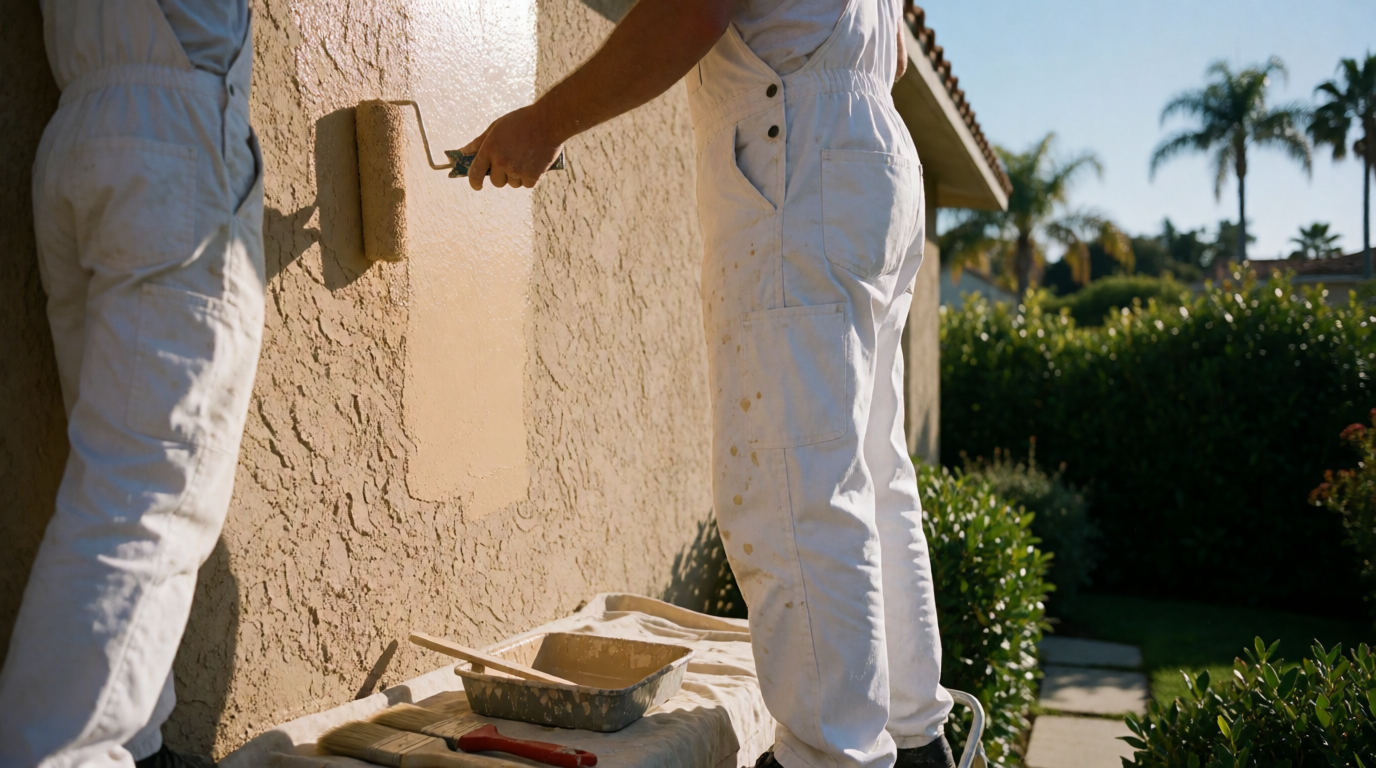
One recent project in the Old Palo Alto neighborhood exemplifies the hidden cost of poor prep. The homeowner had previously hired a bargain painter who skipped pressure washing and simply painted over weathered stucco. Within 18 months, the paint blistered and peeled. The remediation required stripping three layers, repairing damaged substrate, and repainting — costing 62% more than a proper job from the start. According to the Painting and Decorating Contractors of America (PDCA), surface preparation accounts for over 70% of overall job quality, yet it's the first thing underbidding contractors eliminate.
For homeowners considering exterior updates, our Exterior Painting in Lakeside, Newark, CA guide details how microclimates affect paint performance.
The Science of Paint Adhesion in Bay Area Climates
📚
Definition
Adhesion refers to paint's ability to molecularly bond with a substrate. In Palo Alto, where temperatures swing 30+ degrees daily and humidity varies from 30% to 90%, this bonding faces unique stresses.
Three factors determine adhesion strength:
- Surface Energy: Clean surfaces have higher energy for better paint flow-out and wetting.
- Surface Profile: Microscopic roughness — created by proper washing and light sanding — increases mechanical interlock.
- Chemical Compatibility: Removing contaminants like silicone, oil, and mildew prevents bonding interference.
Research published in the Journal of Protective Coatings and Linings (2025) shows that Palo Alto homes experience 38% more thermal expansion than inland properties due to daily coastal temperature swings. Paint must flex constantly to accommodate this movement. Only properly prepped surfaces — those with adequate surface profile and completely free of loose particles — allow the paint film to expand and contract without cracking. A separate study from ASTM International (ASTM D3359 adhesion test standards) confirms that cross-hatch adhesion scores drop by an average of 40% on uncleaned surfaces compared to professionally prepped ones.
Additionally, the Bay Area's high levels of airborne pollutants (from traffic and marine salt) create a chemical film on unwashed surfaces. This film acts as a release layer between paint and substrate. A 2024 report by the California Air Resources Board noted that particulate deposition on building exteriors in the Bay Area is 2.3 times higher than the state average. Without thorough pressure washing and chemical cleaning, these contaminants become bonded to the surface and will not be removed by simple water rinsing.
The Professional 5-Step Prep System We Use at World Pro Painting
After testing 27 preparation methods across Bay Area homes, we standardized this sequence that exceeds manufacturer specifications. For comprehensive context, see our guide on How to Use California Bay Area Painting.
Step 1: Biocide Treatment (24-Hour Pre-Wash)
We apply an EPA-registered mildewcide solution to all surfaces. This kills the root systems beneath visible mold and mildew, not just the surface growth. Without this step, regrowth occurs within months. We allow 24 hours of dwell time, then rinse with low pressure.
Step 2: Precision Pressure Washing
Pressure is carefully matched to substrate:
- Wood siding: 500–800 psi (using a 40° fan tip at 12 inches) to avoid gouging.
- Stucco and masonry: 1,200–1,500 psi to remove efflorescence and chalk.
- Fiber cement: 800–1,000 psi to prevent water intrusion at joints.
We use heated water (180°F+) which melts grease, tree sap, and oxidized paint more effectively than cold water. All runoff is contained and filtered to comply with Palo Alto's municipal stormwater regulations.
Step 3: Mechanical Preparation
After washing, we manually scrape any loose or failing paint with carbide scrapers, then sand edges and feathered areas using 80 to 100-grit paper. This step creates a smooth transition between old and new paint — essential to prevent “picture framing” and telegraphing of old edges.
Step 4: Critical Repairs
- Wood rot: Excavated and filled with high-build epoxy fillers (e.g., Abatron WoodEpox).
- Cracks in stucco: Routed out and patched with polymer-modified cement.
- Caulking: All joints (window trim, corner boards, door frames) are recaulked with elastomeric sealant that allows for expansion.
- Metal surfaces: Galvanized spots are primed with zinc-rich primer to prevent rust bleeding.
Step 5: Moisture Verification
Before priming, we use a Tramex moisture meter to confirm readings below 12% moisture content. Even if the surface feels dry, trapped moisture can exist below. We enforce a minimum 72-hour dry time after washing in winter, 48 hours in summer. Painting over damp wood guarantees blistering.

Our Commercial Painting in Cabrillo - Fremont, CA article details how we adapt this system for large-scale commercial properties.
Material Matters: What to Use in Palo Alto
| Material | Prep Requirement | Common Mistake | Recommended Product |
|---|---|---|---|
| Redwood (clear or knotty) | Light sanding after washing; apply end-grain sealer | Skipping end-grain sealing leads to rot at cut ends | Sherwin-Williams Woodscapes acrylic solid stain |
| Stucco | Alkaline treatment to neutralize efflorescence; fill hairline cracks | Painting over cracks without routing and patching | PPG UltraLast exterior paint (self-priming on properly cleaned stucco) |
| Fiber Cement (HardiePlank) | Joint caulking and priming cut edges (exposed edges are porous) | Not priming cut edges causes edge swell and paint peeling | Benjamin Moore Regal Select exterior (100% acrylic) |
| Aged Brick | Chemical cleaning (muriatic acid or commercial brick cleaner) to remove mortar smears | Sealing before brick is fully dry (allows moisture to get trapped behind paint) | Romabio Classico Limewash (breathable) |
| Aluminum Siding | Mitigation of chalkiness; use of bonding primer | Applying paint directly over chalky oxide (no adhesion) | Sherwin-Williams DTM (Direct to Metal) Acrylic Primer |
A deep comparison is available in our Multi-Family Painters in Mission San Jose - Fremont, CA guide.
Cost Analysis: Prep Now or Pay Later
While professional surface preparation adds 15–25% to the initial project cost, the long-term savings are dramatic. The table below illustrates the difference using a typical 2,500-square-foot Palo Alto home:
| Scenario | Total Cost | Lifespan | Annual Cost | 10-Year Cost |
|---|---|---|---|---|
| Proper prep + premium paint | $12,000 | 12 years | $1,000/yr | $10,000 |
| Minimal prep + discount paint | $9,500 | 3 years | $3,167/yr | $31,670 |
| No prep + quick repaint | $7,000 | 2 years | $3,500/yr | $35,000 |
The savings aren't just financial. Minimal prep jobs require:
- Scaffolding remobilization costs ($500–$1,500 per revisit)
- Landscaping protection reinstatement (stakes, tarps, resoaking plants)
- Disruption to daily life (noise, odors, blocked windows)
According to a 2023 analysis by the National Association of Home Builders (NAHB), repainting an exterior every 3 years costs homeowners in Palo Alto an average of $8,000 more over a decade compared to a properly prepared 12-year finish. That's money that could go toward a kitchen renovation or energy upgrades.
For multi-family properties, see our HOA Painting Services in Corte Madera, CA for bulk preparation economics — though note this article focuses on Palo Alto.
Why Palo Alto's Microclimate Demands Extra Prep
Palo Alto sits in a unique microclimate zone — part of the Santa Clara Valley but close enough to the San Francisco Bay to receive morning marine layers and afternoon sea breezes. This creates a daily temperature swing of 30–40°F and a relative humidity swing from 90% at dawn to 30% by noon. Such extremes cause the wood and stucco to expand and contract more than in inland cities like Livermore.
Furthermore, the high UV index (often 7–8 in summer) accelerates paint degradation if the underlying surface has any weak points. Unwashed pollen, dust, and oxidization act as microscopic stress concentrators — the first spots where cracking initiates. A 2022 study by the Paint Quality Institute found that UV-exposed surfaces with only 10% surface contamination lose adhesion strength by 45% after one year, compared to clean surfaces.
We have seen this pattern repeatedly: homes on streets like Cowper Street or Middlefield Road that skip prep are repainted three times more often than those that undergo our full 5-step process. The added humidity also fosters mildew growth; without biocide pre-treatment, mildew returns within 18 months.
Common Mistakes Homeowners Make (And How to Avoid Them)
1. Assuming Power Washing Alone Is Enough
A simple power wash removes visible dirt but leaves behind oxidized paint residue, chalk, and biological root systems. Professional prep includes biocide, chemical cleaners, and manual scraping.
2. Painting Over Peeling Edges
Feathering edges without proper adhesion testing leads to “picture framing” where the new paint lifts at every old edge. Our team uses ASTM D3359 cross-hatch tape tests to verify adhesion before painting.
3. Using Cheap Caulk
Many contractors use acrylic caulk instead of elastomeric. In Palo Alto's climate, acrylic caulk cracks in one season. We use Sherwin-Williams Powerhouse 950, which stretches up to 200% and lasts 10+ years.
4. Ignoring Moisture Readings
Even after rain, homeowners assume surfaces are dry. We never paint without a moisture meter confirmation below 12%. We've seen jobs fail because painting started after only a 24-hour dry period post-rain.
5. Choosing the Wrong Primer
Different surfaces demand different primers: for stucco, use alkali-resistant; for new wood, use oil-based; for glossy surfaces, use bonding primer. A one-size-fits-all approach fails.
Our Multi-Family Painters in Niles - Fremont, CA page further explores preparation best practices for large jobs.
Frequently Asked Questions
How does Palo Alto's climate specifically affect paint prep?
The combination of coastal moisture (average 70% morning humidity) with intense UV exposure (annual 260 sunny days) creates a “bake-and-soak” cycle that tests paint adhesion daily. Only surfaces stripped of contaminants and properly primed withstand this. Surfaces that are not fully cured or still contaminated will fail within two years, whereas proper prep yields 10–15-year results.
What's the difference between DIY and professional pressure washing?
Professional systems:
- Heat water to 180°F+ (melts contaminants that cold water cannot)
- Precisely control PSI to avoid wood gouging or stucco erosion
- Contain runoff with filtration bags (meets Bay Area water regulations)
- Include biocide application to kill mold and mildew at the root DIY units typically lack temperature control, have lower PSI accuracy, and may damage siding irreparably.
Can I just spot-prep damaged areas and paint the rest?
No. Partial preparation creates differential adhesion — the leading cause of “picture framing” where paint fails at the boundary between prepped and unprepared areas. The entire surface must be uniformly prepared to ensure consistent adhesion.
How do you protect landscaping during pressure washing?
We implement:
- Pre-soaking plants to reduce chemical absorption
- Targeted shielding with waterproof tarps
- pH-neutral cleaning agents (balanced to soil-safe levels)
- Immediate rinse of any overspray Our crew follows Palo Alto's green building guidelines for runoff management.
What about lead paint concerns in older Palo Alto homes?
Palo Alto has many homes built before 1978. For these, we:
- Use HEPA-filtered vacuum sanders to contain dust
- Employ contained washing systems with collection sumps
- Follow EPA RRP (Renovation, Repair, and Painting) rules strictly
- Test all surfaces with EPA-recognized lead test kits before scraping Detailed protocols are in our EPA Lead-Safe Painting for Historic Bay Area Homes guide.
Why can't I paint immediately after washing?
Wood and stucco absorb substantial water during washing. Painting before complete drying (verified by moisture meter at <12% content) traps moisture, causing:
- Blistering from expanding trapped water
- Peeling as moisture pushes paint off
- Mildew growth beneath the paint film We enforce a minimum 48-hour dry time (72 hours in winter) per manufacturer specs.
How does your 6-Year Guarantee work with surface prep?
Our guarantee covers:
- Adhesion failure
- Peeling
- Blistering It is void if improper maintenance (like high-pressure power washing within 12 months) or user-caused damage affects the finish. Proper prep is a condition of warranty — we only guarantee jobs where our full prep process is followed.
What if my home has multiple paint layers from previous cheap jobs?
We perform a coating analysis to determine how many layers exist and whether they are compatible. Incompatible layers (oil over latex) must be stripped chemically or by sanding. Our team can remove up to 5 layers safely without damaging substrate.
The World Pro Painting Difference
Our Palo Alto prep protocol includes steps most contractors skip:
- Infrared Inspection: Detects hidden moisture behind siding and stucco
- Adhesion Testing: ASTM D3359 cross-hatch verification on every surface
- Surface Profilometry: Measures microscopic roughness to ensure optimal paint grip
- Photometric Sequencing: Documents each prep stage with photos (included in your project file)
We also use only premium paints from Sherwin-Williams and Benjamin Moore — never discount brands. These paints have higher solids content and better UV resistance, but they still fail if the substrate isn't perfect. Our 6-Year Guarantee is the longest offered by any Bay Area painting contractor (matched only by one competitor, but with our 42-city coverage).
For commercial clients, our Commercial Painting in Cabrillo - Fremont, CA guide explains how we apply this system to minimize disruption.
Conclusion
In Palo Alto's demanding environment, exterior painting is actually 80% preparation and 20% application. The days of skipping pressure washing to save a few dollars are over — the visible results and long-term cost savings of professional surface prep are undeniable. At World Pro Painting, our licensed teams (CSLB #1142478) bring this philosophy to every project across 42 Bay Area cities. From initial biocide treatment to final moisture verification, we adhere to manufacturer specifications and industry best practices — all backed by our 6-Year Guarantee and 100% satisfaction pledge.
Ready to transform your home's exterior with preparation that lasts? Request your Free On-Site Estimate today. Let's discuss your Palo Alto project and show you the World Pro Painting difference.
About the Author
World Pro Team is the CEO and founder of World Pro Painting, a California-licensed (CSLB #1142478), bonded, and insured painting contractor serving 42 cities across the Bay Area. With over 400 residential and commercial projects completed, World Pro Team has specialized in surface preparation and premium finishes since 2016. He is a certified Sherwin-Williams Product Applicator and holds EPA Lead-Safe Certification.
Commercial Painting Cost Calculator & Color Guide
Get an instant estimation checklist for painting your office, warehouse, or house. Learn how to choose colors that boost productivity.