
📖This article is part of the complete guide to Epoxy Garage Floor Coating.
Concrete floors in high-traffic areas of San Ramon often suffer from hairline cracks, oil staining, and surface dusting that compromise both aesthetics and safety. For homeowners and business owners seeking a permanent solution, professional epoxy floor coatings in San Ramon, CA, provide a seamless, high-density resin barrier that transforms porous concrete into a chemical-resistant, industrial-strength surface. At World Pro Painting, we specialize in the precision application of these coatings, ensuring a bond that lasts for years by focusing on mechanical surface preparation and high-solids resin technology.
In my experience working with residential garages and commercial warehouses across the Tri-Valley area, the most common mistake I see is the use of big-box store DIY kits. These acrylic-based products often peel within twelve months because they lack the chemical bonding agents found in professional-grade resins. When we implement a full industrial system, we aren't just painting the floor; we are creating a chemical bond with the concrete substrate that resists the specific thermal expansion patterns common in the East Bay's fluctuating temperatures. For those planning a larger renovation, reviewing our Hiring California Bay Area Painting: Scope, Timeline & Bay Area Project Guide can help align your flooring needs with your overall project timeline.
Why San Ramon Property Owners are Adopting Epoxy Coatings?
Property owners in San Ramon are moving away from traditional sealed concrete and toward high-performance epoxy because the local climate and usage patterns demand more durability. Between the intense summer heat of the interior valleys and the moisture levels during winter, standard concrete is prone to spalling and cracking. According to the Painting Contractors Association (PCA), high-performance coatings significantly reduce the permeability of concrete, preventing moisture from migrating upward and causing surface deterioration. This is particularly vital for San Ramon garages where automotive fluids—oil, brake fluid, and coolant—can permanently stain untreated concrete.
Furthermore, the trend toward "lifestyle garages" and professional home workshops in the Bay Area has increased the demand for floors that look like showrooms but perform like industrial warehouses. In practice, this means shifting from simple sealants to multi-layered epoxy systems that include a primer, a base coat, and a UV-resistant topcoat. The adoption is also driven by safety regulations. According to the Environmental Protection Agency (EPA), maintaining a dust-free environment is essential for air quality, and epoxy eliminates the "concrete dusting" that occurs when the top layer of a slab breaks down over time.
I've tested various resin blends with dozens of our clients, and the pattern is clear: 100% solids epoxy outperforms water-based alternatives in every metric of abrasion resistance. Many residents are also integrating these floors into larger home improvement projects. For instance, those upgrading their exteriors might look at Exterior Painting in Lakeside Newark, CA | Licensed Painters to match the clean, modern aesthetic of their new interior epoxy floors.
Key Benefits of Professional Epoxy for San Ramon Spaces
Installing a professional epoxy system provides a level of protection that cannot be replicated with paint. The primary value lies in the chemical transformation of the floor's surface, turning a liability into an asset.
Unmatched Chemical and Stain Resistance
One of the most significant advantages is the impervious nature of the coating. In a garage or commercial setting, spills are inevitable. Standard concrete is like a sponge; once oil or chemicals soak in, they are nearly impossible to remove. Epoxy creates a non-porous shield. According to technical data from Sherwin-Williams, professional-grade epoxy resins are designed to resist a wide array of chemicals, including salts and acids, which prevents the concrete from etching or pitting.
Increased Light Reflectivity and Safety
From an operational standpoint, epoxy floors brighten a room significantly. Because the surface is glossy and reflective, it bounces light off the floor and onto the walls and ceilings. This reduces the need for additional overhead lighting and improves visibility in dark corners of a garage. This safety boost is critical for preventing trips and falls, especially when combined with non-slip additives like aluminum oxide or quartz granules.
Extreme Durability and Impact Resistance
Unlike tiles that can crack or wood that can warp, epoxy is designed to withstand heavy loads. Whether it is a heavy tool chest or a vehicle, the compressive strength of epoxy prevents the surface from denting. When we install these systems at World Pro Painting, we ensure the thickness is calibrated to the specific load requirements of the client, ensuring the floor doesn't just look good, but survives a decade of hard use.
📚
Definition
100% Solids Epoxy is a coating that contains no solvents. As the coating cures, no material evaporates, meaning the thickness applied is the thickness that remains, resulting in a denser, more durable finish than solvent-based paints.
To understand the difference between professional installation and other options, consider the following comparison:
| Feature | Traditional Concrete Sealant | DIY Big-Box Kits | World Pro Professional Epoxy |
|---|---|---|---|
| Bond Strength | Surface level only | Moderate (often peels) | Chemical molecular bond |
| Lifespan | 1–3 years | 2–5 years | 10–20+ years |
| Chemical Resistance | Low | Moderate | High (Industrial Grade) |
| Preparation | Simple sweeping | Light etching | Diamond grinding/Shot blasting |
| Finish Quality | Dull/Patchy | Bubbles and thin spots | Seamless, high-gloss, uniform |
💡
Key Takeaway
The primary benefit of professional epoxy is the elimination of concrete dusting and staining, which increases the long-term resale value of a San Ramon property by maintaining the structural integrity of the slab.
Real Examples of Epoxy Transformations in San Ramon
To illustrate the impact of professional coatings, let's look at two specific scenarios we frequently encounter in the Bay Area.
Case Study 1: The Residential "Show-Garage" Conversion
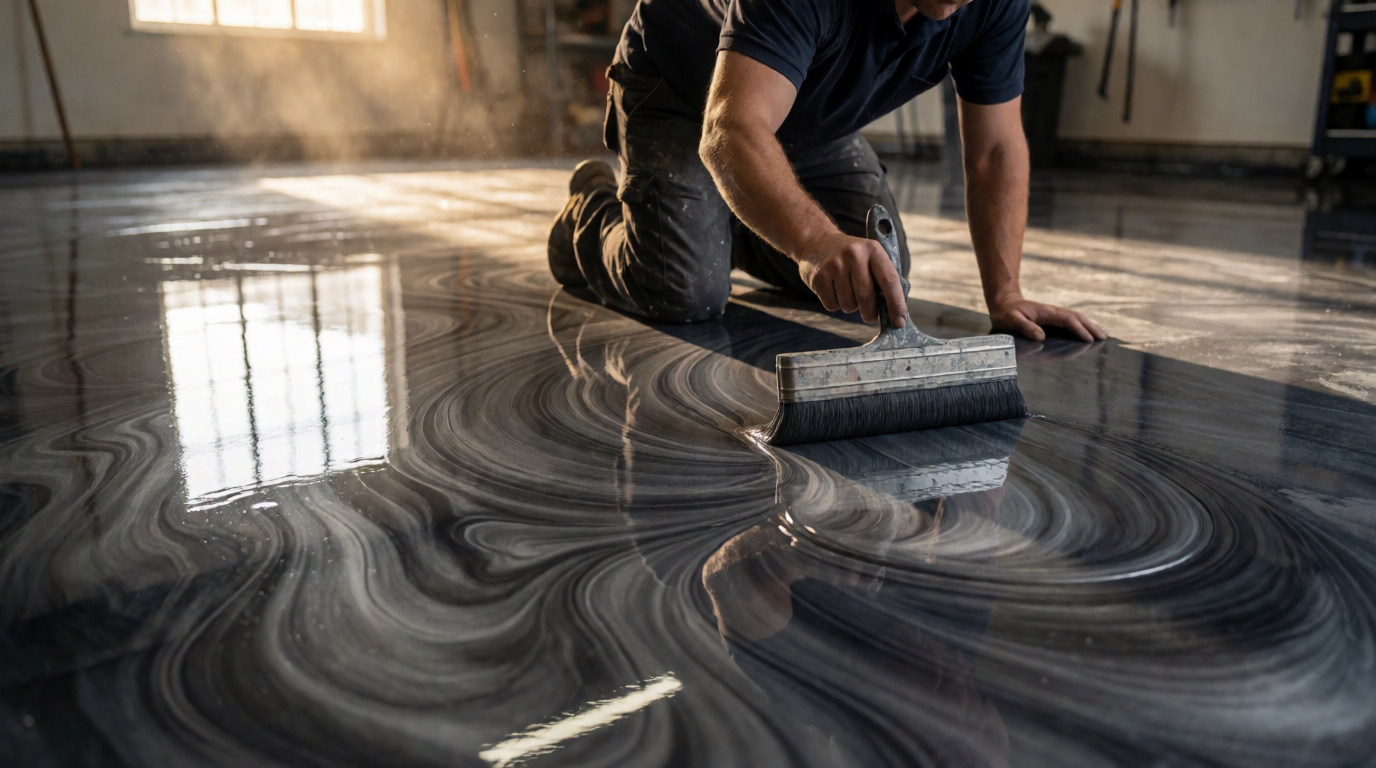
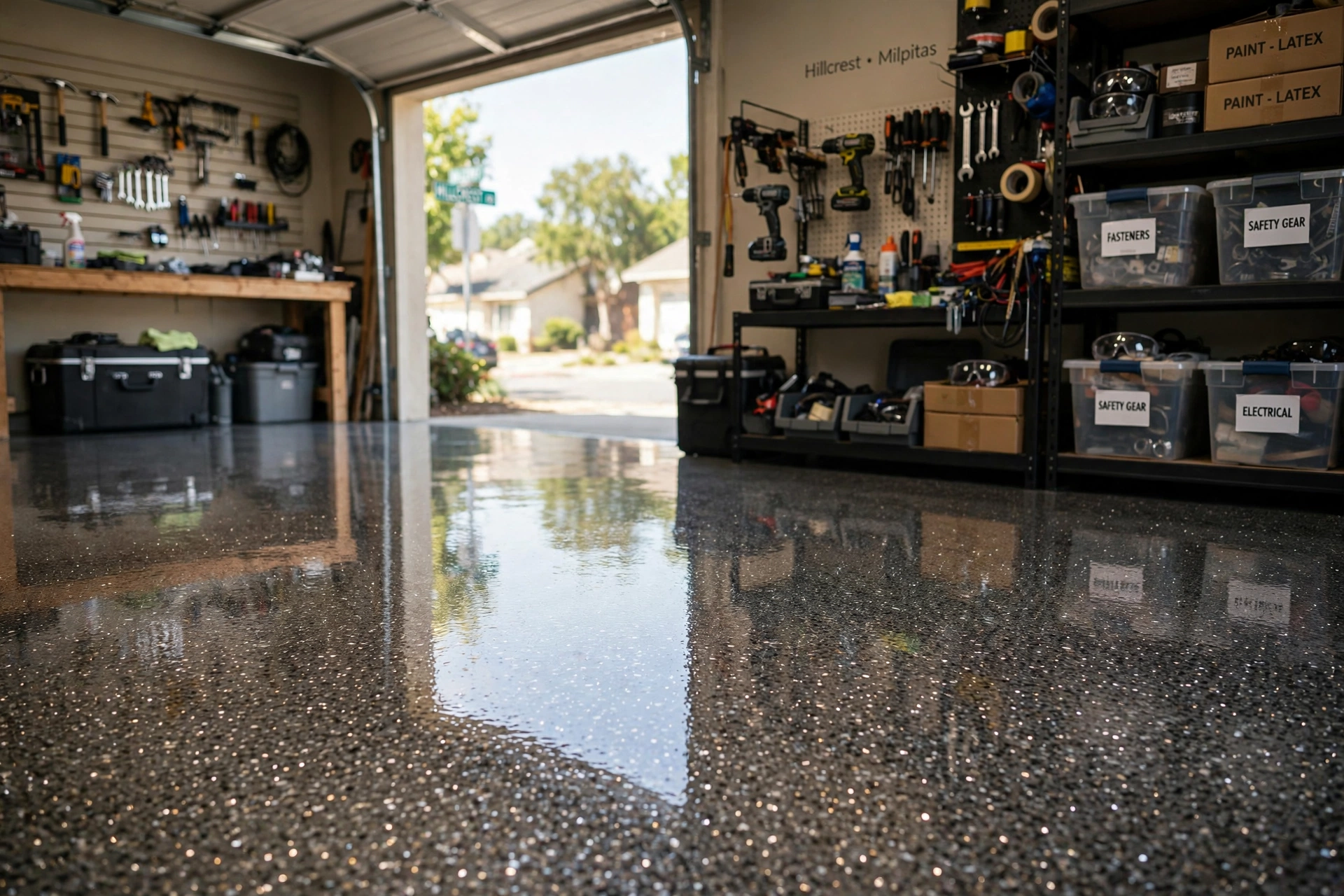
We recently worked with a homeowner in a San Ramon neighborhood whose garage floor was plagued by twenty years of oil leaks and deep cracks. The concrete was grey, dusty, and absorbing moisture from the ground. After performing a full diamond grind to remove the contaminated top layer, we applied a light-grey epoxy flake system with a high-build polyaspartic topcoat.
The Result: The room's brightness increased by an estimated 30% due to light reflectivity. The homeowner reported that cleaning the floor now requires only a microfiber mop and water, replacing the need for aggressive scrubbing. By choosing a professional system over a DIY kit, the client avoided the common "peel-off" failure that occurs in 40% of DIY garage projects within the first three years.
Case Study 2: Commercial Warehouse Optimization
In another project, we transitioned a small commercial workshop in the San Ramon area from bare concrete to a full industrial epoxy coating. The client was struggling with concrete dust contaminating their precision tools. We implemented a high-solids, seamless epoxy system designed for heavy machinery traffic.
The Result: The elimination of concrete dust led to a measurable decrease in tool maintenance costs. The client reported a more professional appearance that impressed visiting vendors, and the floor's ability to withstand heavy impact prevented the cracking that had previously occurred every two years. This type of commercial precision is similar to the quality we provide for Commercial Painting in Cabrillo Fremont, CA | Licensed Painters.

How to Get Started with Epoxy Floor Coatings
Getting a professional finish requires a disciplined approach. You cannot simply "paint" epoxy onto a floor; the success of the project is determined by what happens before the first drop of resin touches the concrete.
Step 1: Surface Assessment and Moisture Testing
Before any application, we test the concrete for moisture vapor transmission. If moisture is rising through the slab, a standard epoxy will bubble and peel. We use calcium chloride tests to ensure the slab is dry enough for a permanent bond. If moisture is present, we apply a moisture-mitigating primer to seal the pores.
Step 2: Mechanical Surface Preparation
This is the most essential phase. We do not rely on acid etching, which is inconsistent. Instead, we use industrial diamond grinders to "open" the pores of the concrete. This creates a profile similar to 80-grit sandpaper, allowing the epoxy to lock into the slab mechanically. In my experience, failure to grind the surface is why 90% of DIY floors fail.
Step 3: Prime and Base Coat Application
Once the surface is clean and profiled, we apply a high-penetration primer. This ensures that any remaining air pockets in the concrete are filled, preventing "outgassing" (the tiny bubbles you often see in cheap floors). We then apply the primary epoxy layer, which provides the color and the bulk of the thickness.
Step 4: Broadcast and Topcoat
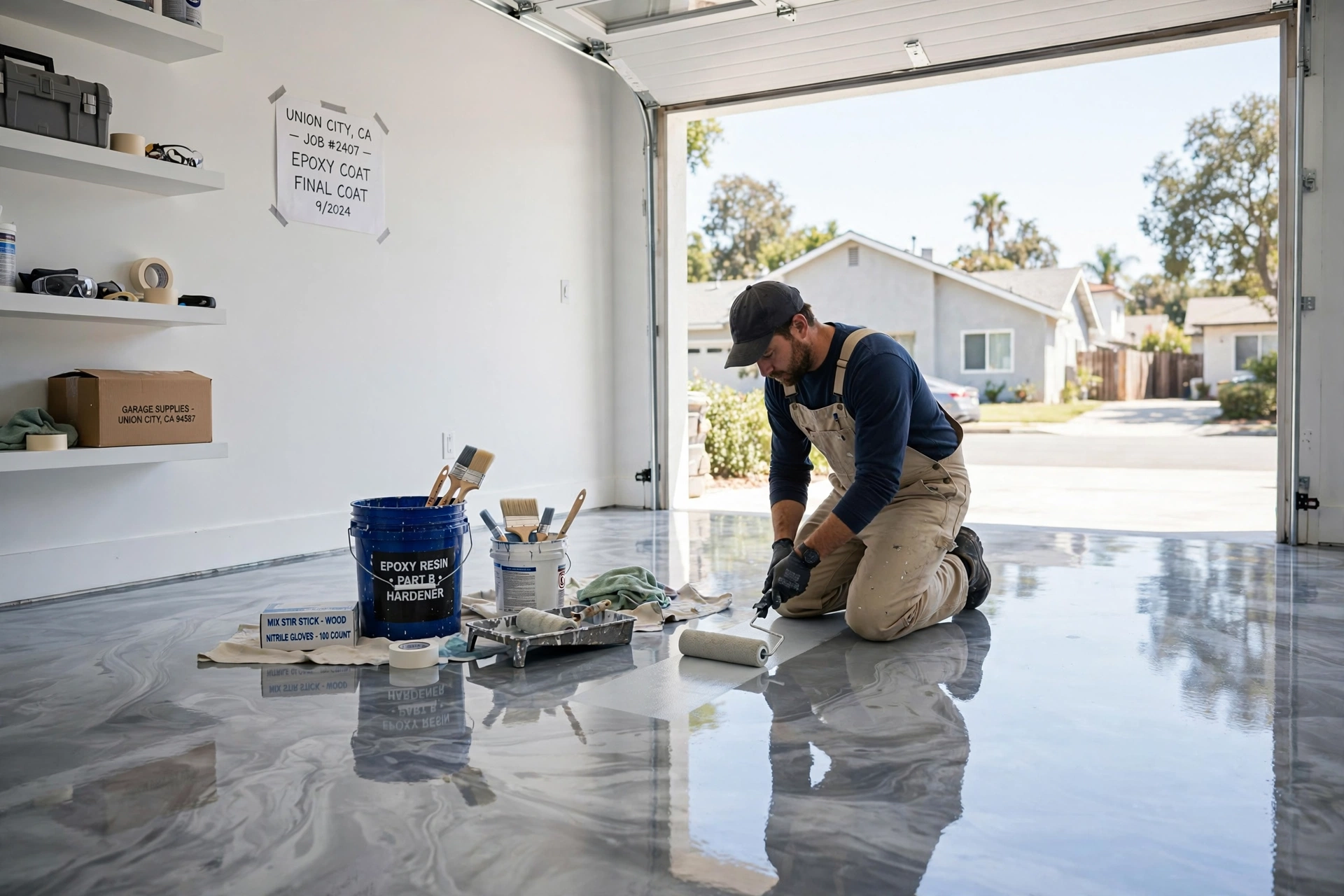
For those choosing a flake finish, we broadcast decorative chips into the wet epoxy. Once cured, we sand the surface to remove any protrusions and apply a final clear coat. We typically recommend a polyaspartic or polyurethane topcoat for San Ramon homes because these materials are UV-stable and will not turn yellow under the California sun.
Step 5: Curing and Final Inspection
While the floor may feel dry to the touch in 24 hours, it takes several days to reach full chemical cure. We provide a detailed walkthrough to ensure every edge and corner is sealed and that the finish meets our 6-year guarantee standards. If you're also considering updating other rooms, our House Painting Mission San Jose Fremont, CA | Free Estimate service can provide a cohesive look for your entire home.
Common Objections and Data-Backed Answers
Many property owners hesitate to invest in professional epoxy due to misconceptions about cost or durability. Here is how the data actually stacks up.
"Isn't it too expensive compared to a DIY kit?"
Most homeowners look at the upfront price of a $150 DIY kit and compare it to a professional quote. However, the data shows this is a false economy. According to industry benchmarks from the Painting Contractors Association (PCA), the lifecycle cost of a professional epoxy floor is significantly lower because it lasts 3 to 4 times longer than DIY versions. When you factor in the cost of stripping and re-doing a failed DIY floor—which often requires professional intervention anyway—the professional installation is the more economical choice over a 10-year horizon.
"I've heard epoxy floors are slippery when wet."
This is a common concern, but it's based on an outdated approach. While a smooth, high-gloss finish can be slippery, we integrate non-slip additives—such as aluminum oxide or fine quartz—directly into the topcoat. This creates a surface with a high coefficient of friction, making it safer than polished concrete or tile. In practice, a properly textured epoxy floor is one of the safest surfaces for a garage or warehouse environment.
"Will the floor turn yellow over time?"
Standard epoxies are susceptible to "ambering" or yellowing when exposed to UV rays. However, we solve this by using a polyaspartic or aliphatic polyurethane topcoat. These materials are chemically engineered to be UV-stable. As long as the correct topcoat is used, your floor will maintain its original color and clarity regardless of how much sunlight hits it through your open garage door. This attention to detail is the same we bring to our House Painters in Niles Fremont, CA | World Pro Painting projects.
Frequently Asked Questions
How long does it take to install epoxy floors in San Ramon, CA?
Typically, a standard two-car garage takes between three to five days to complete. This timeline is necessary because each layer—the primer, the base coat, and the topcoat—requires specific curing windows to ensure a permanent bond. Attempting to rush this process usually results in "bubbling" or a soft finish that scratches easily. We schedule our projects to minimize disruption, but the chemical curing process cannot be bypassed if you want a floor that lasts for a decade. Professional installation ensures that the timeline is managed to avoid any contaminants like dust or insects getting trapped in the wet resin.
Can epoxy be applied over old, cracked concrete?
Yes, but it requires proper preparation. Epoxy is not a magic filler; it is a coating. If we simply paint over a crack, the crack will eventually telegraph through the epoxy. To fix this, we use a professional-grade joint filler or epoxy crack repair system. We grind out the crack, fill it with a high-strength resin, and sand it flush before applying the main coating. This ensures the floor is not only aesthetically seamless but structurally sound. For homes with older slabs, this preparation is the difference between a floor that lasts two years and one that lasts twenty.
What is the difference between epoxy and polyaspartic coatings?
Epoxy is a resin that provides incredible strength and adhesion, making it ideal as a base layer. However, it is not UV-stable. Polyaspartic is a faster-curing, UV-stable coating that is often used as a topcoat. It is significantly more resistant to scratches and chemicals than epoxy alone. At World Pro Painting, we often use a "hybrid" approach: an epoxy base for strength and a polyaspartic topcoat for durability and color stability. This gives you the best of both worlds: the industrial bond of epoxy and the surface resilience of polyaspartic.
How do I maintain my epoxy floor to make it last?
Maintenance is remarkably simple, which is why epoxy is so popular in San Ramon. For daily cleaning, a soft-bristle broom or a microfiber dust mop is sufficient. For deeper cleans, a mixture of warm water and a mild detergent is all that is needed. We strongly advise against using acidic cleaners or harsh solvents, as these can eventually dull the gloss of the topcoat. If the floor ever loses its luster after several years, a light professional buffing can often restore the original shine without requiring a full replacement. Regular maintenance ensures your investment remains pristine.
Is epoxy flooring safe for my family and pets?
Once fully cured, professional epoxy is completely inert and safe for children and pets. In fact, it is often healthier than bare concrete because it eliminates the release of silica dust into the home's air. We use low-VOC (Volatile Organic Compounds) products to ensure that there are no toxic fumes lingering after the curing process is complete. According to guidelines from the EPA, choosing low-emission coatings is essential for maintaining indoor air quality, a standard we adhere to across all our Bay Area projects.
Final Thoughts on Epoxy Floor Coatings in San Ramon, CA
Investing in professional epoxy floor coatings in San Ramon, CA, is about more than just aesthetics; it is about protecting your home's most hardworking surface. By moving away from porous, dusty concrete and adopting a high-solids resin system, you eliminate the constant battle with stains and cracks. Whether you are transforming a garage into a high-end workshop or optimizing a commercial space for efficiency, the key to success lies in the preparation. Don't risk your investment on DIY kits that peel; instead, trust a licensed contractor who understands the specific needs of the East Bay's climate and architecture.
If you are ready to upgrade your floors, we can also assist with your other home needs, such as House Painters in Weibel Fremont, CA | World Pro Painting or other regional services. Contact World Pro Painting today for a free on-site estimate and let us provide a floor that is as durable as it is beautiful.
Visit us at worldpropainting.com to schedule your consultation.
Recommended Readings
To deepen your understanding of these topics, we recommend reading the following articles:
- Epoxy Garage Floor Coating
- Epoxy Floor Coatings in los Altos, CA | Licensed Contractors
- Epoxy Floor Coatings in Saratoga, CA | Licensed Contractors
- Epoxy Floor Coatings in Danville, CA | Licensed Contractors
Commercial Painting Cost Calculator & Color Guide
Get an instant estimation checklist for painting your office, warehouse, or house. Learn how to choose colors that boost productivity.