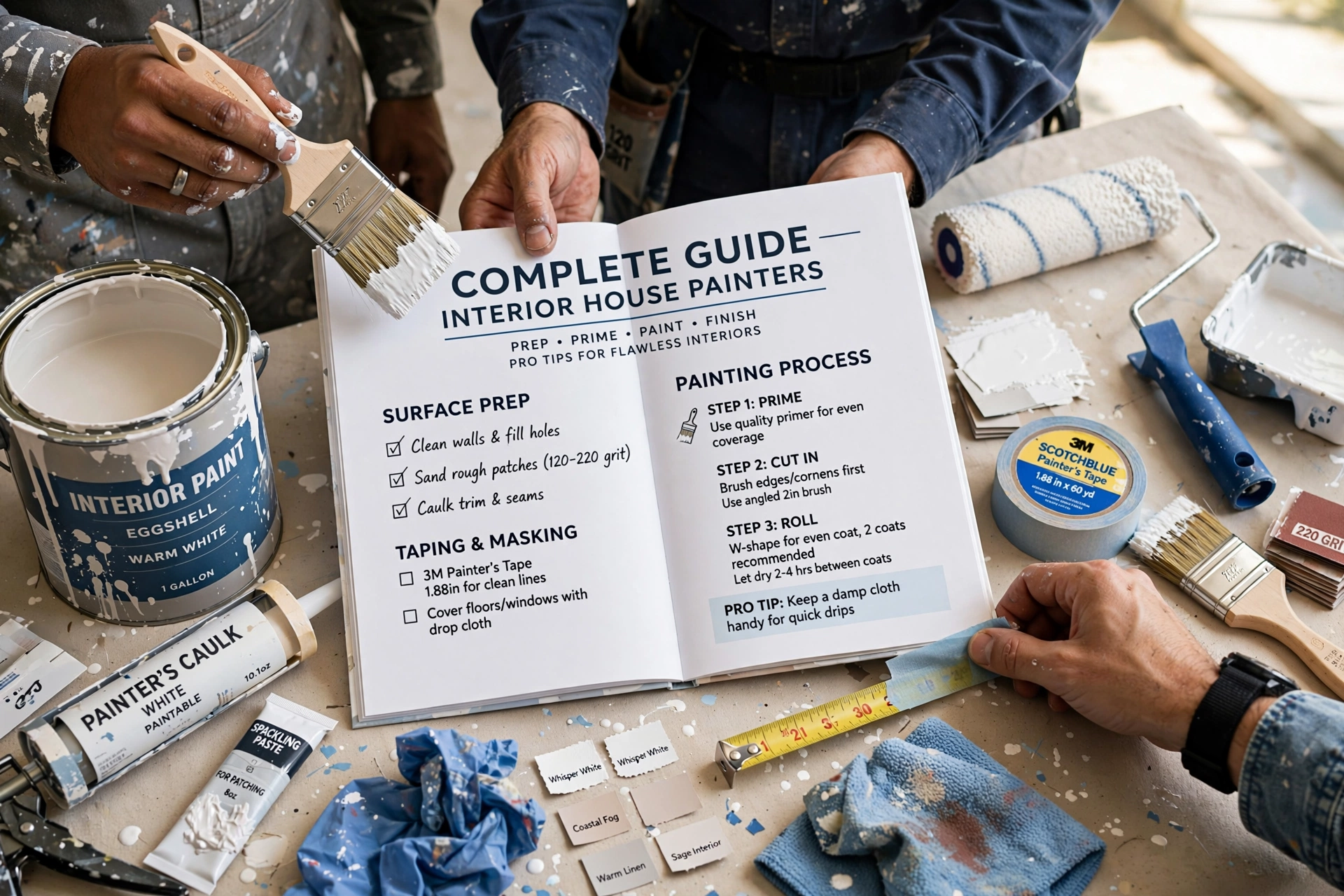

📖This article is part of the complete guide to Interior House Painters.
How to Hire and Work With Professional Interior House Painters
The difference between a "paint job" and a professional interior transformation often comes down to the 80% of the work that happens before a brush ever touches the wall. In my experience working with high-end estates in the San Francisco Bay Area, I've seen homeowners spend thousands on premium paints only to have the finish peel within two years because the surface wasn't properly deglossed or primed. When people ask what is interior house painters' actual role, they often assume it is simply applying color to a wall, but a true professional is actually a surface preparation specialist. To get a flawless result, you must focus on a rigorous five-step process: comprehensive site protection, substrate cleaning, precision patching, high-adhesion priming, and multi-coat application.
For those managing larger properties, understanding these standards is the only way to ensure longevity. If you are overseeing a complex project, you might find our guide on how to use California Bay Area painting services useful for coordinating multiple teams across different residential zones.
What Exactly Is the Role of Professional Interior House Painters?
Professional interior house painters are licensed contractors specialized in the chemical application of coatings to interior substrates. Unlike a DIY attempt, a professional manages the interaction between the paint chemistry and the environmental conditions of the room—such as humidity in a San Francisco kitchen or the UV exposure in a sunny Fremont living room.
📚
Definition
Interior house painting is the systematic process of preparing, priming, and applying pigmented coatings to indoor walls, ceilings, and trim to protect the substrate and enhance the aesthetic value of a property.
The technical complexity of the job is often underestimated. A professional must understand the difference between acrylic, latex, and oil-based paints, and more importantly, when they cannot be mixed. According to the Painting Contractors Association (PCA), the longevity of an interior finish is directly proportional to the quality of the surface preparation. If a painter skips the sanding phase on a glossy trim, the new coat will lack the mechanical bond required to stay adhered, leading to premature chipping.
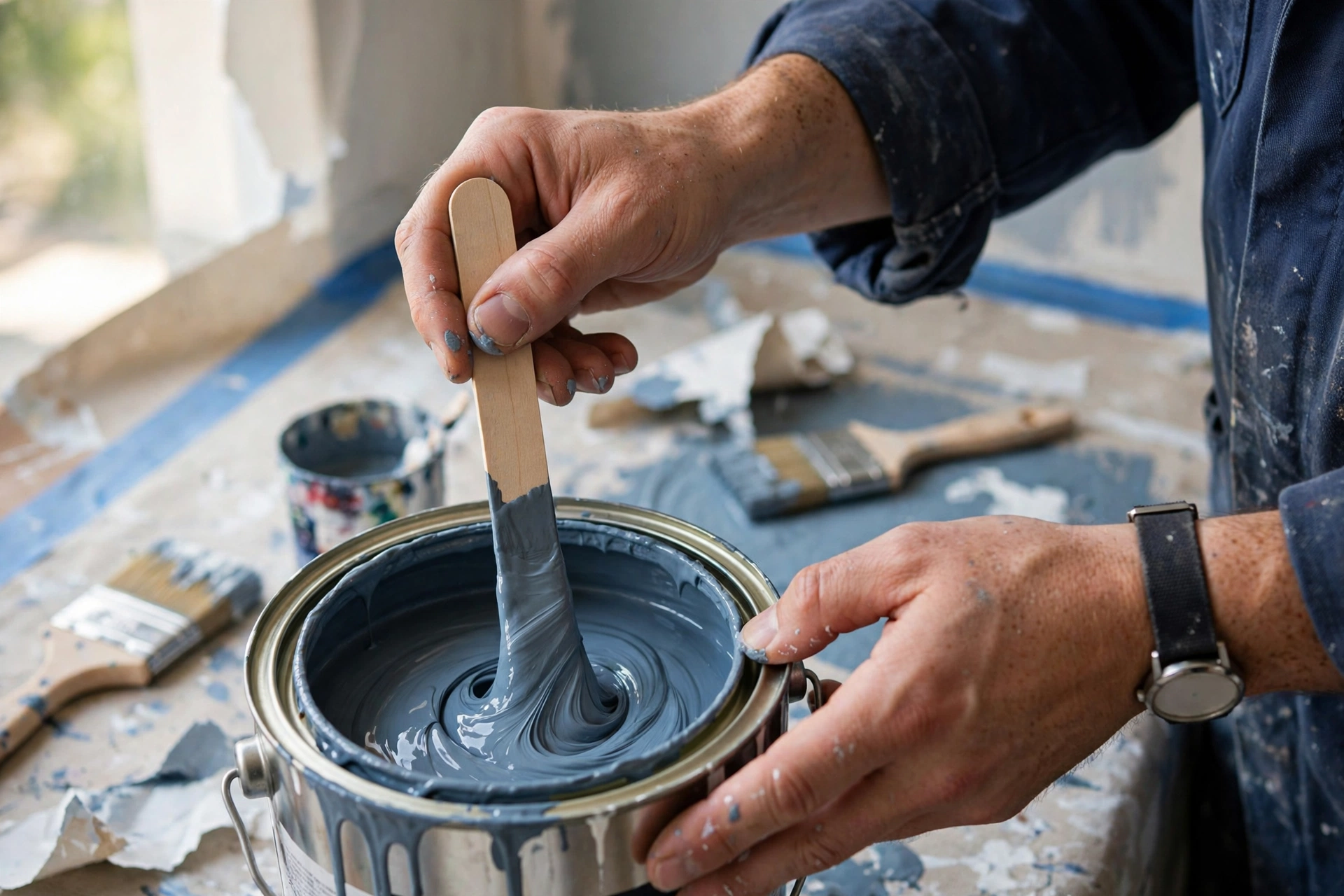
Now, here's where it gets interesting: the "art" of painting is actually science. It involves calculating the "Wet Hiding Power" of a paint and understanding how "flash-off" times affect the final sheen. When we handle projects for Multi-Family Painters in Weibel - Fremont, CA, we don't just pick a color; we analyze the light reflectance value (LRV) of the room to ensure the color doesn't "shift" under different lighting conditions. This level of detail is what separates a licensed contractor from a casual laborer.
Why Professional Interior Painting Matters for Property Value
Investing in professional interior painting isn't just about aesthetics; it is a strategic move for asset preservation. A poorly executed paint job can actually decrease the perceived value of a home by signaling a lack of maintenance to potential buyers. Conversely, a crisp, professional finish creates an immediate psychological impression of "move-in ready" quality.
According to data from Benjamin Moore, the right color palette and professional application can significantly impact the emotional response of a buyer, often leading to faster sales and higher offers. This is particularly true in competitive markets like the Bay Area, where "designer" interiors are expected.
The consequences of skipping professional services are often financial. For example, if a homeowner applies a low-VOC paint over an old lead-based layer without proper containment, they risk contaminating the living space. According to the Environmental Protection Agency (EPA), failing to follow the RRP (Renovation, Repair, and Painting) rule can lead to severe health risks and legal liabilities. This is why hiring a contractor licensed by the California Contractors State License Board (CSLB) is non-negotiable for any home built before 1978.
Beyond health and value, there is the issue of durability. Professional-grade paints from Sherwin-Williams are engineered for specific environments. A professional knows that a bathroom requires a paint with mildew-resistant properties and a higher sheen to repel moisture, whereas a bedroom requires a flat or eggshell finish to hide wall imperfections. When these choices are made incorrectly, the result is "surfactant leaching" or peeling, which requires a full strip and repaint—doubling the cost of the original project.
Practical Application: The Step-by-Step Process of Interior Painting
If you are wondering how to actually execute a professional-grade interior project, you need to follow a strict sequence. At World Pro Painting, we utilize a rigorous standard that eliminates the "orange peel" texture and "lap marks" common in amateur work.
Step 1: Protection and Containment
The first 20% of the project timeline is dedicated to protection. This means moving furniture to the center of the room, covering it with plastic sheeting, and using heavy-duty drop cloths for floors. Professionals use "painter's tape" not just to create a line, but to seal the edges of baseboards.
Step 2: Substrate Preparation
This is the most critical phase. The walls are scrubbed to remove oils and dust. Any holes are filled with a high-quality spackle, sanded flush, and then "spot primed." In my experience, the biggest mistake I see is painters painting directly over wet spackle; this creates a visible "ring" around the patch known as "flashing."
Step 3: Priming for Adhesion
Priming is not optional. A primer seals the porous surface and provides a uniform "tooth" for the paint to grip. If you are transitioning from a dark color to a light one, a high-hide primer is essential to prevent the old color from bleeding through.
Step 4: Cutting In and Rolling
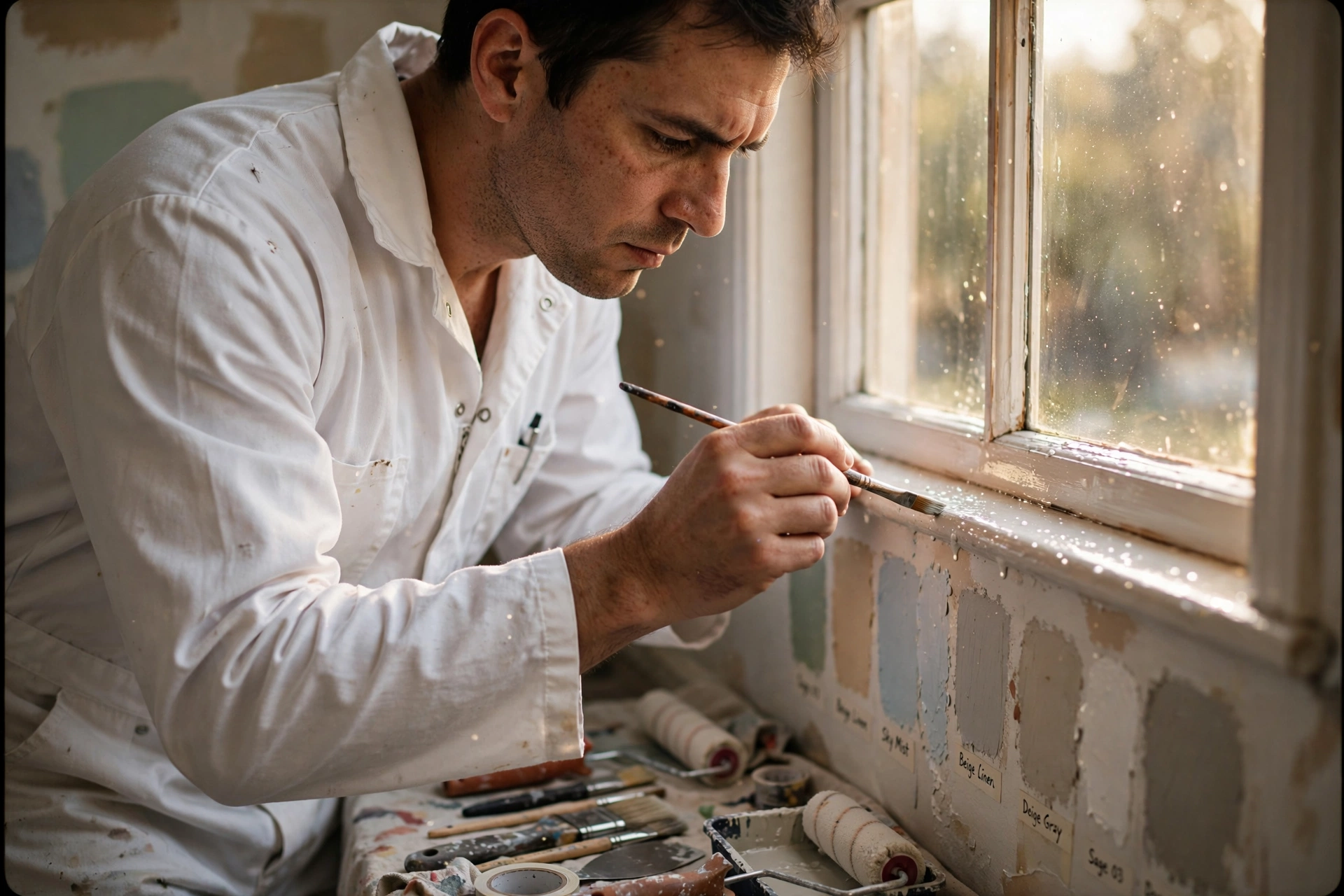
"Cutting in" is the process of painting the edges and corners with a brush before using a roller. The key is to maintain a "wet edge" to prevent visible seams where the brush meets the roller. We use high-nap rollers for textured walls and short-nap rollers for smooth drywall to ensure a consistent finish.
Step 5: Inspection and Touch-ups
Once the final coat is dry, the walls are inspected under high-intensity lighting to find "holidays" (missed spots) or drips. A professional project isn't finished until every drip is sanded and every edge is sharp.
💡
Key Takeaway
The quality of your interior paint job is decided during the preparation phase. If you spend less than 30% of your time on prep, you are guaranteed a sub-par finish.
For those managing large-scale residential complexes, such as those needing Multi-Family Painters Brookvale - Fremont, CA expertise, this process is scaled to ensure consistency across hundreds of units.

Comparing Painting Approaches: DIY vs. Cheap vs. Professional
Many homeowners struggle to decide whether to do the work themselves or hire a budget contractor. The following table breaks down the actual impact of these choices on your home's interior.
| Feature | DIY Approach | Cheap "Handyman" Approach | World Pro Painting Approach |
|---|---|---|---|
| Surface Prep | Minimal (dusting only) | Basic (filling large holes) | Exhaustive (Sanding, Deglossing, Priming) |
| Material Quality | Store-brand / Low-grade | Medium-grade (often diluted) | Premium Sherwin-Williams/Benjamin Moore |
| Longevity | 1–3 Years | 3–5 Years | 6+ Years (Guaranteed) |
| Finish Quality | Visible lap marks/drips | Acceptable from a distance | Flawless, "Factory" finish |
| Risk | High (Mess/Incorrect Paint) | Medium (Poor adhesion/Peeling) | Low (Licensed, Bonded, Insured) |
| Best For | Small accent walls | Low-value rental properties | Primary residences & Luxury estates |
That said, the "cheap" option often ends up being the most expensive. I've frequently been called in to fix "budget" jobs where the contractor used the wrong primer on a bathroom wall, resulting in the paint peeling off in sheets after just six months. The cost to strip that paint and redo it is typically 2.5x the cost of doing it right the first time.
Common Questions & Misconceptions About Interior Painters
Most online guides get the "how-to" of interior painting wrong because they focus on the application and ignore the chemistry. Here are the most common myths debunked.
Myth 1: "You don't need primer if you're using paint-and-primer-in-one."
This is a dangerous misconception. While "self-priming" paints exist, they are designed for refreshing a wall that already has a compatible paint layer. If you are painting over a glossy surface, a stained ceiling, or a new piece of drywall, a dedicated primer is essential. Without it, the paint will eventually peel because it lacks a chemical bond with the substrate.
Myth 2: "More coats always mean a better job."
Actually, too many coats can lead to a "heavy" look where the crisp lines of the architecture are lost. A professional aims for the minimum number of coats required to achieve total opacity. Usually, two coats of high-quality paint are superior to four coats of cheap paint.
Myth 3: "All white paint is the same."
In the world of professional interior design, there are thousands of "whites." Some have blue undertones (cool) and others have yellow undertones (warm). Using the wrong white in a room with north-facing light can make a space feel like a sterile hospital rather than a cozy home. This is why we emphasize color consultation as part of our professional service.
Myth 4: "The cheapest quote is the best value."
In the painting industry, a low quote usually means the contractor is skipping the prep work or using "contractor grade" paint, which has lower pigment density and wears out faster. When you see a quote that is 50% lower than the market average, it is a red flag that they are not licensed or insured, leaving you liable for any accidents on your property.
Frequently Asked Questions
How do I know if I need professional interior house painters or if I can do it myself?
You should hire professionals if the project involves high ceilings, intricate crown molding, or surfaces that require specialized prep, such as removing lead paint or fixing severe drywall damage. If you have a limited budget and a single small room, DIY is possible. However, if you are painting an entire home or a multi-family unit—such as those requiring Multi-Family Painters Mission San Jose - Fremont, CA services—the risk of inconsistency is too high. Professional painters bring the equipment (sprayers, scaffolding) and the technical knowledge of paint chemistry to ensure a uniform finish that lasts for years.
How long does a professional interior paint job typically take?
For a standard 3-bedroom home, a professional crew usually takes between 3 to 7 days, depending on the level of preparation required. A significant portion of this time is spent on "prep and cure" cycles. For example, the primer must be fully cured before the first topcoat is applied, and the first topcoat must dry before the second. Rushing this process leads to "sagging" or "blistering." If a contractor promises to paint your entire interior in 24 hours, they are likely skipping the preparation and drying phases, which will compromise the quality of the finish.
What is the best type of paint for high-traffic areas like hallways?
For high-traffic areas, you need a paint with a higher "scrubbability" rating. Semi-gloss or satin finishes are generally recommended because they have a tighter molecular structure that resists stains and allows you to wipe the walls without removing the pigment. We typically recommend premium acrylic latex paints for these areas. These paints offer a balance of durability and flexibility, ensuring that they don't crack as the house settles. Avoid using flat paint in hallways, as it absorbs oils from hands and is nearly impossible to clean without leaving a "burnish mark."
How do professional painters handle the smell of paint indoors?
Modern professional painting focuses heavily on Low-VOC (Volatile Organic Compounds) and Zero-VOC paints to minimize odors and health risks. We use high-grade products from Sherwin-Williams that are designed to dry quickly and emit minimal fumes. Additionally, we employ active ventilation strategies, using industrial air movers and strategically placed fans to exhaust fumes out of the house. This ensures that the home is habitable shortly after the project is completed, which is essential for families with children or pets.
Why is the price for professional interior painting so high compared to a handyman?
The price reflects the cost of professional-grade materials, liability insurance, and the labor-intensive nature of proper preparation. A handyman might simply paint over a hole; a professional will sand, fill, prime, and sand again to ensure the wall is perfectly flat. Furthermore, the cost includes the guarantee of the work. At World Pro Painting, we provide a 6-year guarantee because we know our process is scientifically sound. You aren't paying for the act of painting; you are paying for the certainty that the paint will not peel for the next half-decade.
Final Thoughts on Hiring Interior House Painters
Understanding what is interior house painters' true value requires shifting your perspective from "applying color" to "preserving the substrate." Whether you are updating a single room or managing a large-scale project like Multi-Family Painters Niles - Fremont, CA, the results are determined by the rigor of the preparation and the quality of the materials used.
The most expensive paint job is the one you have to do twice. By focusing on a licensed contractor who follows the 5-step preparation process and uses premium, Low-VOC coatings, you protect your home's value and ensure a flawless aesthetic. For those in the Bay Area seeking a transformation that lasts, we recommend avoiding the "budget" traps and investing in a professional, guaranteed finish.
If you are ready to upgrade your home with a team that prioritizes precision over speed, we invite you to schedule a free on-site estimate. Visit World Pro Painting today to see how our professional standards can transform your interior space. For other specialized needs, check out our services for Commercial Painting Cabrillo - Fremont, CA 2026 or Exterior Painting in Birch Grove - Newark, CA (2026).
Commercial Painting Cost Calculator & Color Guide
Get an instant estimation checklist for painting your office, warehouse, or house. Learn how to choose colors that boost productivity.